MAIN CONTENT
Three invisible layers of protection
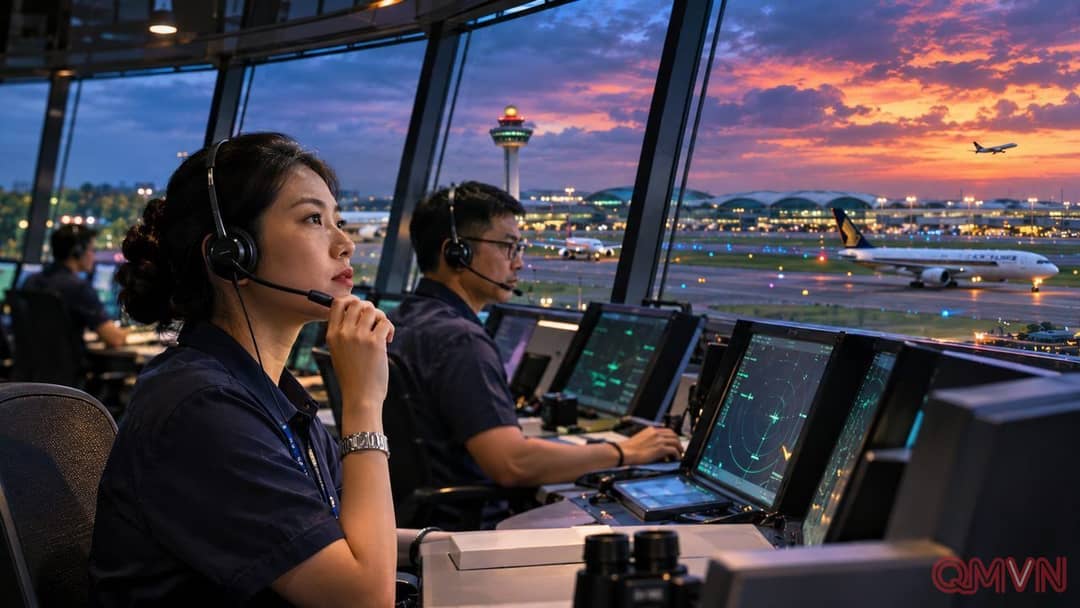
Passengers see aircraft and runways, but rarely the sequence of coordination behind each flight. Aerodrome controllers manage ground movements, departures and landings; approach controllers sequence aircraft climbing and descending near airports; and area controllers oversee flights travelling at cruising altitudes. Precise handovers and shared situational awareness keep these separate tasks functioning as one safety system.
Singapore’s teams operate from Changi and Seletar towers and from the Singapore Air Traffic Control Centre near Changi Village. CAAS says they handle about 2,000 flights daily, including approximately 1,000 arriving at or leaving Changi. That traffic density helps explain why a small communication breakdown can have consequences far beyond one aircraft.
Eighteen months to develop sound judgment
Kathirvelu Krishnan, a senior training chief with more than 35 years of experience, argues that new tools exist to support the controller rather than to replace decision-making. Trainees begin with roughly four months studying foundations such as meteorology and aviation law before entering one of three specialisations.