Grim shores at Cape Palliser and the desperate struggle for survival
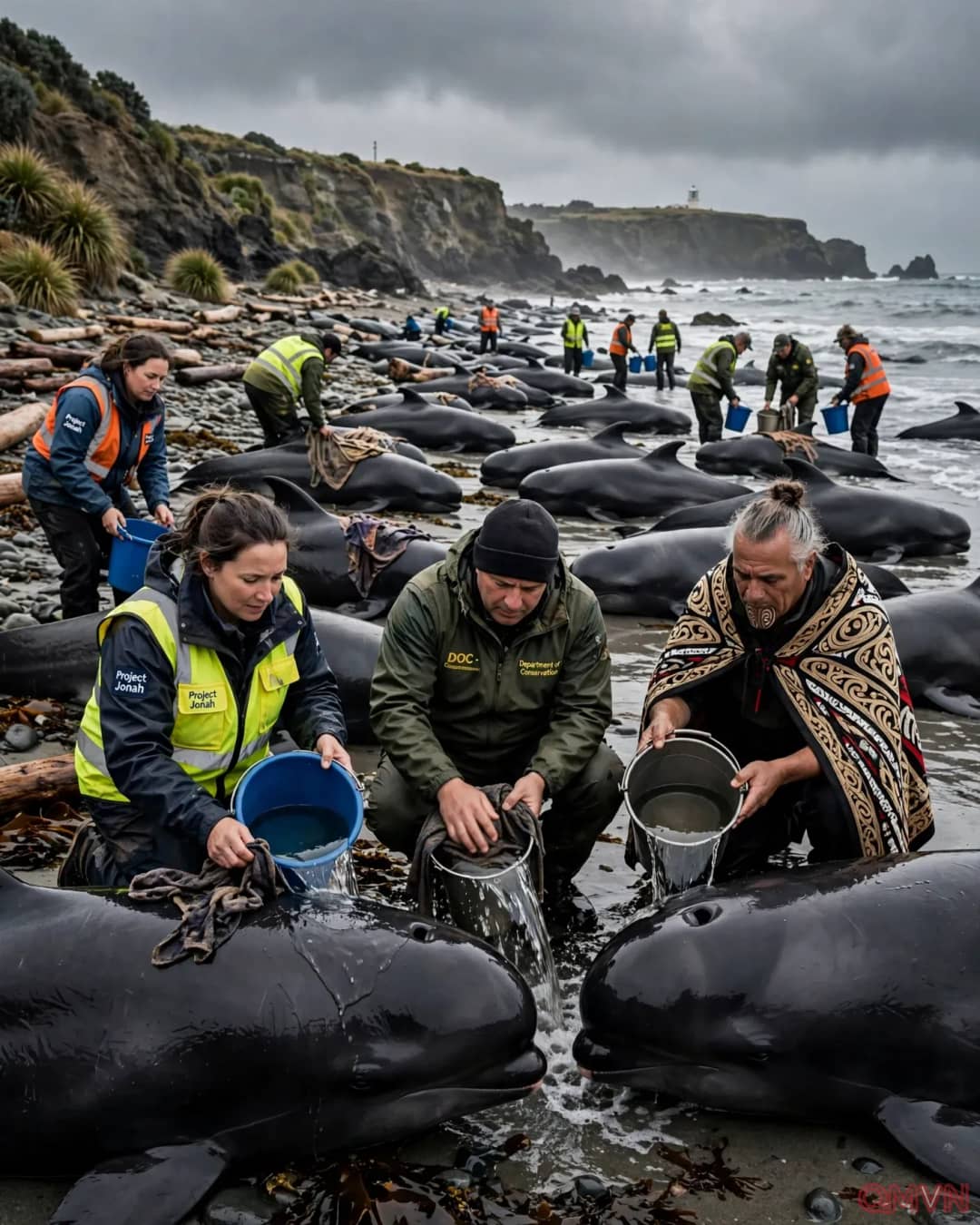
The remote, gravel-strewn coastline of Ngawi, situated beneath the steep cliffs of Cape Palliser, became a scene of profound grief at daybreak. Local residents discovered dozens of massive pilot whales scattered along the tideline, their dark bodies battered against coastal rocks after becoming trapped in shallow surf overnight.
Professional conservation officers and local volunteers immediately established emergency life-support perimeters. Teams worked tirelessly under fluctuating coastal winds, dousing sensitive cetacean skin with buckets of ocean water and draping wet towels to prevent fatal dehydration and thermal shock while waiting for the afternoon high tide to enable refloating efforts.
It's horrible; the ones that are alive are on their last breaths amidst complete exhaustion.
Indigenous collaboration and the harrowing mechanics of whale rescue
The humanitarian response highlighted a seamless partnership between state wildlife biologists, seasoned volunteers from Project Jonah, and the local Maori iwi. In Maori cosmology, whales are revered as sacred guardians (taonga), requiring both rescue operations and customary burial rituals to be carried out with utmost cultural respect and spiritual solemnity.