MAIN ARTICLE
A handshake after a contested transfer of power
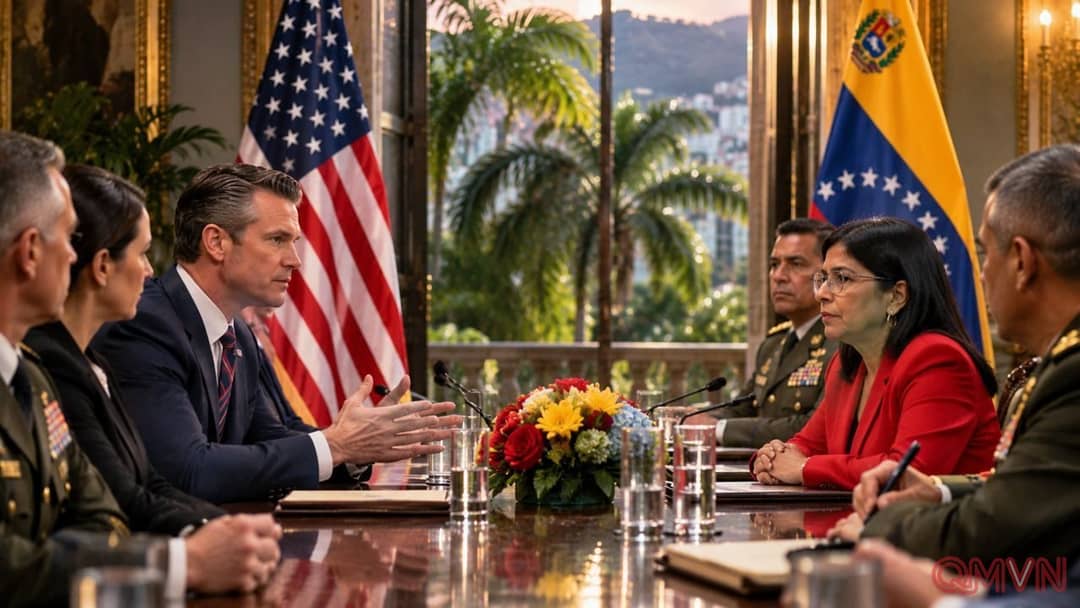
At the Miraflores presidential palace on November 18, Hegseth joined Rodríguez to announce a new defense framework. Reuters and the Associated Press reported that the disclosed measures include joint military training, intelligence exchanges and cooperation on capabilities. Both governments highlighted shared threats, especially cross-border narcotics networks. Yet the public announcements offered limited detail about implementation schedules, independent oversight or how responsibilities would be divided.
The symbolism was unmistakable. Ten months earlier, U.S. special forces had carried out a raid in Caracas that deposed Nicolás Maduro. Rodríguez, previously his vice president, was now welcoming a senior defense official from the country responsible for that intervention. This is a fundamental diplomatic reversal, but it does not settle questions surrounding the legality of the operation or the legitimacy of the subsequent transition.
Security cooperation and the campaign against trafficking
Hegseth presented the arrangement as a significant expansion of joint operations against drug-trafficking organizations. Washington describes transnational armed networks as a pressing security threat, while Caracas says cooperation will help train its armed forces and confront common risks.