MAIN CONTENT
From exploration to local production
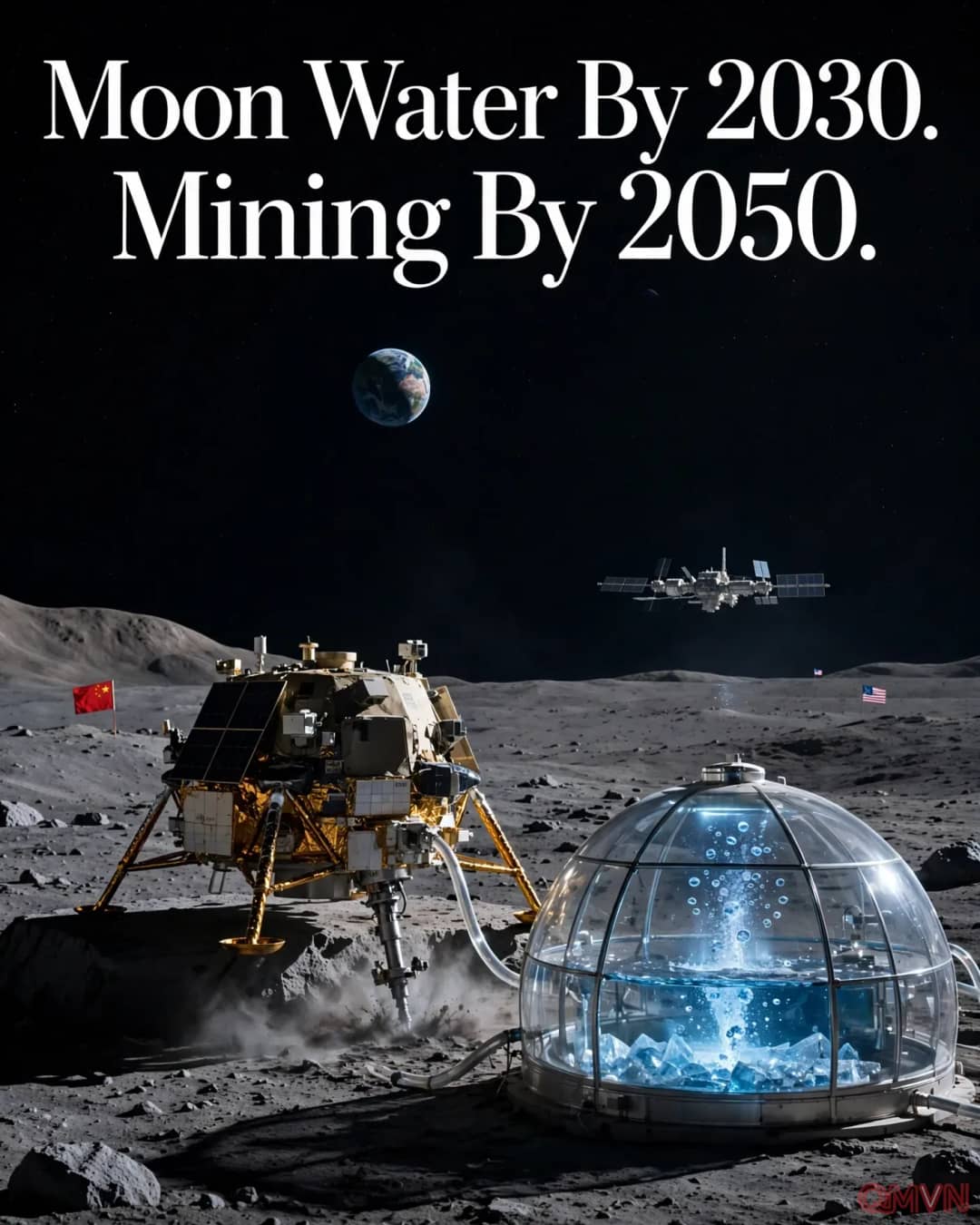
The first step is not a mine in the ordinary terrestrial sense. It is a demonstration that a robotic or crewed mission can identify, collect and process material on the lunar surface into something useful. Wu’s team suggests testing water recovery from ice-bearing deposits or oxygen extraction from regolith, the dust and fragmented rock covering the Moon. Either result would be scientifically important, though a successful experiment would remain far from sustained industrial production.
Transporting water, breathable oxygen and fuel ingredients across the Earth–Moon distance is expensive and technically difficult. Producing even part of these supplies at the destination could reduce dependence on repeated cargo launches. Water can support crews and potentially be separated into hydrogen and oxygen; lunar soil may also provide raw material for construction. These possibilities depend on available deposits, equipment reliability, power supplies and how efficiently resources can be processed in harsh conditions.
The proposed timetable proceeds in stages: verify a core technology by 2030, operate a small demonstration facility for water, oxygen or building materials by 2040, and seek capacity for broader extraction by 2050. Those benchmarks are recommendations from researchers. They should not be confused with official confirmation that specific factories have been funded or that mining on the Moon is commercially viable.