MAIN STORY
Stronger shipments meet a more resilient product mix
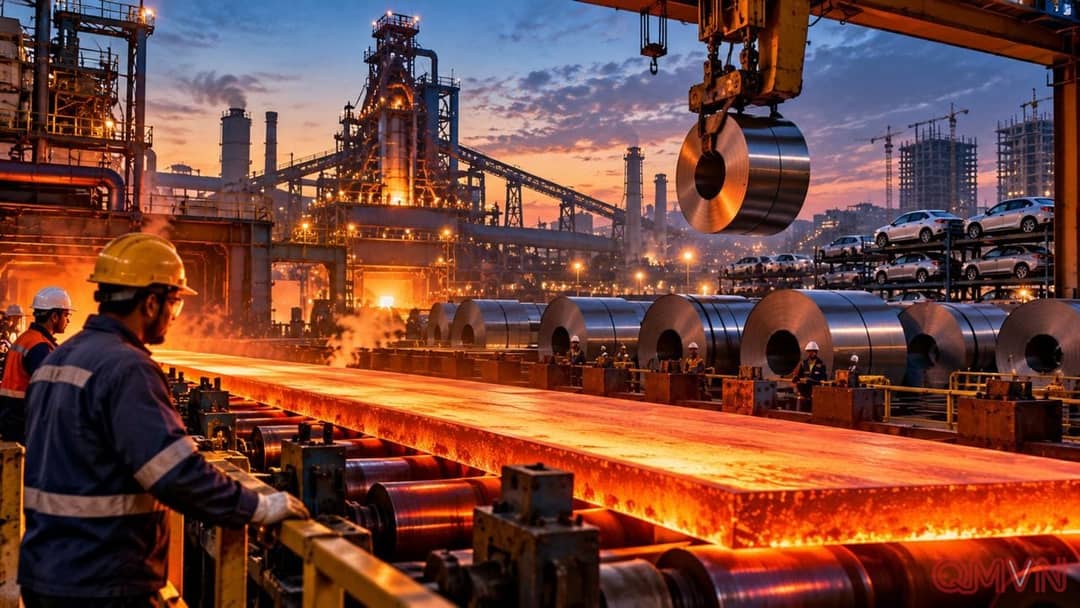
JSW Steel’s earnings improvement was not simply the result of higher prices. The company sold 7.46 million metric tons of steel during the quarter, up 13% from a year earlier, with flat steel deliveries supporting growth. Revenue rose to 544.86 billion rupees, comfortably exceeding the 504.94 billion rupees forecast reflected in LSEG data cited by Reuters. That combination indicates that volume played an important part in the performance.
Flat steel is commonly used in car bodies, machinery, fabricated pipes and sheet-based construction products. Demand in these industries has helped prices hold up better than prices for some long steel products. Analysts at Emkay Global and Elara Securities therefore considered JSW Steel comparatively well positioned among Indian producers reporting results for the quarter. The distinction matters: steel is not a single market, and gains in one category do not necessarily translate across the entire sector.
Higher margins do not eliminate cost pressure
The operating EBITDA margin advanced to 18.57% from 15.76% a year earlier, suggesting the larger sales base and product mix aided profitability. Still, raw-material expenses jumped 12.5%, while total expenses increased about 12% to 481.68 billion rupees.
Strong headline profit should not obscure the challenge of maintaining that balance if input prices remain elevated or finished steel realizations weaken.
Coking coal is especially important in traditional blast-furnace steelmaking. Its cost can move independently of domestic steel demand, putting producers in a difficult position when customers resist higher prices. Meanwhile, the recovery in shipments followed a June quarter that tends to be seasonally weaker. That timing helps explain why both year-on-year and sequential comparisons are important when evaluating the durability of JSW Steel’s performance.
A record investment bill creates a second test
The company recorded quarterly consolidated capital spending of 62.66 billion rupees, its highest reported level. New facilities, downstream capacity and raw-material projects could allow it to serve a growing domestic customer base. But investment returns are earned over years rather than quarters; delays, borrowing costs and downturns in steel prices can alter the economics of expansion plans.
NDTV Profit reported additional investment proposals involving Odisha, Vijayanagar and Dolvi, alongside measures to secure raw materials. Those plans reinforce the long-term industrial story, though they should be assessed separately from this quarter’s profits. Investors will also look at cash generation, balance-sheet discipline and whether future output can be sold at attractive margins. Capacity growth, by itself, is not proof of value creation.