MAIN CONTENT
A quieter dinner after a spectacular rise and fall
The launch of $TRUMP in January 2025 combined political celebrity with a fast-moving speculative market. Its price briefly rose to about $74; by the November 2026 dinner it had sunk below $1. That fall does not establish every holder’s loss, since purchase prices, holding periods and hedges differ, but it demonstrates how dramatically investor expectations changed.
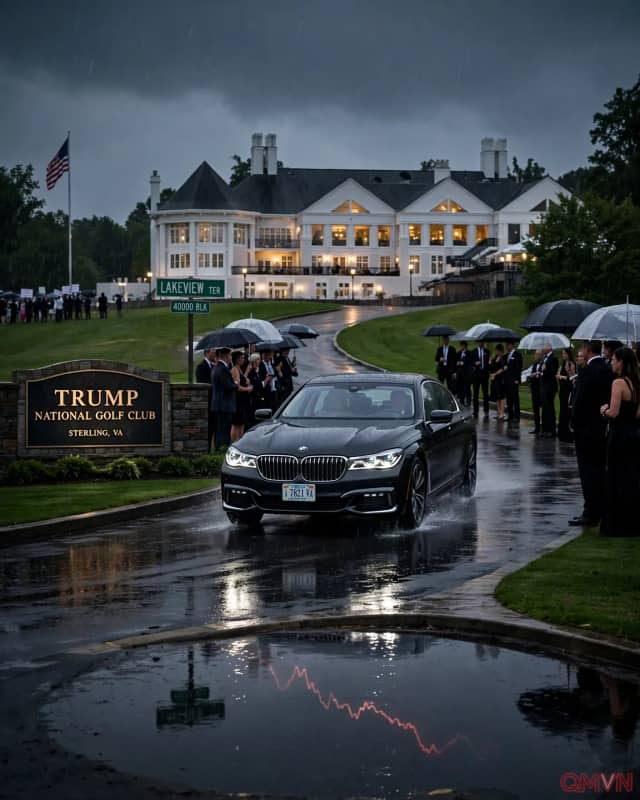
The evening at Trump National Golf Club featured advertised personalities including entrepreneur Kevin O’Leary, former basketball player Tristan Thompson and mentalist Lior Suchard. The highest-ranking token holders were offered access to a VIP reception, while the top four were eligible for Trump-branded 18-karat gold watches under stated conditions. Those perks illustrate how proximity to a powerful political figure can itself become a selling point.
The first gala in May 2025 drew 220 winners. Organizers indicated 185 wallets qualified for the latest dinner, although the public leaderboard listed only 130 at its close. Those figures refer to differing lists, not necessarily a verified attendance count. The publicly listed wallets held far less in total value than during the earlier contest, underscoring diminished market enthusiasm.
The investor who hedged the price of admission
Morten Christensen, founder of Airdrop Alert, told The Wall Street Journal that he bought roughly 75,000 $TRUMP tokens at an average $1.70 each and opened a broadly matching short position using perpetual futures on Hyperliquid. He said payments associated with the hedge left his plan about $6 in profit. This is an individual’s account, not an independently audited return.
The approach turned the typical speculative wager on its head: Christensen sought access to the event while limiting outright exposure to the coin’s direction. Yet derivatives introduce funding-rate, liquidity and liquidation risks. A strategy described by an experienced trader should not be mistaken for a guaranteed or widely suitable way to neutralize losses.
Justin Sun, the leading token holder at the previous dinner, did not plan to attend this year, according to a person cited by The Wall Street Journal. Sun is involved in litigation with Trump family-associated World Liberty Financial, accusing the company of freezing tokens; the company rejects his allegations. The dispute illustrates how quickly relationships around high-profile crypto businesses can sour.
The difference between earning fees and holding a falling token
Reuters reported that the Trump family’s proceeds associated with $TRUMP reached at least $635 million, citing the president’s June 2026 disclosure. Many buyers, meanwhile, face steep mark-to-market losses. Business revenues and investment returns are different measures, and collapsing token prices do not necessarily mean a comparable fall in the issuer’s past receipts.
Reuters separately estimated that outside investors in five principal Trump family crypto and crypto-related ventures had lost more than $5 billion. That is a calculation based on valuations and reporting dates, not evidence that every investor realized the loss by selling. Still, the contrast calls for careful scrutiny of token distributions, project fees and disclosures to retail buyers.
At the dinner, Trump said he backed cryptocurrency to strengthen American competitiveness against China. Supporters view industry-friendly policy as an opening for innovation; critics question whether rewarding major holders of a token linked to a sitting president blurs political access and private benefit. Attendance alone, however, is not proof of misconduct.
What the gala says about trust in digital assets
Meme coins often derive much of their appeal from community sentiment, notoriety and online attention rather than a predictable business cash flow. Exclusive invitations can stimulate interest, but they cannot by themselves establish the economic worth of a token. When excitement cools, prices may react violently.
The wider digital-asset cycle has also weakened. The Wall Street Journal noted that Bitcoin recently slipped below $60,000 after exceeding $126,000 in October 2025, while a setback for the Clarity Act in the Senate and shifting retail attention toward artificial intelligence and prediction markets changed the mood. Those developments provide context, although none can fully explain one coin’s price.
For individual buyers, the decisive question is what rights or economic value their purchase carries beyond the possibility of an encounter with a famous person. When entertainment, political status and investment claims become intertwined, transparent ownership arrangements, eligibility rules, fees and potential conflicts of interest become all the more important.