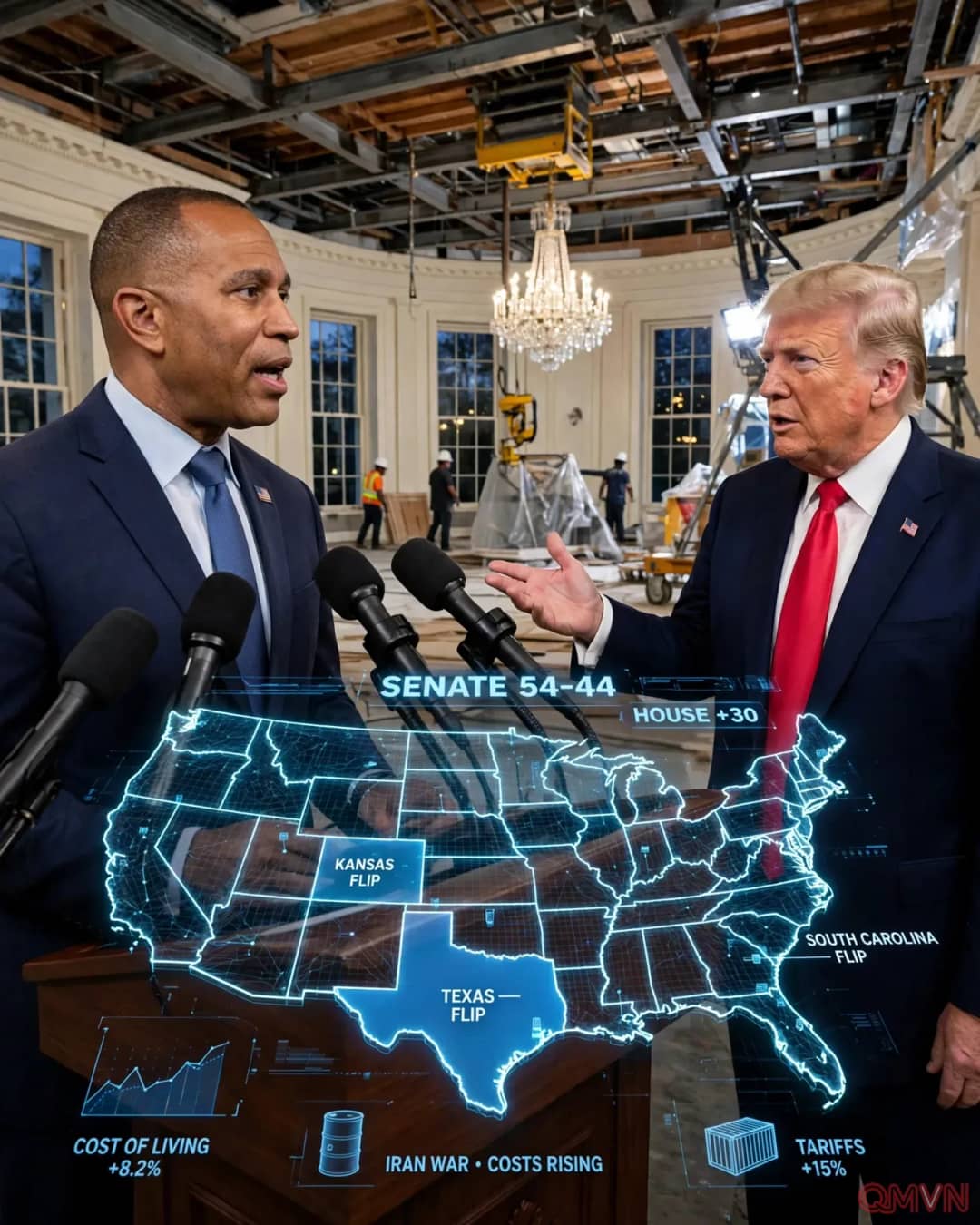
Congressional leadership transition and historic realignments across conservative bastions
Addressing the press corps following the decisive legislative realignment, House Democratic Leader Hakeem Jeffries—slated to make history as the first Black Speaker of the House—declared that the incoming congressional majority will focus with singular discipline on consumer affordability and systemic executive accountability. Jeffries emphasized that the legislative branch will no longer function as a compliant appendage of executive directives, marking an abrupt conclusion to unilateral administrative governance in the United States.
The electoral realignment shattered decades of conservative hegemony across traditional Republican bastions. In Texas, Democrats ended an unbroken 38-year Senate losing streak by claiming their first Senate seat since 1988, alongside unseating three-term incumbent Governor Greg Abbott.
Simultaneously, Kansas elected its first Democratic senator since the 1930s, and voters in South Carolina rejected Trump’s hand-picked nominee. Reflecting on the nationwide shift across 99% of reporting counties, Florida Governor Ron DeSantis characterized the widespread conservative losses as an existential reckoning.
We don't work for Donald Trump. We work for the American people. And the days of the House of Representatives functioning like a wholly owned subsidiary of the Trump administration are over.
Executive defiance from the ballroom and looming legislative gridlock
In marked contrast to the political upheaval consuming Capitol Hill, President Donald Trump summoned media correspondents to the construction site of his personal ballroom project within the White House complex. In a meandering hour-long appearance, Trump framed his architectural endeavors as a personal relaxation while downplaying election results, warning that he retains absolute constitutional veto power to neutralize Democratic policy bills.
Democrats capture a commanding Senate majority of at least 54-44, flipping decisive seats across deep-red jurisdictions.
The Democratic caucus gains at least 30 seats in the House of Representatives, positioning Hakeem Jeffries for the speakership.
Senate Democrats secure absolute confirmation veto power over federal judicial and executive appointments, including Supreme Court vacancies.
House Speaker Mike Johnson steps down from Republican caucus leadership following the midterm collapse.
President Trump threatens systematic deployment of presidential vetoes to counter incoming legislative investigations and budget mandates.
With pending tabulations in Alaska and Mississippi potentially expanding the Democratic Senate margin to 56-44, the incoming majority holds absolute authority to scrutinize executive administration records and block judicial appointments, including prospective Supreme Court vacancies. Meanwhile, internal Republican leadership fractured, evidenced by House Speaker Mike Johnson’s resignation and Vice President JD Vance’s public critique attributing the electoral rout directly to the unpopular foreign military war against Iran.
When I get criticized, like, 'Why are you working on the White House?' I'm doing it because the White House is the ultimate symbol of America, and it's got to be pristine... For me, it's relaxing.