MAIN CONTENT
A Welcome Without Flowers
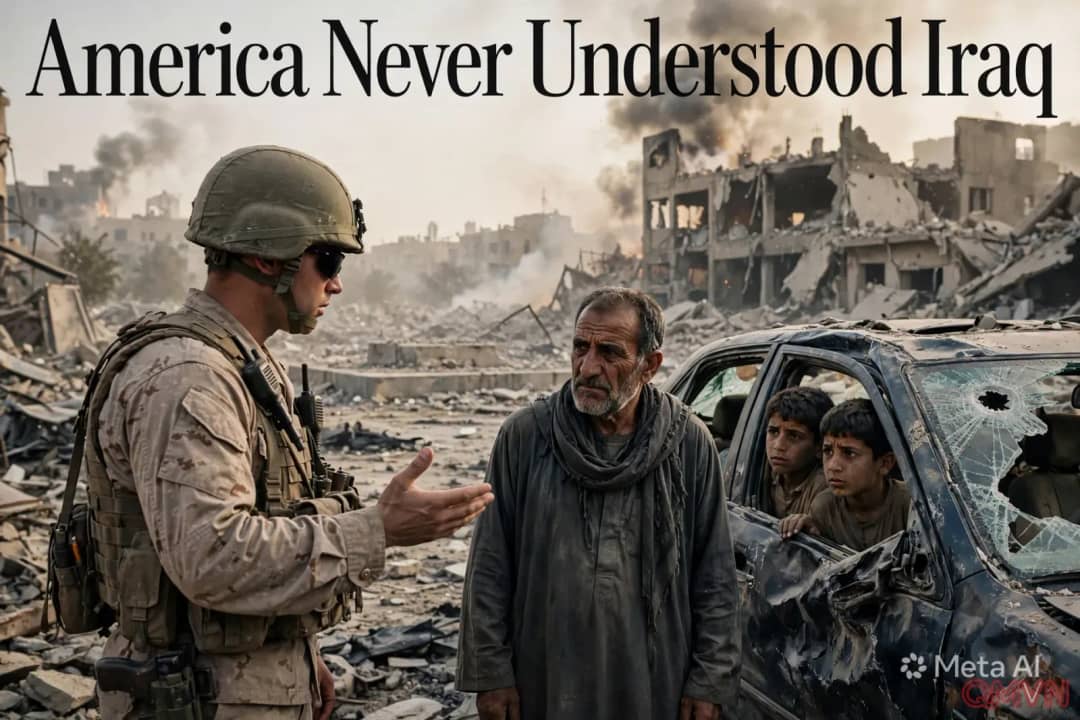
In the first days after the invasion, the mood in Baghdad was more curious than fearful. Driving across the border, Rubin passed blackened Iraqi military vehicles, smoke still curling on the horizon and the smell of burning rubber everywhere. The capital's shops held little beyond out-of-date toffees and canned tuna. Iraqis did not greet American soldiers with flowers, let alone as the “liberators” the American vice president had predicted, but they were intrigued by a future no longer defined by the brutality and restrictions of the Hussein regime.
Yet the reason for the war kept moving like a target. The Bush administration first cited claims, later discounted, that Baghdad was developing chemical weapons. Once officers and policymakers settled into the palaces of the Green Zone, a new rationale emerged: bringing democracy to Iraq. President George W. Bush framed the goal this way.
“To help the Iraqi people build a lasting democracy in the heart of the Middle East.” — George W. Bush
The Order to Disband an Army and the Wound to Dignity
One moment stays vivid for Rubin: the order from Paul Bremer, the chief civilian administrator, to disband the Iraqi Army. She asked a military press attaché, “Do you mean, disband the whole army?” He said he would get back to her. Iraq then had some 400,000 troops. Every morning, dismissed soldiers gathered at the gates of the Green Zone, stunned and increasingly angry.