MAIN ARTICLE
An avenue of umbrellas from Atocha
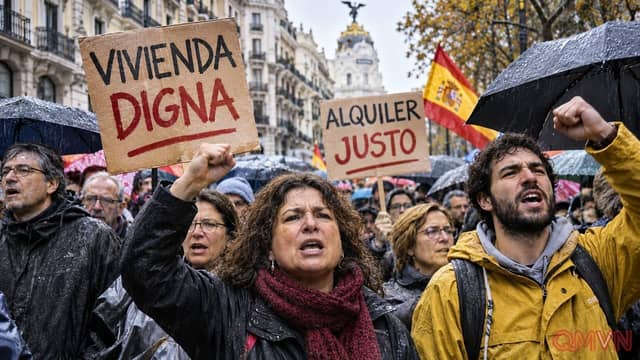
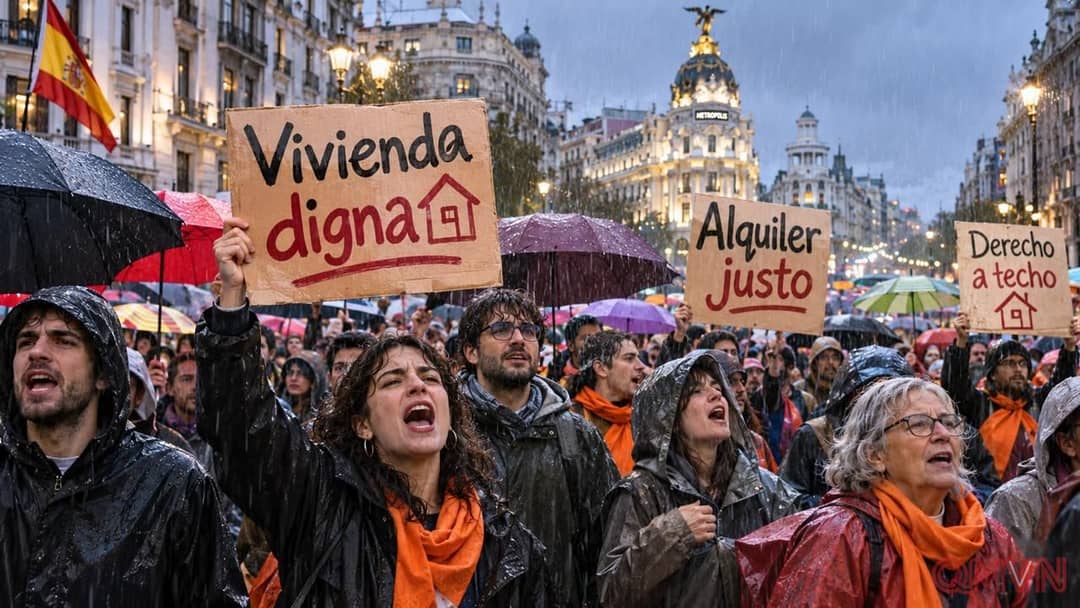
Heavy rain and gusting wind did little to empty the route from Atocha through central Madrid toward Plaza de España. Under colorful umbrellas, banners linked wages, rent and the prospect of a secure home. Many demonstrators described practical frustrations rather than abstract ideological positions: sharing accommodation well into working adulthood, struggling to save a deposit or moving farther from jobs to find an affordable room. In that sense, housing had moved beyond a narrow property-market debate to become a question of who can build a stable life in Spain's cities.
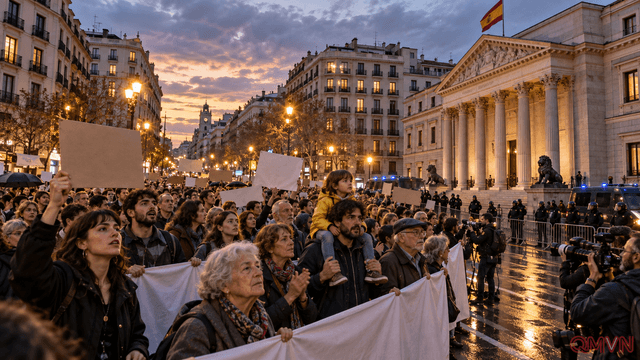
El País and AFP reported an official Madrid estimate of roughly 120,000 participants. Organizers claimed between 600,000 and 750,000, figures calculated differently and not independently reconciled. Barcelona saw another large march, with gatherings across Galicia and elsewhere. The images of packed streets should not be mistaken for uniform participation in the strike itself. Unions reported substantial stoppages in some industrial and transport workplaces, while other businesses and services operated almost as usual. Different methods and competing interests help explain the wide gap in assessments of the day's economic impact.