MAIN CONTENT
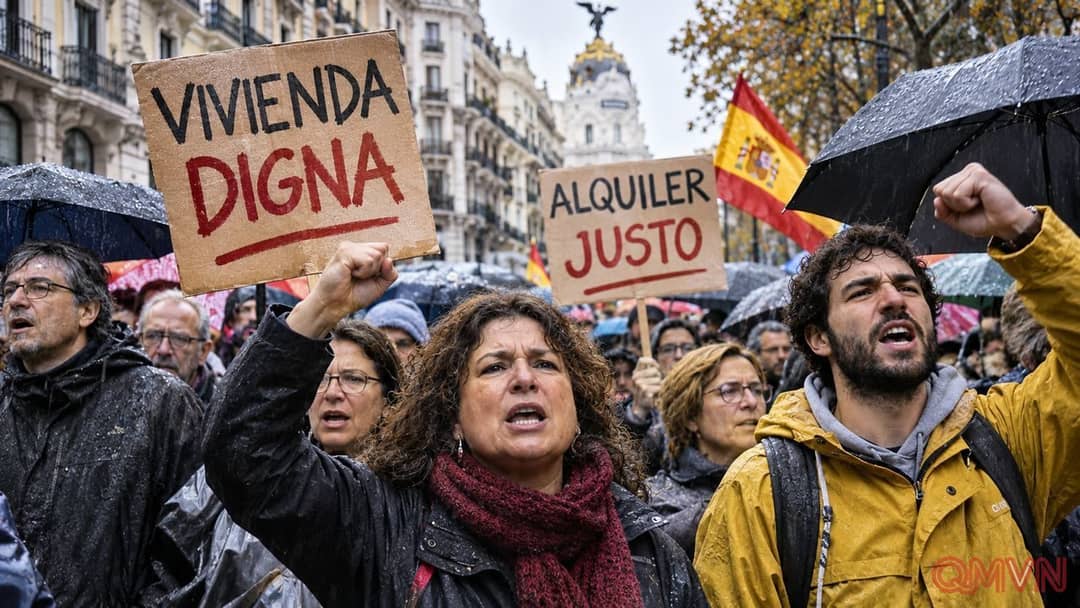
A housing grievance becomes a national stoppage
The strike brought together a movement rooted in tenants’ organizations with Spain’s two major union confederations, UGT and CCOO. Its central message, “Wages. Housing. Prices,” deliberately connected employment conditions to the cost of a home. Campaigners argue that a paycheck no longer reliably provides the ability to rent alone, let alone save for a deposit. Their demands challenge the traditional separation between workplace bargaining and housing policy.
Reuters reported that unions put participation at roughly four million workers, close to one-fifth of the workforce. That figure is an organizers’ estimate, not a verified headcount, and employers described the impact as much smaller. The discrepancy matters: a strike is both a measurable interruption to activity and a political statement about how widespread dissatisfaction has become. Reporting either side’s number without attribution would obscure the argument itself.
Two cities reveal different pressures
In Barcelona, picketers obstructed roads and transport hubs, and metro service was curtailed. Demonstrators filled central shopping streets during the evening. Organizers claimed 400,000 people attended the march, while local police estimated 55,000. Such a wide gulf should prompt careful attribution rather than an attempt to present either estimate as a definitive independent count.