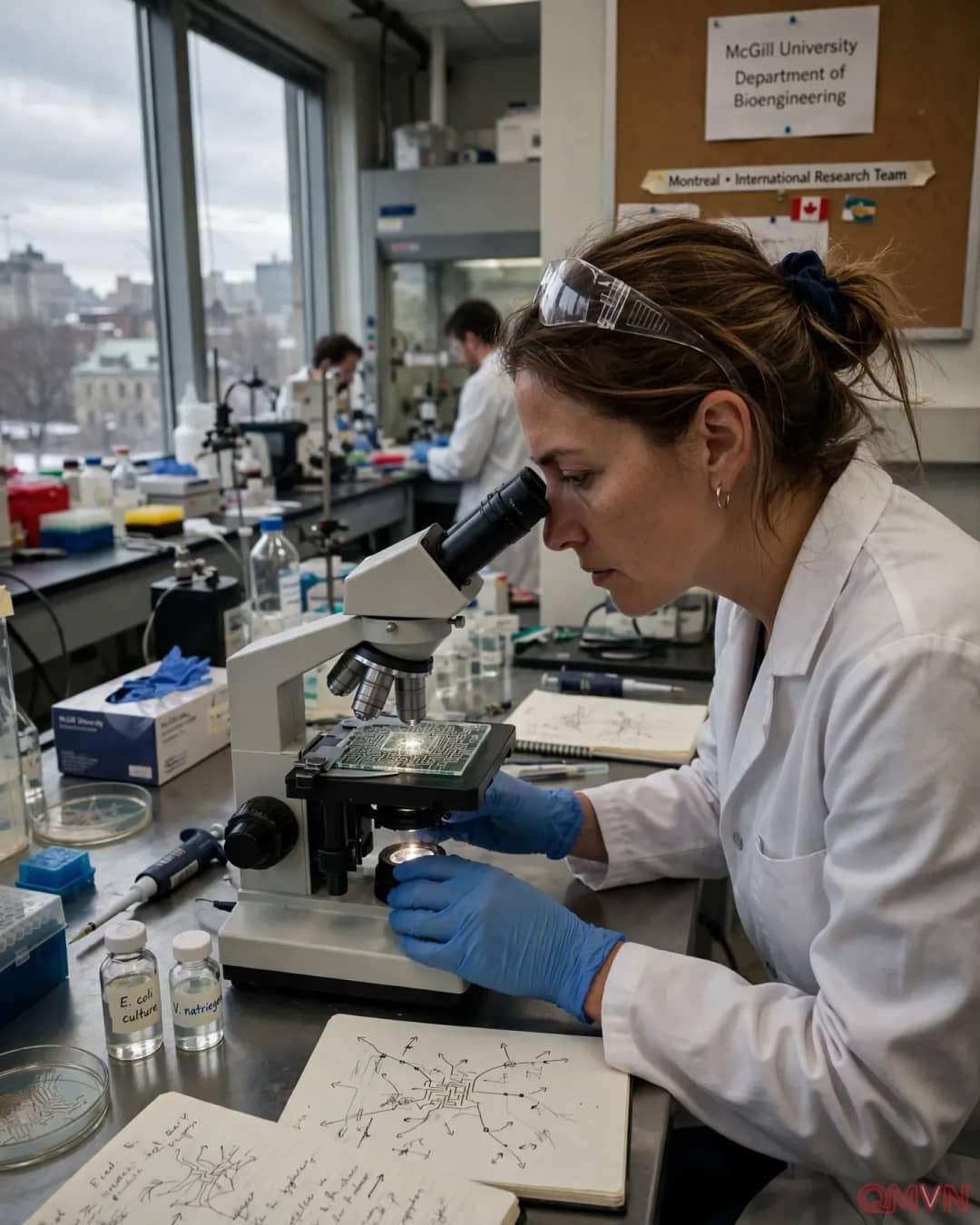
A breakthrough 20 years in the making
The project combines biology, computer science and engineering, with scientists from Canada, Europe, the United Kingdom and Australia. According to the researchers, the device could tackle problems that standard computers handle with difficulty, particularly decision-tree problems.
*“Electronic computers, which are sequential, are not conceived or designed to solve decision trees.” — Dan Nicolau*
Dan Nicolau, professor of bioengineering at McGill and lead author of the study, explained that if an electronic computer has to solve such problems, it needs large amounts of RAM.
Two bacteria, two roles
The study used two bacterial species with different traits to carry out the calculations:
- Escherichia coli was chosen because it moves through fluids in a predictable and measurable way.
- Vibrio natriegens was chosen for its ability to reproduce very rapidly.
Using living bacteria instead of digital processing allows the biocomputer to solve large, complex problems with minimal memory and resources compared with traditional equipment.