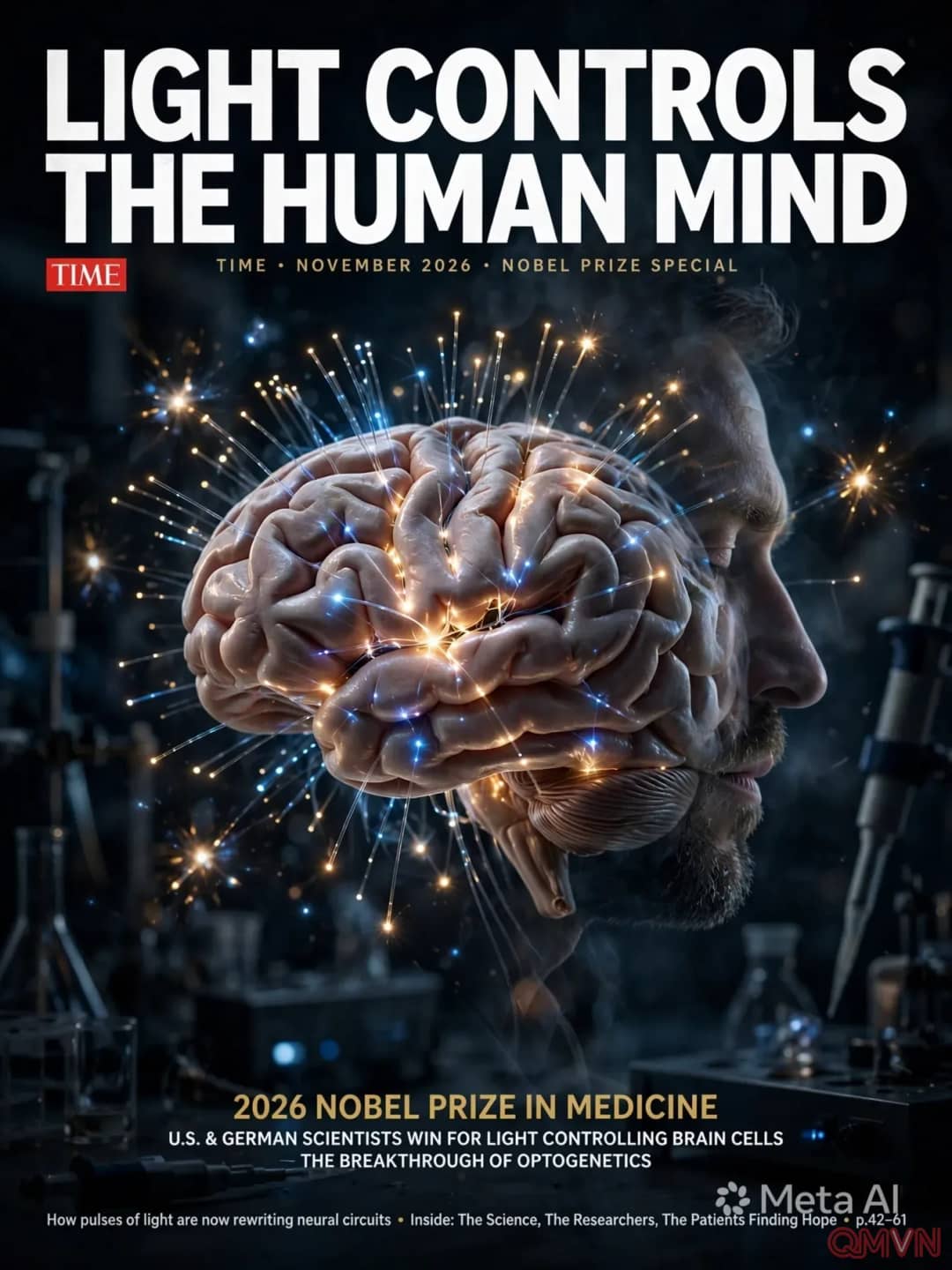
When light becomes the brain’s switch
On the morning of October 5 in Stockholm, the Nobel Assembly at Karolinska Institutet honored Karl Deisseroth, 54, of Stanford University; Peter Hegemann, 71, of Humboldt University of Berlin; and Georg Nagel, 73, of the University of Würzburg, for their “discoveries concerning light-gated ion channels and optogenetics.”
The core idea sounds like science fiction: introduce a light-sensitive protein borrowed from algae into nerve cells, then use flashes of light to activate or silence precisely the cells researchers choose, with millisecond accuracy. Before that, neuroscientists could largely only observe the brain or stimulate it crudely with electricity, affecting broad swaths of tissue.
“This method makes it possible to switch on, or off, the activity of individual nerve cells in a living brain.” – Thomas Perlmann, Secretary-General of the Nobel Assembly at Karolinska Institutet
A midnight phone call and a village in Italy
As is so often the case, the call from Stockholm came when the laureates least expected it. In California, it was already the early hours of the morning when Deisseroth picked up the phone.