MAIN ARTICLE
More than a sheet of paper
In Korea, hanji has never been merely a surface for words. Its uses range from manuscripts, painting and calligraphy to interior fittings and ceremonial objects. Fibrous plant material and careful processing give the paper its distinctive texture, flexibility and endurance. When an old piece of hanji survives, it preserves more than an object: it offers evidence of how people studied, decorated their homes and passed ideas between generations. These cultural relationships explain why the story of paper is inseparable from the story of the people who make and use it.
South Korea’s nomination deliberately names the knowledge, skills and cultural practices of hanji production. The subject is not a finished sheet sitting behind museum glass, but a chain of activities performed by living communities. Makers, growers, families preparing raw material and artists using the finished sheets all sustain the tradition. That network matters because a craft cannot survive simply through photographs of its finest products; it needs repeated work, shared judgment and a reason for younger people to participate.
A craft built on skill and cooperation
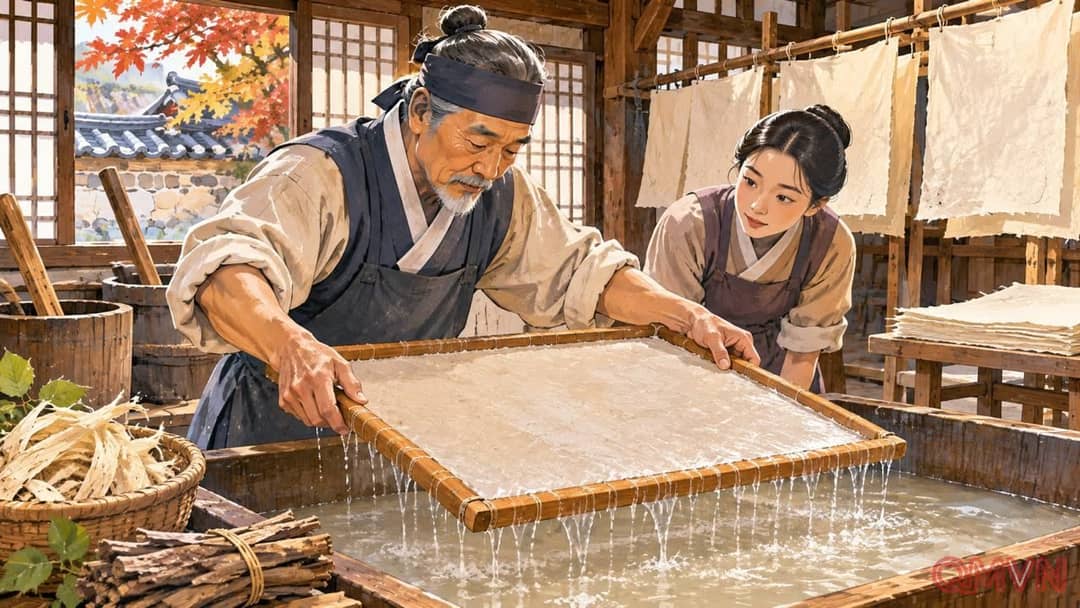
South Korea’s permanent delegation to UNESCO describes an elaborate sequence of harvesting, steaming, peeling and working mulberry bark, followed by pounding fibres, forming sheets and drying them. Craftspeople make decisions about water, fibre quality, weather and the movement of the screen used to lift pulp.