MAIN STORY
A city counting water by the container
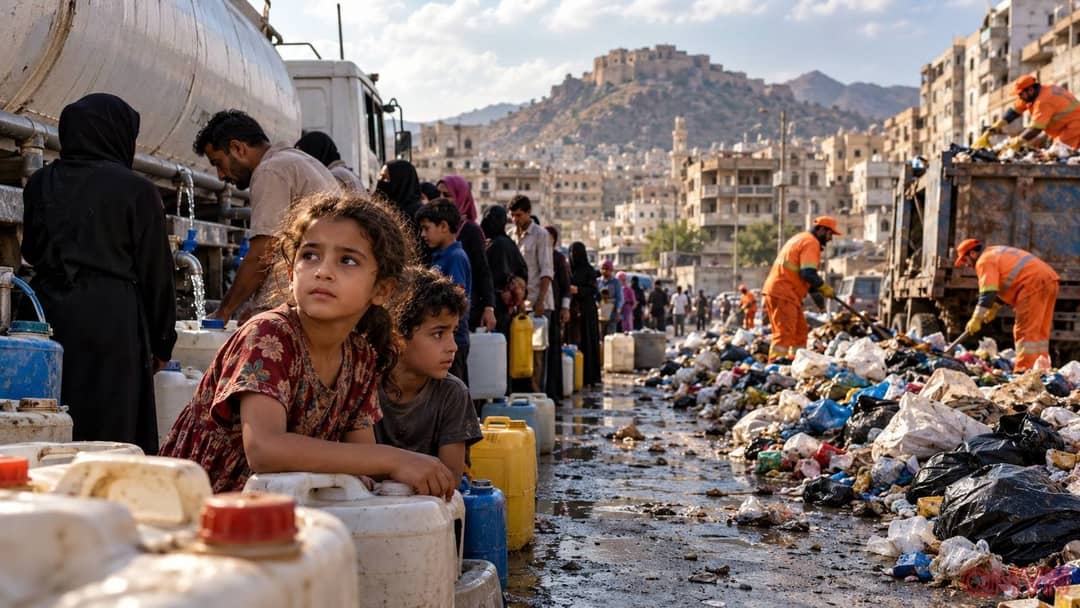
Families have been waiting since morning beside tanker trucks to fill jerrycans. Many neighbourhoods in Taiz depend on transported water rather than a reliable municipal network. Yet the roads that make those deliveries possible have been affected by fighting between the Saudi-backed government and the Iran-aligned Houthi movement.
UNICEF says threatened water networks serve about three million people, including at least 1.6 million children. Save the Children estimates that water production in Taiz has dropped by approximately 50%. Diesel shortages endanger pumping stations, water transport and hospital equipment at the same time.
UNICEF estimates that the price of a tanker load has climbed from roughly 23,000 Yemeni rials before the latest escalation to 70,000. For families deciding how to divide scant income between food, medicine and water, that increase is not an ordinary price shock. It changes the boundaries of everyday survival.
Rubbish turns into a public health threat
Household refuse has gathered along busy roads after collection crews lost access to the main disposal site because of fighting. Some workers have resorted to burning waste in the streets, bringing smoke and additional environmental hazards.