Neither for nor against
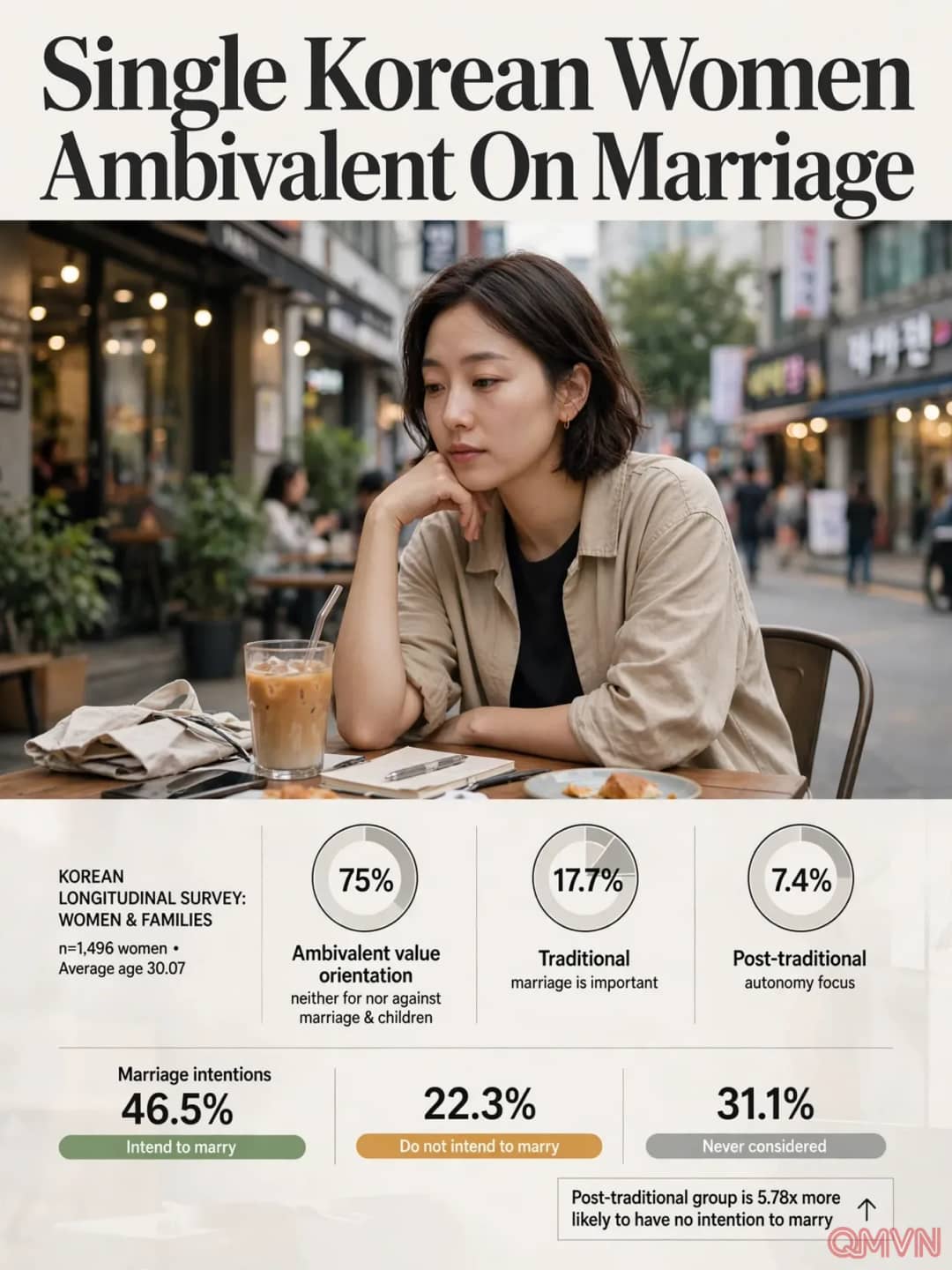
The study used data from the ninth phase of the 2022 Korean Longitudinal Survey of Women and Families. Respondents answered 14 questions about marriage, children, cohabitation, divorce and personal achievement.
The results paint a more complex picture than the common view that young South Korean women are “turning their backs” on marriage. Most of them are not at either extreme, but in a thoughtful middle ground.
Three value groups
Based on their answers, the study divided respondents into three groups:
- An “ambivalent value orientation” group of 75 per cent, neither strongly supporting nor opposing marriage and having children.
- A “traditional normative acceptance” group of 17.7 per cent, viewing marriage and having children as important life paths.
- A “post-traditional acceptance” group of 7.4 per cent, emphasising personal autonomy and more accepting of non-traditional relationships and family forms.
Notably, the ambivalent group was less accepting of having children outside marriage than of premarital sex or cohabitation, suggesting that marriage remains tightly linked to childbirth in many people's minds.