MAIN STORY
From market threats to expansion plans
The announcement came only days after Trump moderated his position on Bombardier. He had previously threatened to block the Canadian company from selling aircraft in the United States unless it expanded its American industrial presence. That prospect alarmed officials and workers in Wichita, Kansas, where the manufacturer employs about 1,500 people.
Reuters reported that the initial $270 million would support infrastructure and operational growth. The company intends to recruit for 500 US roles and expects expansion projects to generate about 300 additional positions. Those figures should not automatically be interpreted as 800 newly created jobs available immediately: earlier company comments indicated that some openings involve retirement replacements and ordinary staff turnover.
Four states linked by one aerospace network
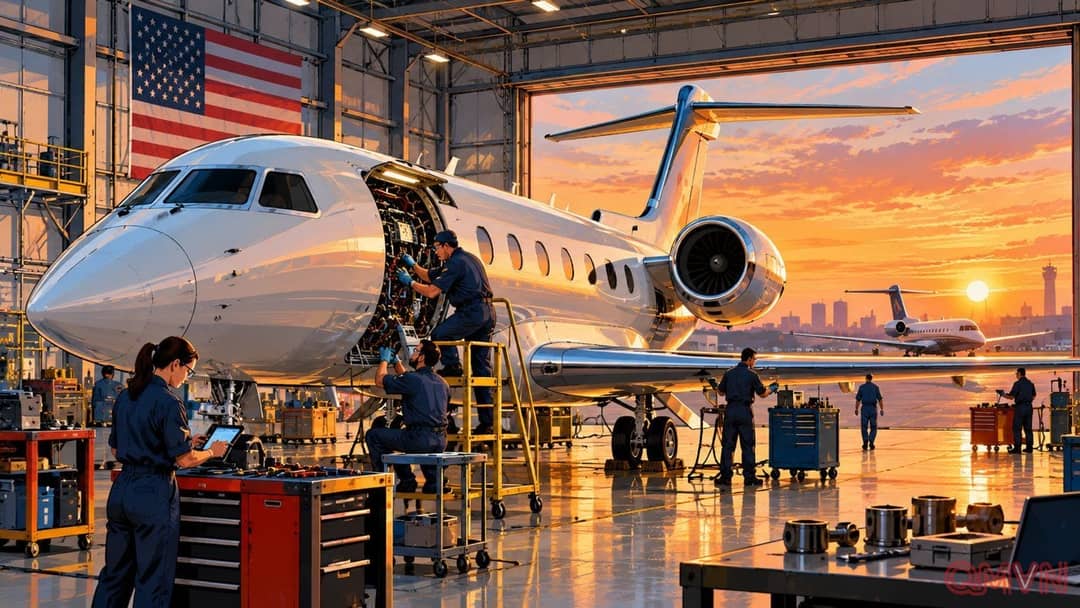
Kansas remains central to Bombardier’s American business. On October 15, the company announced roughly $50 million of investments in Wichita, including its North American Learning Center for technicians, an expanded wheel-and-tire shop and further maintenance capabilities.
These projects underscore how capital spending can build technical expertise as well as physical capacity.
Indiana is preparing for a service facility in Fort Wayne, while Texas already hosts wing-production activities. Connecticut is also among the states identified for hiring and infrastructure growth. Maintenance, training and customer support help aircraft manufacturers sustain long-term relationships after delivery. The pace at which planned jobs materialize will depend on construction, training and market demand.
Reading the competing employment claims
In a Truth Social post, Trump said the agreement would create thousands of American jobs and praised Senator Roger Marshall and Texas Attorney General Ken Paxton. Bombardier, however, specified recruitment for 500 positions plus an estimated 300 additional jobs through expansion. The president’s larger description might include indirect supply-chain effects, but it should not be presented as the company’s verified direct-hiring forecast.
Bombardier already employs about 3,500 people across the United States and depends on a far-reaching American supplier network. It has said annual procurement from US suppliers exceeds $2.5 billion. A restriction aimed at a Montreal-based brand could therefore reverberate through American component manufacturers, repair facilities and engineering businesses.
Political leverage meets commercial realities
Chief executive Eric Martel described constructive discussions with the administration and expressed optimism about future US investment. His statement conveys the company’s outlook, not proof that every regulatory or trade disagreement has disappeared. Aircraft demand, certifications, skills shortages and implementation schedules will influence the eventual results.
The case exposes a policy dilemma. Political pressure can encourage local investment, yet the same country pressing a foreign manufacturer may depend heavily on that company for domestic jobs. Aviation’s intricate certification rules and established supply chains make predictable policy especially valuable. The durable outcome will depend less on celebratory statements than on facilities completed and workers trained.