MAIN ARTICLE
A signal in the rock and a far larger claim
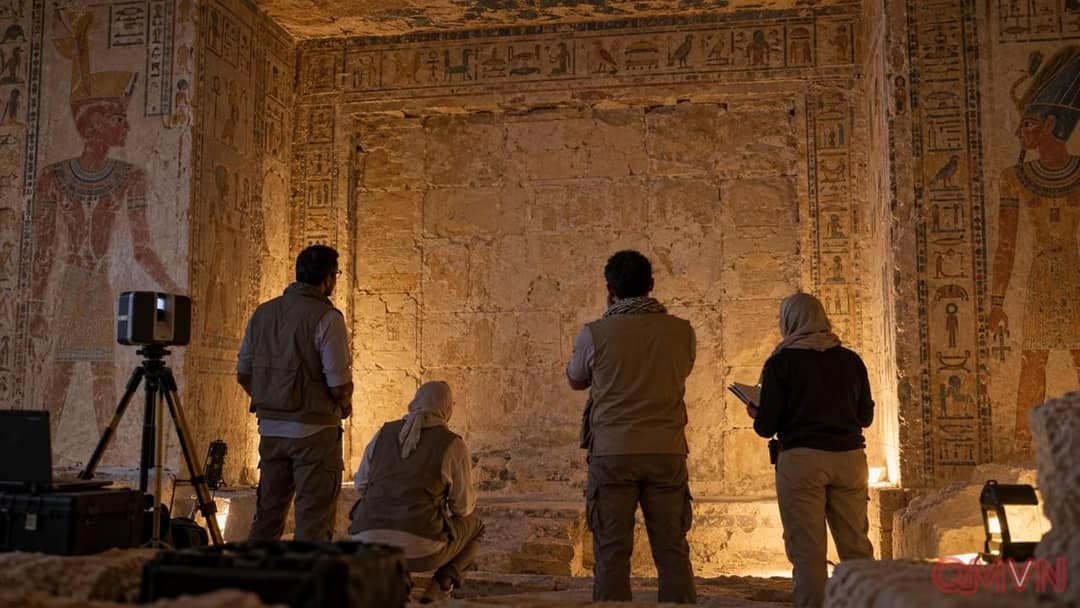
According to The Times, a team led by former Egyptian antiquities minister Mamdouh Eldamaty has reported geophysical results suggesting a structure extending north of Tutankhamun’s tomb, known as KV62. The researchers are applying to drill a small hole from the hillside above and lower a camera if they reach an open space. Their proposed route would avoid cutting through the tomb’s decorated walls. The available report does not describe an approved excavation or images of a newly opened room.
Survey equipment measures differences in the material beneath the surface; it cannot assign a human identity to what it detects. An intriguing reading might reflect ancient architecture, natural geology or rubble filling a void. Even a confirmed corridor would require inscriptions, objects, dating and architectural analysis before anyone could say whose monument it was. That distinction allows curiosity to remain exciting without turning a possibility into a premature announcement.
The woman behind the celebrated portrait
For many visitors, Nefertiti first appears as the painted bust at Berlin’s Neues Museum. The museum records its discovery on December 6, 1912, in the sculptor’s workshop at Tell el-Amarna and its allocation to the German side under the division of finds then in force.