A landmark contract
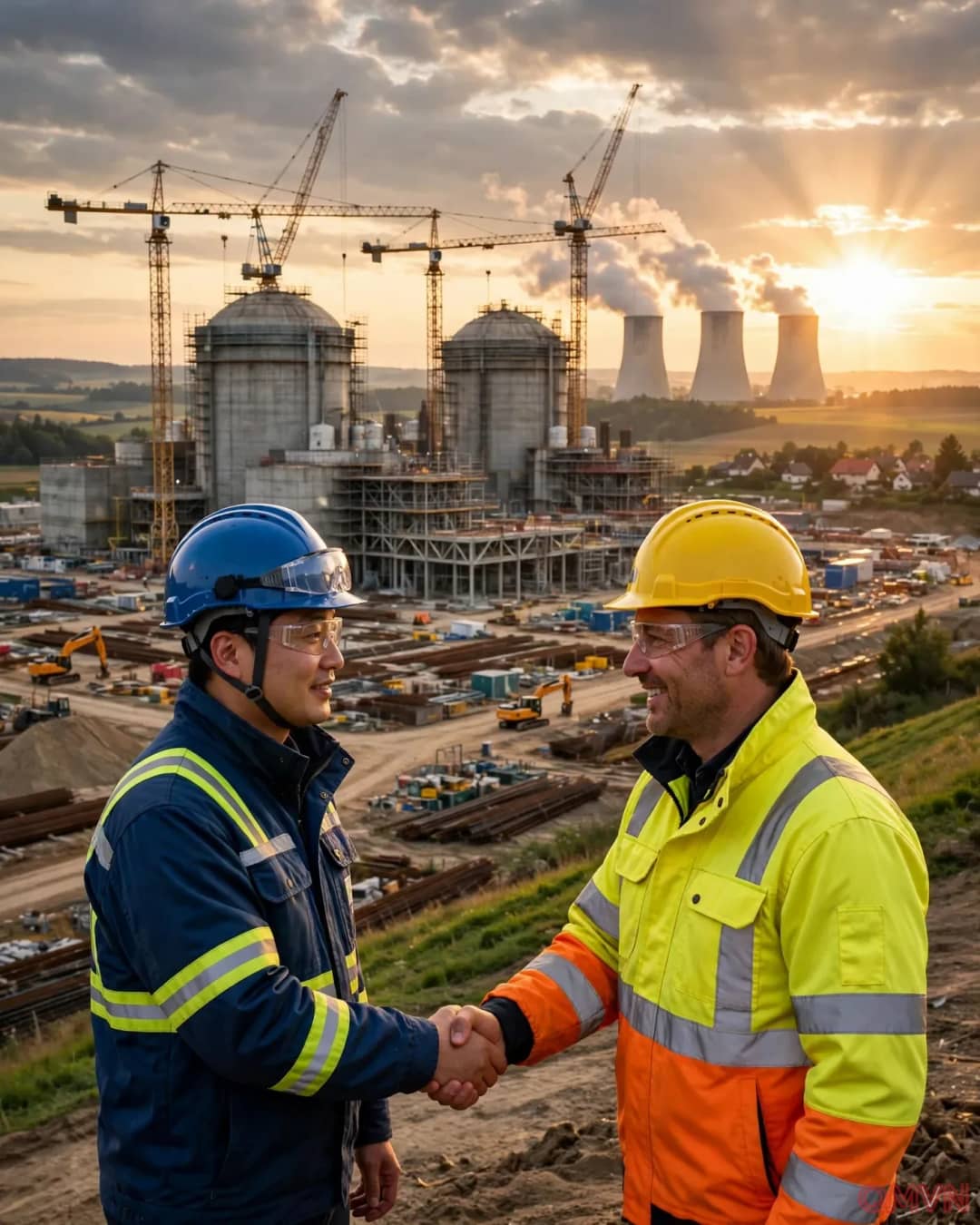
According to The Korea Herald, the signing took place digitally between KHNP and Elektrárna Dukovany II (EDU II), a subsidiary of state utility ČEZ in charge of operating the Dukovany nuclear plants. Prime Minister Petr Fiala announced the news at a nationally televised press conference.
“We have removed all doubts and legal obstacles that prevented the nuclear power plant project from being launched.” — Petr Fiala
The Dukovany plant is located about 170 kilometres southeast of Prague. The Czech government had pre-approved the contract between ČEZ and KHNP, allowing the deal to proceed immediately once the injunction was lifted.
The project in detail
KHNP will serve as the lead engineering, procurement and construction (EPC) contractor, overseeing the full project with a consortium of leading Korean firms. According to The Korea Herald:
- Two APR-1000 reactors, Dukovany Units 5 and 6, are due for completion in 2036 and 2037.
- Kepco E&C will handle design and engineering.
- Doosan Enerbility will be responsible for equipment supply and construction.
- Daewoo E&C will lead structural construction.
- Kepco NF will supply nuclear fuel, and Kepco KPS will handle commissioning and maintenance.
- KHNP will set up an onsite project office near Dukovany for early work such as permitting and site surveys.
KHNP also said it would hold briefing sessions on qualification requirements and technical standards for Korean suppliers interested in the project. The Korean and Czech sides have also set a goal for Czech companies to take a significant share of the project's supply chain.
From importer to exporter
According to KHNP, the deal is a symbolic milestone for South Korea, which once imported European nuclear technology but now exports its own. In 1982, Korea adopted France's Framatome reactor for its Hanul 1 and 2 units.
“The deal is a testament to the technological excellence and global reliability of Korea's nuclear industry.” — Whang Joo-ho
KHNP CEO Whang Joo-ho pledged to carry out the project to the highest safety and quality standards, strengthening Korea's competitiveness in the global nuclear energy market.
Overcoming legal hurdles
KHNP was named preferred bidder in July 2024, beating France's EDF and U.S.-based Westinghouse. The signing was originally set for May 7, 2025, but was postponed when a Czech court accepted a last-minute injunction filed by EDF, which claimed irregularities in the bidding process.
KHNP and EDU II appealed, and the Supreme Administrative Court found the injunction's claims unsubstantiated. Earlier, in January 2025, KHNP had also settled an intellectual property dispute with Westinghouse, removing a major obstacle to the project.
The Czech Republic's energy future
The Dukovany project is the Czech Republic's largest infrastructure initiative for long-term energy security and decarbonization. When operational in the late 2030s, the two new reactors will join four existing units built in the 1980s. The deal also gives KHNP the opportunity to negotiate two more reactors at the Temelín plant.
“Nuclear will likely supply 50% to 60% of our electricity around 2050.” — Petr Závodský
Petr Závodský, head of the Dukovany expansion project, made the remark in an interview with the Associated Press. However, environmental groups argue the project is too expensive and that funds would be better spent on energy efficiency, while neighbouring Austria, which abandoned nuclear power, has long opposed Czech nuclear projects.