MAIN ARTICLE
An eight-year exercise in slowing down
BepiColombo launched aboard an Ariane 5 rocket from French Guiana in October 2018. Flying closer to the Sun sounds straightforward, but a spacecraft heading inward acquires orbital speed under solar gravity. Without shedding enough energy, it would race past Mercury rather than remain with it. This counterintuitive problem makes the innermost planet one of the Solar System’s hardest destinations.
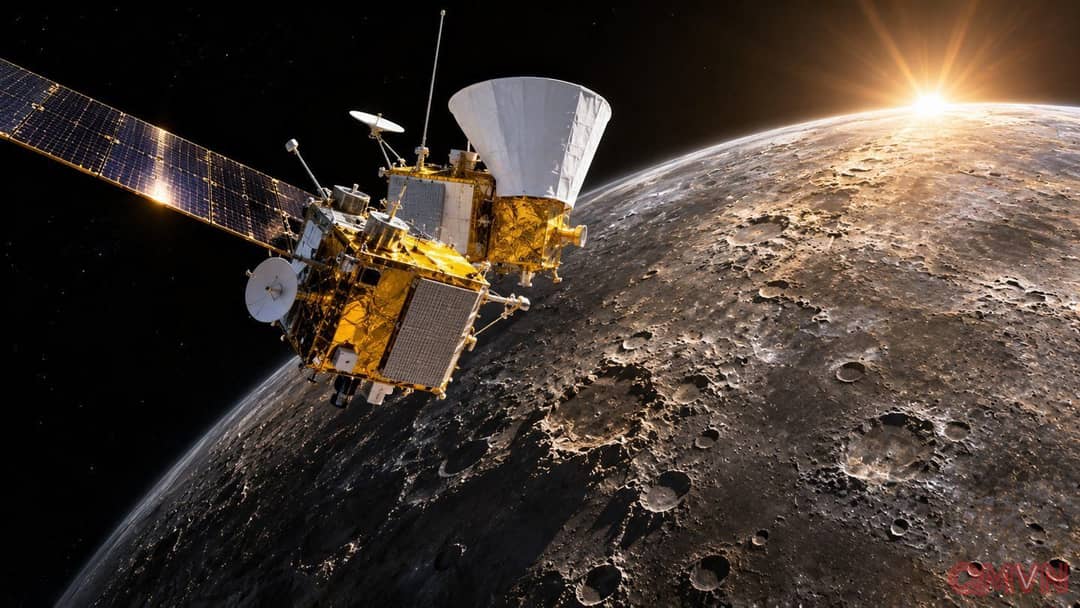
Engineers combined solar-electric propulsion with nine planetary flybys, borrowing gravity to reshape the trajectory. The final approach requires precisely timed engine burns that allow Mercury to capture the spacecraft. ESA says the planned 21 November insertion begins a sequence of orbital adjustments continuing into early 2027; it does not mean every scientific instrument can immediately begin its full observing program.
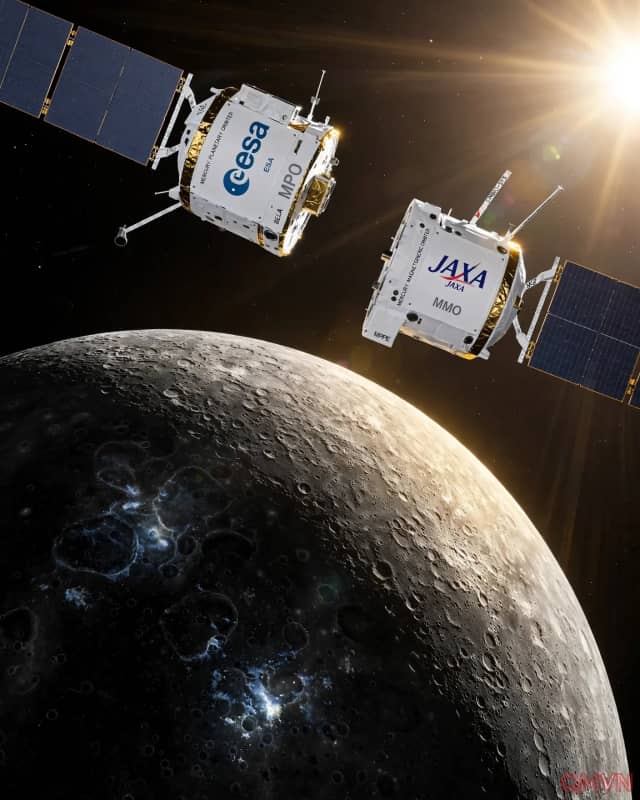
The engineering sequence has been delicate from the beginning. The electric propulsion transfer module was discarded before arrival, while the two science spacecraft remain connected during initial capture. Small errors in thrust, attitude or timing would matter enormously in an environment exposed to intense solar radiation and extreme thermal stresses.