MAIN CONTENT
A meeting that could reshape the arithmetic
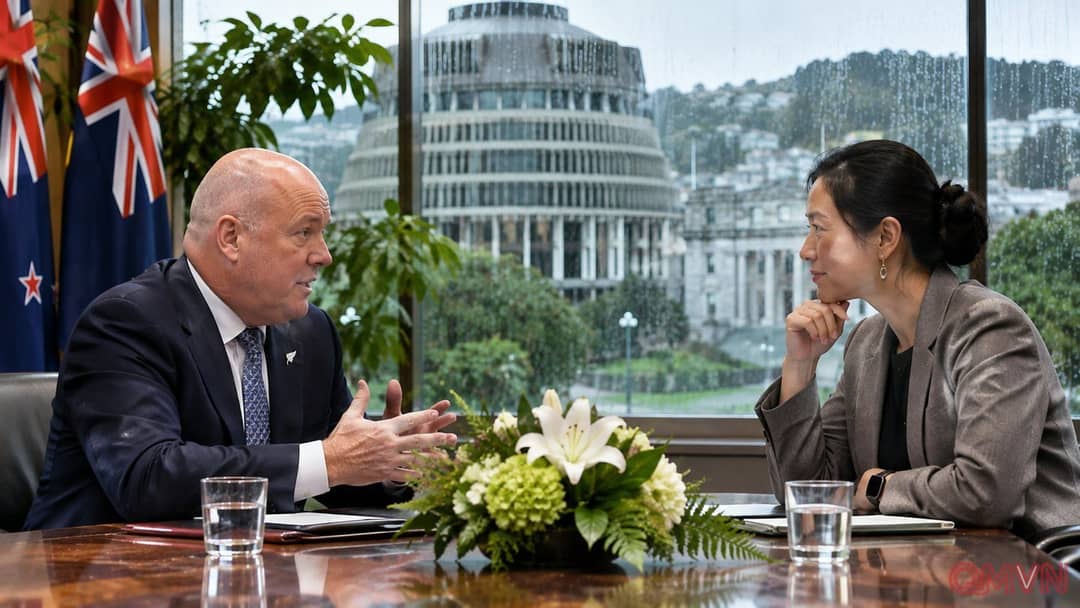
Luxon received Wong in his office on the evening of November 9, according to Reuters and New Zealand news outlets. He described a positive, constructive discussion that allowed the two leaders to begin building a working relationship. The warmer language was significant: during the election campaign, he had ruled out a coalition with Opportunity. The altered tone reflects not necessarily an ideological conversion but a new political calculation after the preliminary count.
Opportunity is not speaking exclusively to one side. As 1News reported, Wong also met Labour leader Chris Hipkins on November 10. She indicated that her party would engage National first but could turn to Labour if talks stalled. These early conversations should not be confused with a signed agreement. They are exploratory contacts taking place while the final parliamentary balance remains uncertain.
The figures are preliminary, not a mandate set in stone
The Electoral Commission’s preliminary allocation gives National 42 seats, ACT 13 and New Zealand First 12. Their combined 67 crosses the threshold for a majority in the 131-seat Parliament by only one seat. Labour has 36 seats, the Greens 16 and Te Pāti Māori five. Opportunity secured approximately 5.96% of the party vote, enough to project seven representatives. The numbers explain why a seemingly minor shift in the final count could acquire national significance.