MAIN ARTICLE
A ruined home and a race against the debris
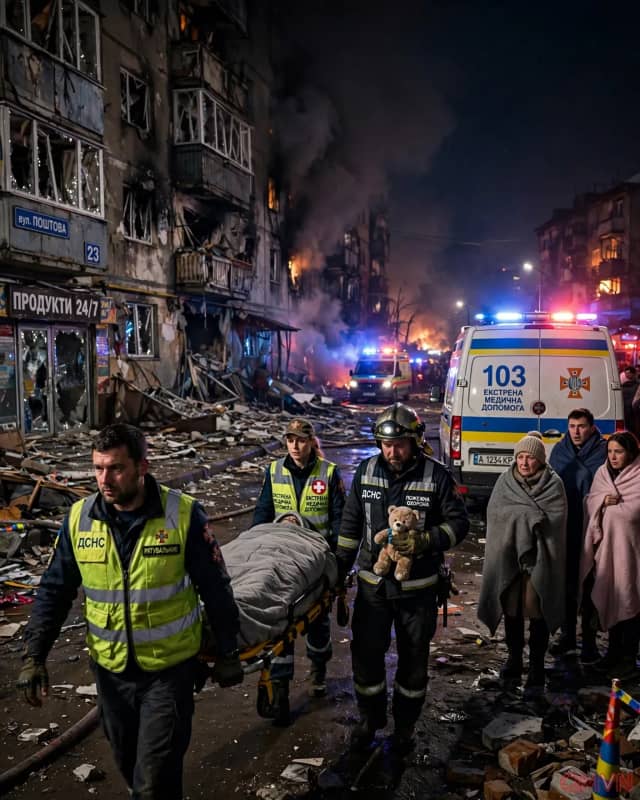
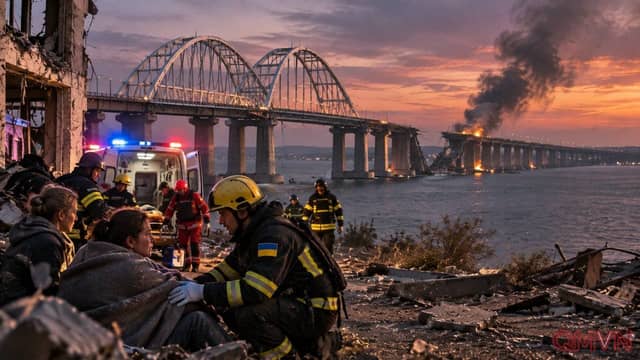
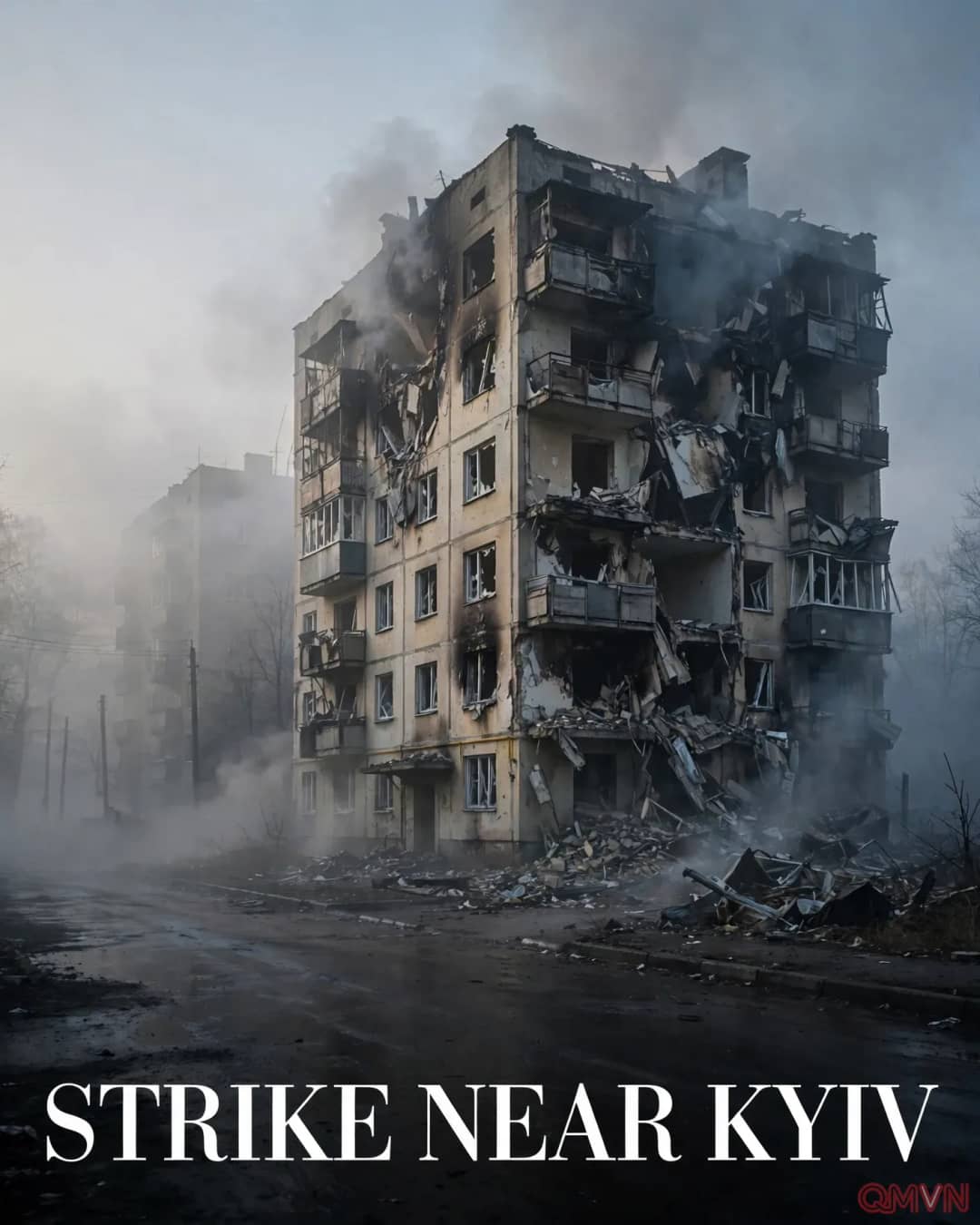
The attack hit Dymer during the early hours of Sunday, collapsing part of a five-storey residential block and setting off a difficult rescue operation. Firefighters battled flames while crews removed broken concrete and searched pockets of the building that might still shelter survivors. The Associated Press reported at least two deaths and four injuries, figures that remained subject to change as the rescue continued.
For people gathered outside, the numbers stood for families whose fates were unresolved. Resident Mykola Osadnyi described being thrown awake by the explosion and rushing toward the building, where a relative cried for help. Olena Kharkavliuk said she had waited since the early morning because her daughter’s classmate and the classmate’s mother were inside. Their testimony makes the uncertainty behind the casualty figures painfully clear.
Officials said rescuers had evacuated nine people, including a child, and that another child had been hospitalized. Early statements referred to 14 missing people, whereas a later State Emergency Service account put the number potentially trapped at 11. Such figures describe different reporting moments, not necessarily a change in the final toll; only verified searches and identification can resolve the discrepancy.
Drones make distance a fragile protection
Ukraine’s air force said it had intercepted or suppressed 161 of 186 Russian drones launched overnight, including 56 jet-powered models. Those national figures do not establish which weapon struck every individual location.
They do show the volume of aerial threats confronting Ukrainian air defences even when most incoming drones are stopped.
Russia’s defence ministry separately claimed to have downed or suppressed 170 Ukrainian drones across Russian territory, occupied Crimea and adjacent seas. That figure was presented by Moscow and could not be independently reconciled with Ukraine’s figures. Wartime reports from opposing militaries frequently count different geographic areas, time windows and kinds of interception.
In Russian-occupied Luhansk, Kremlin-installed official Leonid Pasechnik reported that an attack killed a cyclist in Severodonetsk and injured three others. That claim, too, requires attribution rather than treatment as independently established fact. Civilian harm on either side of the front line reinforces the urgency of distinguishing verified outcomes from the competing claims of combatants.
Kaliningrad alarm raises questions beyond the front
Hours after an attack on a Russian cargo ship in the Gulf of Finland, an air alert sounded in Kaliningrad, the Russian territory between Poland and Lithuania. Regional governor Alexei Bezprozvannykh said a suspicious object approaching from Lithuania’s direction had prompted an alert in the Nemansky district. Russian officials reported no injuries or damage in the exclave as of Sunday morning.
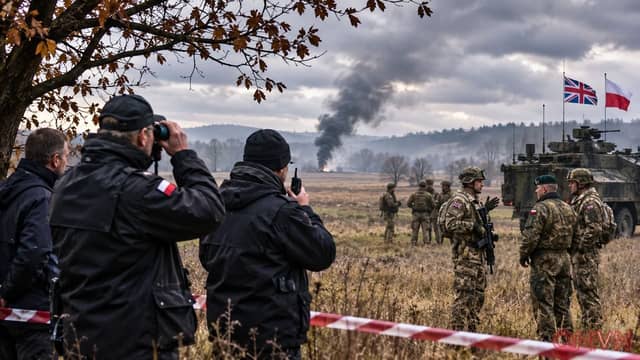
Photographs and videos circulated online purportedly showing drone activity near Baltiysk, home to significant elements of Russia’s Baltic Fleet. The Associated Press said it could not verify the imagery. Regional authorities rejected at least one widely circulated image as unrelated to Kaliningrad. What people saw online therefore cannot be treated as confirmation that a particular military site was attacked.
Lithuanian Foreign Minister Kęstutis Budrys explicitly rejected suggestions of Lithuanian participation, saying the country had not authorized its airspace to be used for attacks on Russia. Lithuanian authorities also reported detecting no drones crossing their airspace that night. The distinction matters because an unverified claim about a NATO member can intensify tensions far beyond the site of an incident.
A burning ship places Finland at the centre of the response
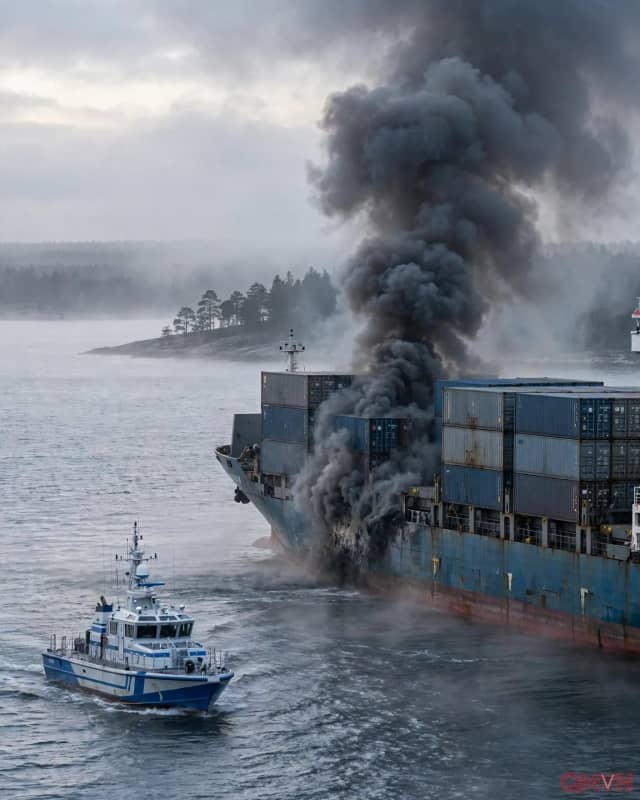
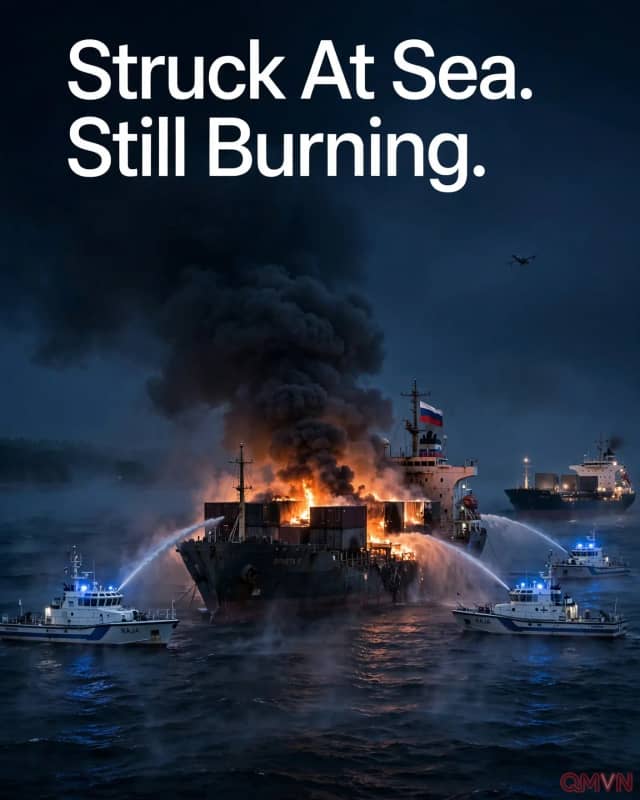
The Russian-flagged cargo ship Sparta II was struck by drones while travelling toward Kaliningrad and subsequently drifted into Finnish territorial waters. Finnish authorities led emergency efforts to contain the fire and manage maritime safety. The crew had been transferred to a Russian rescue vessel, according to information cited by Finnish broadcaster Yle.
Finland said the cargo was not confirmed. The ship is associated with Russian company Oboronlogistika, which has links to defence logistics, but such links alone do not establish what was being transported on that voyage. Finnish and Russian officials suggested Ukrainian drones were responsible; Ukraine had not publicly confirmed involvement in the accounts available on Sunday morning.
The juxtaposition of a collapsing Ukrainian home and a burning vessel near Finland underlines different forms of risk: immediate danger to residents, hazards for crews and possible maritime pollution. Emergency authorities must respond to each without assuming disputed claims about responsibility or cargo are settled. Protecting lives and preventing a wider incident remain urgent even when the politics are unresolved.