A Fifteen-Year Genomic Odyssey Through Forensic History
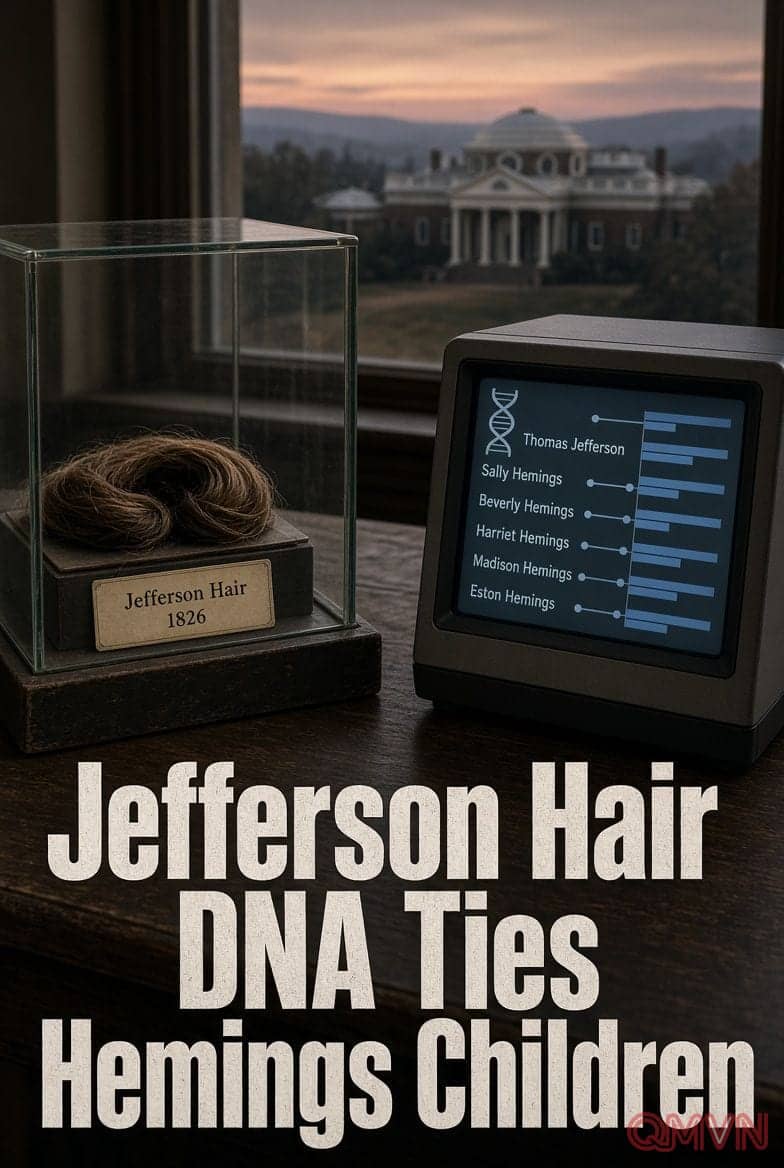
In Washington, an ambitious interdisciplinary research effort directed by longtime Smithsonian scholar Richard Kurin has culminated in a watershed forensic breakthrough. Beginning in 2011 when conservators examined hairs found in Jefferson's personal compiled Bible, the inquiry brought together molecular geneticists, genealogists, and historians across multiple institutional administrations. Although those initial biblical strands proved genetically unrelated, the project secured a decisive breakthrough upon obtaining authentic hair clipped from Thomas Jefferson's deathbed at Monticello in 1826.
Partnering with renowned paleogenomics pioneers Beth Shapiro and Ed Green at the University of California, Santa Cruz, the research team applied cutting-edge methodologies to extract usable nuclear DNA from rootless hair shafts, adapting forensic protocols previously employed in complex criminal investigations. Comparing Jefferson's reconstructed genome against biological samples collected from nine fifth-generation descendants of Sally Hemings through sons Madison and Eston revealed genetic sharing between 0.5 and 5 percent, flawlessly matching expected statistical baselines for fifth-generation lineage.
"The museum must be built on a foundation of truth, whatever that truth may be." Secretary Lonnie G. Bunch III