MAIN CONTENT
Boats arriving in quick succession
On November 15, AP reported that nearly 2,200 people had reached the Canary Islands over two days. It described a rescue operation involving 1,324 people aboard 14 dinghies, most destined for El Hierro, an island home to about 12,000 people. Such concentrated arrivals require immediate coordination among maritime rescuers, emergency medical teams, local authorities and volunteers.
Reuters offered a separate account on November 15: 1,488 people rescued from 14 vessels on Saturday, with 12 boats reaching El Hierro and one each arriving at Gran Canaria and Tenerife. Reuters called the count the highest single-day total since 2020, above the 1,461 rescued on November 7 that year. Because the reports present different daily rescue figures, these numbers should not be represented as identical counts or casually combined.
A small island faces a vast responsibility
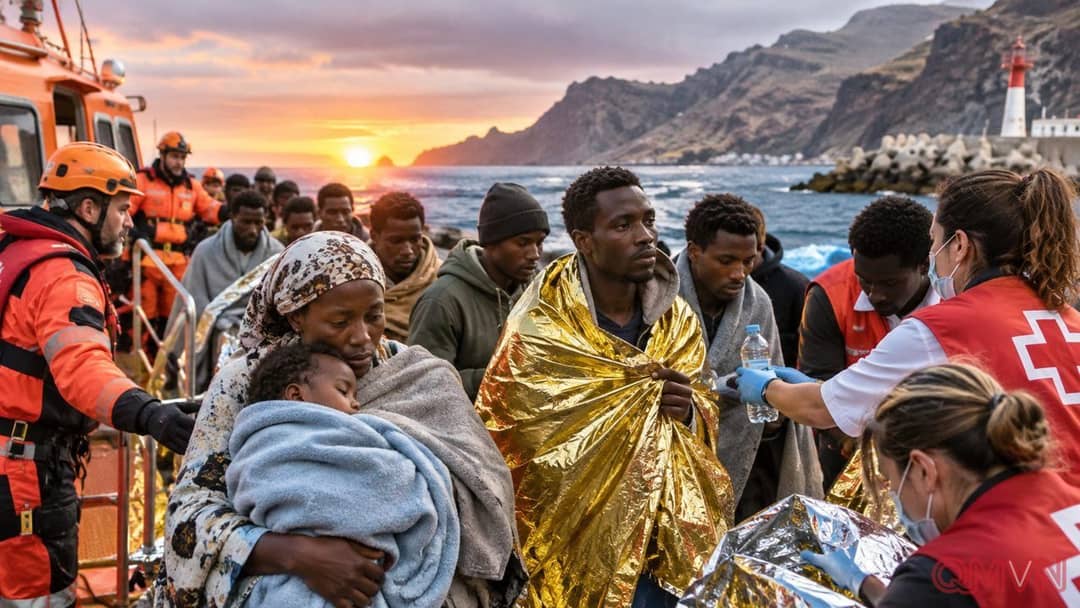
At the harbor, the first necessities are simple: drinking water, dry clothes, blankets and health checks. Red Cross emergency coordinator Dácil León described the distribution of essentials and registration of arrivals to public broadcaster RTVE, according to AP.
Although the experiences of those crossing the sea vary widely, safety and dignity should not depend on the boat in which someone arrives.
El Hierro illustrates a mismatch between the population of a small island community and the demands of a regional migration route. A sudden wave can strain reception facilities, translation services and the transfer system linking smaller islands with larger ones or mainland Spain. Nor does a shared means of arrival imply a shared legal status: individual circumstances, including the needs of children and other vulnerable people, require separate assessment.
A longer crossing can be a deadlier one
The archipelago lies roughly 105 kilometers from the nearest African coast, but that short map distance rarely tells the full story. Some boats depart much farther south, particularly from Mauritania and other parts of West Africa, and follow extended routes to avoid patrols. Passengers may spend days or weeks at sea exposed to strong currents, limited supplies, overcrowding and rapidly changing weather.
The International Organization for Migration (IOM) recorded 17,788 irregular arrivals by this route in 2025, a 62% fall from 46,843 in 2024. Yet it also registered 54 shipwrecks and 1,214 deaths or disappearances during 2025. In the first half of 2026, its reporting counted 3,708 arrivals and 168 people dead or missing. A decline in arrivals therefore cannot, by itself, be taken as evidence of a safer route.
Border decisions and the right to protection
Spain had declared a migration emergency in the Canary Islands earlier that week, AP reported, with a snap general election roughly two weeks away. Migration is therefore both an urgent public-service challenge and a political debate about border management, reception capacity and how different levels of government should share responsibility.
UNHCR has warned that reductions in sea arrivals can reflect weather, conditions in origin countries and cross-border enforcement cooperation, while also pushing people toward riskier routes. A lasting response must integrate sea rescue, individual assessment of asylum and protection claims, and cooperation with communities and governments in departure countries. No single arrival count can capture whether a migration policy is both effective and humane.