Carrying a nation’s name
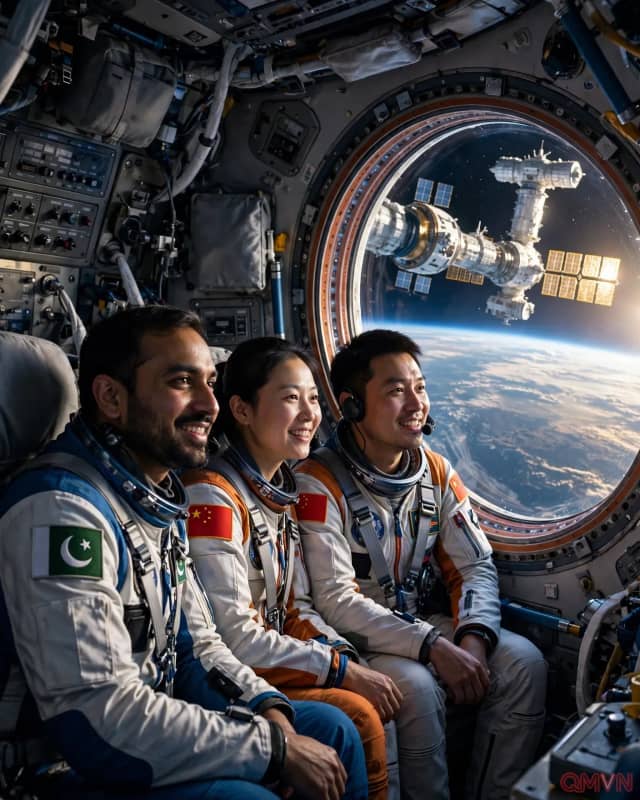
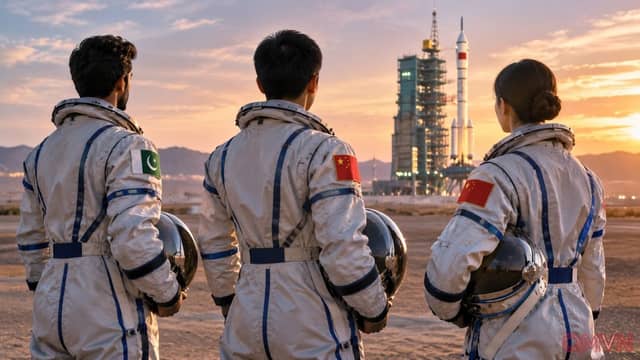
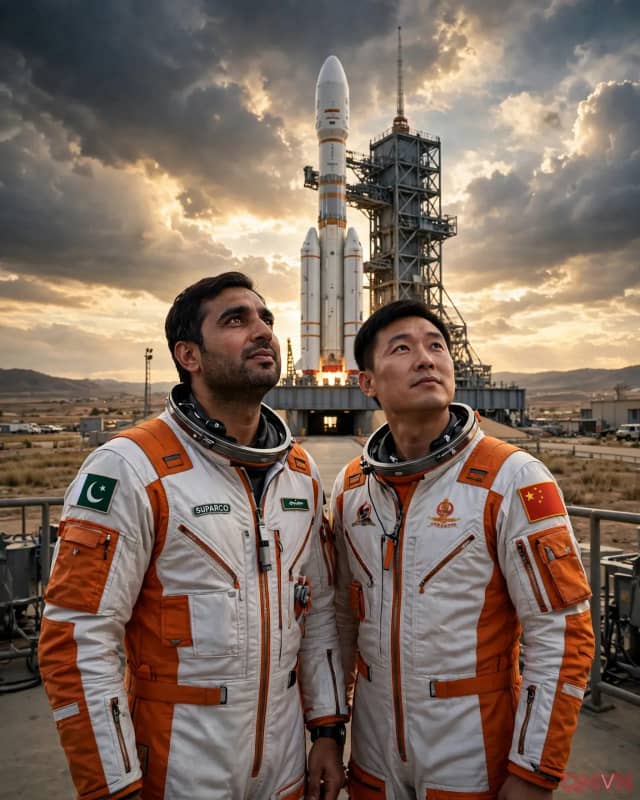
Ali will serve as a payload specialist and stay at the station for 5 to 10 days, far shorter than the usual six-month rotation for Chinese astronauts. He is accompanied by commander Tang Hongbo and flight engineer Wu Yi. Before the flight, he told reporters that the journey was not his alone.
*“I’m not flying for myself. I carry the name of Pakistan on my shoulder.” — Zeeshan Ali*
While in orbit, Ali will help conduct experiments, including research into self-healing carbon fiber composites that can automatically repair small cracks in spacecraft.
The pride of 240 million people
Pakistani Prime Minister Shehbaz Sharif hailed the flight as proof of the friendship between the two countries and thanked China for making Pakistan part of the historic mission.
*“This is not just one astronaut’s journey, but the journey of 240 million Pakistanis. It is the journey of our younger generation, our scientists and our dreams.” — Shehbaz Sharif*
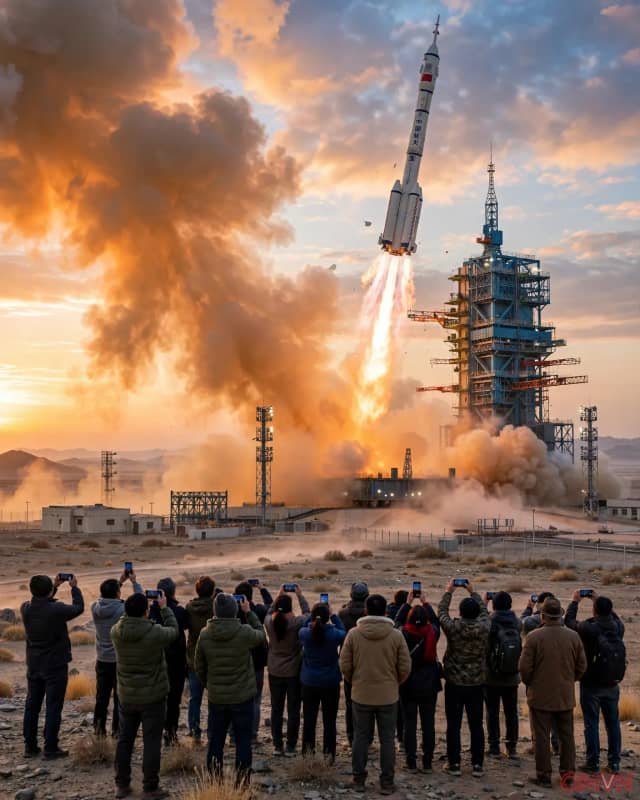
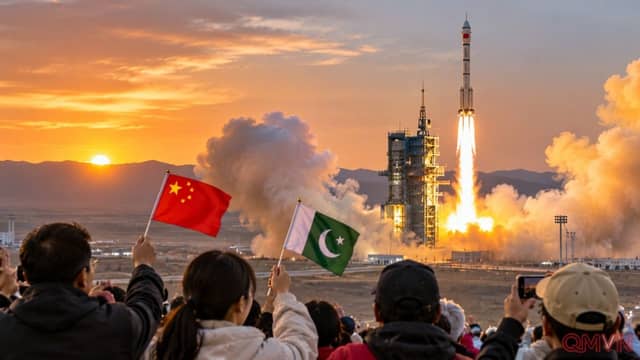
Speaking at the launch site, Pakistan’s development minister Ahsan Iqbal said he hoped the flight would mark the start of further cooperation, potentially including a joint lunar mission.
*“This shows the way forward how developing countries can cooperate to have capability in areas which are very critical for future economic development.” — Ahsan Iqbal*
A year in orbit and lunar ambitions
This crew handover is also unusual. Shenzhou-23 commander Zhu Yangzhu will remain aboard for a year to support research into how the human body copes in space, and will set the record for the longest single stay in orbit by a Chinese astronaut. Notable points on Beijing’s roadmap include:
- The goal of putting humans on the moon by 2030 remains unchanged, despite the delay of the Chang’e-7 mission due to bad weather linked to a tropical storm.
- China plans to build a research base on the moon with Russia by 2035.
- A Pakistani-built rover is set to fly on a Chinese lunar mission around 2028.
The United States, meanwhile, aims to return humans to the moon in 2028. Washington has warned that Beijing could seek to dominate access to resource-rich areas of the moon, an allegation China rejects, saying it advocates the peaceful use of outer space.