MAIN CONTENT
Taking an entire marsh into the laboratory
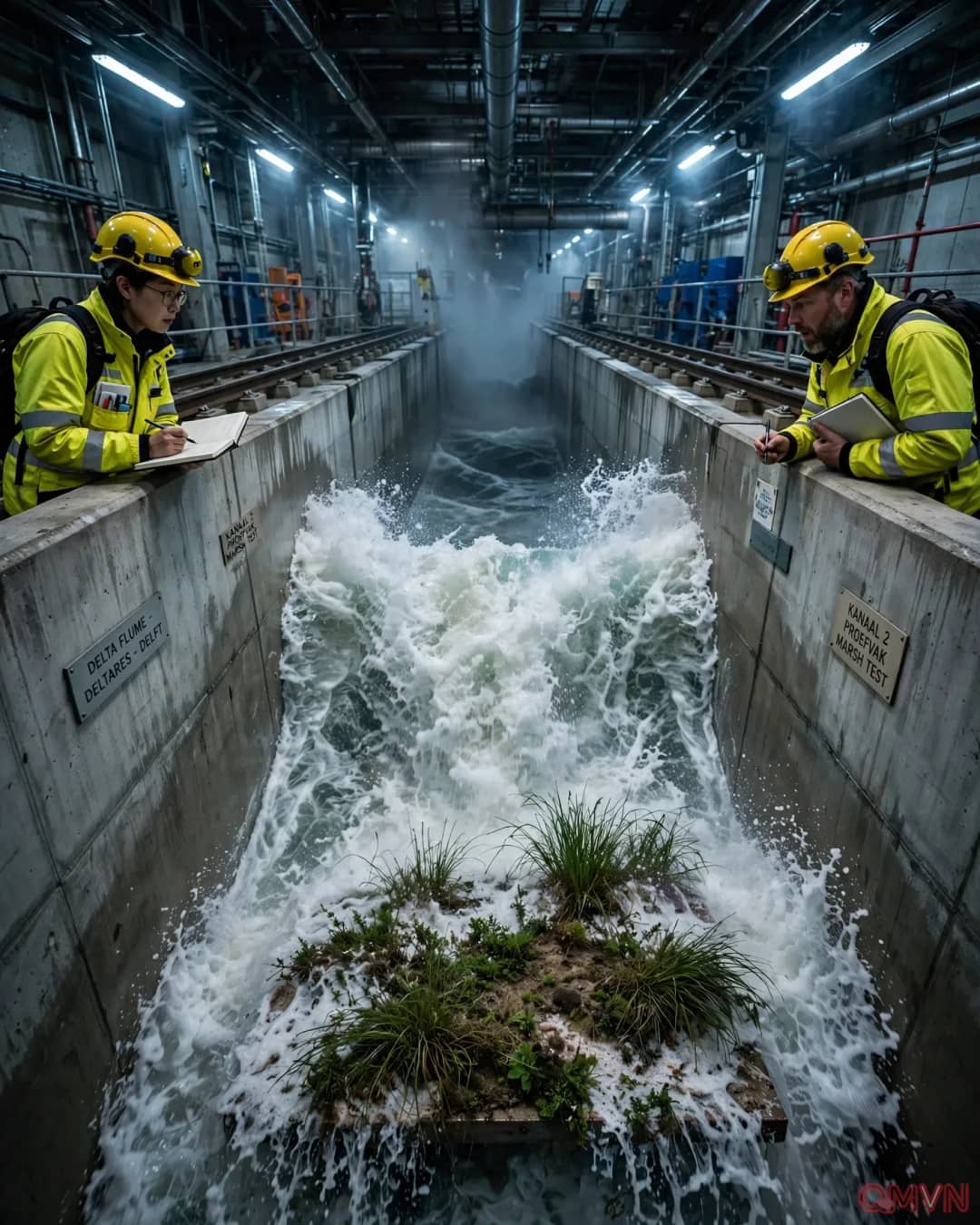
To measure processes that are difficult and dangerous to isolate during real storms, researchers moved about 306 square metres of intact salt marsh from the Peazemerlannen reserve on the Wadden Sea coast into the Delta Flume near Delft. They preserved the sediment, roots and living plants instead of building an artificial imitation. That mattered because erosion resistance depends not just on visible stems but on the binding action of roots, cohesive soil and the living structure of the marsh platform.
Operated by Deltares, the facility is roughly 300 metres long, five metres wide and 9.5 metres deep. Its machinery can generate exceptionally high waves, but this particular experiment exposed marsh vegetation to significant wave heights of up to about two metres. That distinction between the flume’s maximum capacity and the actual test is essential. Sensors tracked changes in wave height across the marsh and monitored damage to vegetation and sediment.
The hidden strength beneath the stems
After 21 hours, average surface erosion was only about seven millimetres. Roughly two-thirds of the above-ground vegetation endured, and the below-ground root structure remained largely intact.