MAIN ARTICLE
A spacecraft returns to where it began
The full Starship system, approximately 124 meters tall, lifted off from SpaceX’s Texas facility on November 13. Following stage separation, the upper spacecraft entered orbit at an altitude of roughly 265 kilometers. It sent back views of Earth while continuing a flight far longer than the limited orbital circuits achieved on earlier tests. Fourteen laps later, controllers prepared it for the demanding journey home.
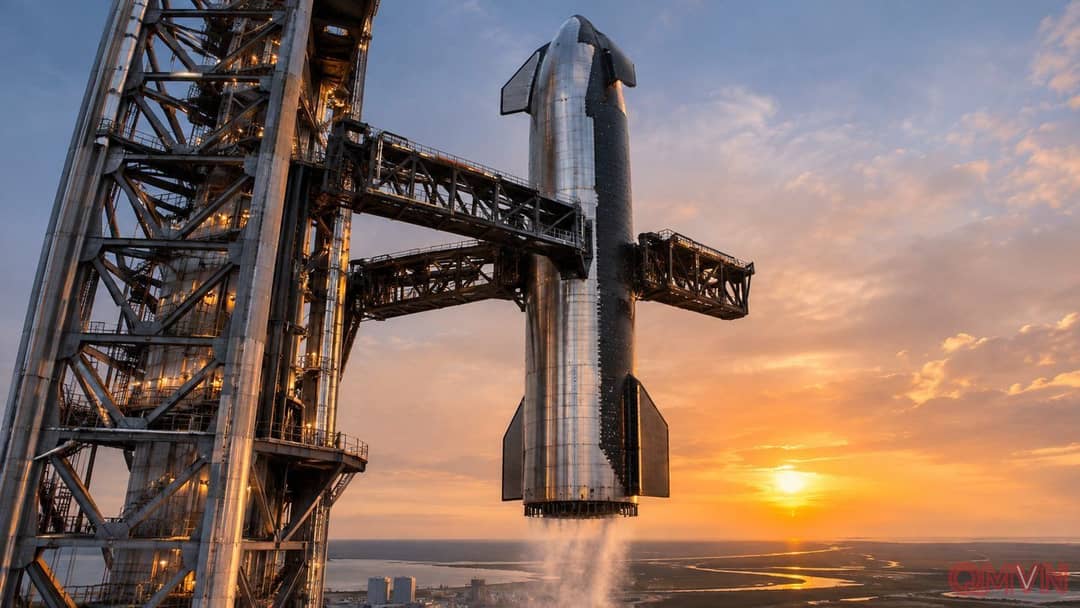
The most delicate phase came after reentry. The spacecraft had to endure extreme heating, manage its orientation, restart its engines and arrive precisely between the launch tower’s mechanical arms. Rather than touching down on conventional legs, the stainless-steel vehicle was suspended high above the ground by the enormous structure that had supported its launch.
SpaceX commentator Dan Huot reacted with astonishment during the live coverage, according to the Associated Press. Elon Musk later climbed the tower to inspect and film the returned vehicle. The images were memorable, but the engineering conclusion is narrower than the celebration: a successful capture proves an important recovery capability, not yet a rapid, affordable turnaround.