MAIN ARTICLE
Reunions after a long detour
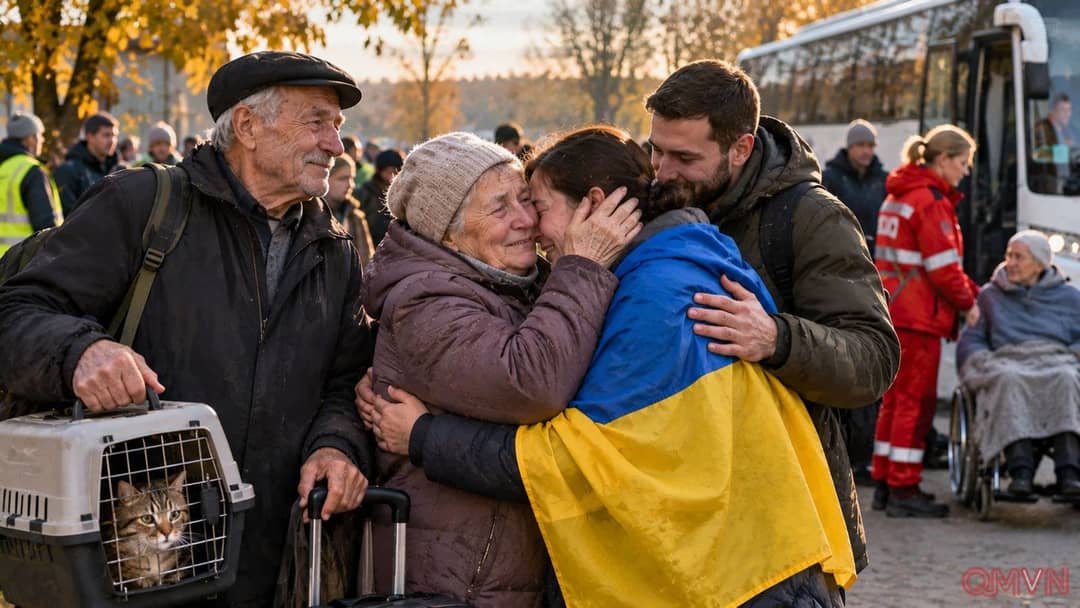
In Chernihiv, relatives ran toward the newly arrived buses, embracing beside suitcases and ambulances. The BBC described Mykhailo Palii being met by daughters Dasha and Anya, who had feared they might never see their father again. He explained that his home had been damaged in attacks, but that he had concealed much of the danger from his family to spare them worry.
Olha and her husband Viacheslav returned with family members and their dog. She described the years in Oleshky as horror; he said they had come back from hell. These are personal accounts, not independently verified descriptions of every military incident, but they convey the exhaustion of a community living under prolonged threat.
A local pause makes the journey possible
Oleshky stands near the Dnipro River and has been under Russian control since the early days of the full-scale invasion in 2022. Mines, attacks and drones made escape hazardous. Under the latest humanitarian arrangement, passageways were prepared, and an evacuation convoy of roughly 25 buses with capacity for about 750 passengers was organized alongside ambulances and medical assistance.
The route did not cross the front line directly. According to Reuters and the Associated Press, evacuees traveled through Crimea and southern Russia, then flew to Belarus and crossed into Ukrainian-controlled territory. Such a circuitous journey reflects the fragility of access and the diplomatic and practical coordination needed even to move civilians to safety.