MAIN STORY
From invisible infrastructure to ballot-box issue
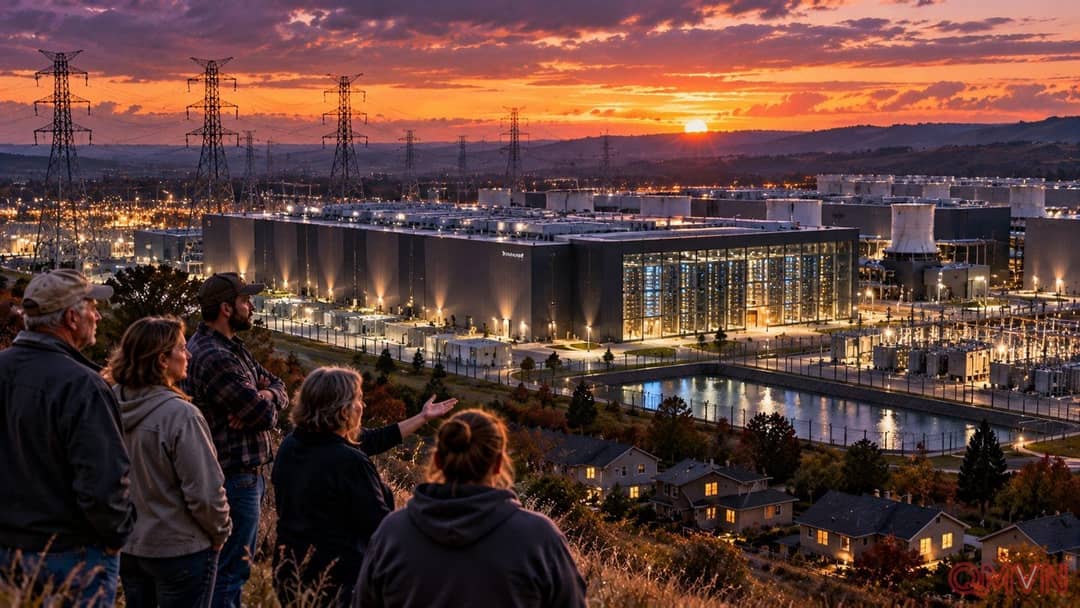
A web search, an email or a request to an AI assistant may look effortless, but each relies on servers housed in physical buildings. Systems designed for training and operating advanced AI can demand far more electricity than traditional computing equipment. As companies expand, so does their need for land, transmission connections and cooling. Decisions that once belonged to local planning boards now attract attention in statewide and national campaigns.
An August 2026 Brookings analysis found that candidates in both major parties were highlighting concerns about energy prices, land use and developer transparency. A Reuters/Ipsos survey cited by Brookings found 77% of respondents worried that data centres would raise their electricity rates, while just 14% were willing to live nearby. Those findings capture public sentiment; they do not prove that every proposed facility would necessarily increase household bills.
Electricity, water and the question of who pays
The International Energy Agency estimated that data centres used about 415 terawatt-hours of electricity worldwide in 2024, roughly 1.5% of global consumption. Its baseline outlook envisages demand nearly doubling by 2030.