MAIN ARTICLE
An absent wall, a powerful memory
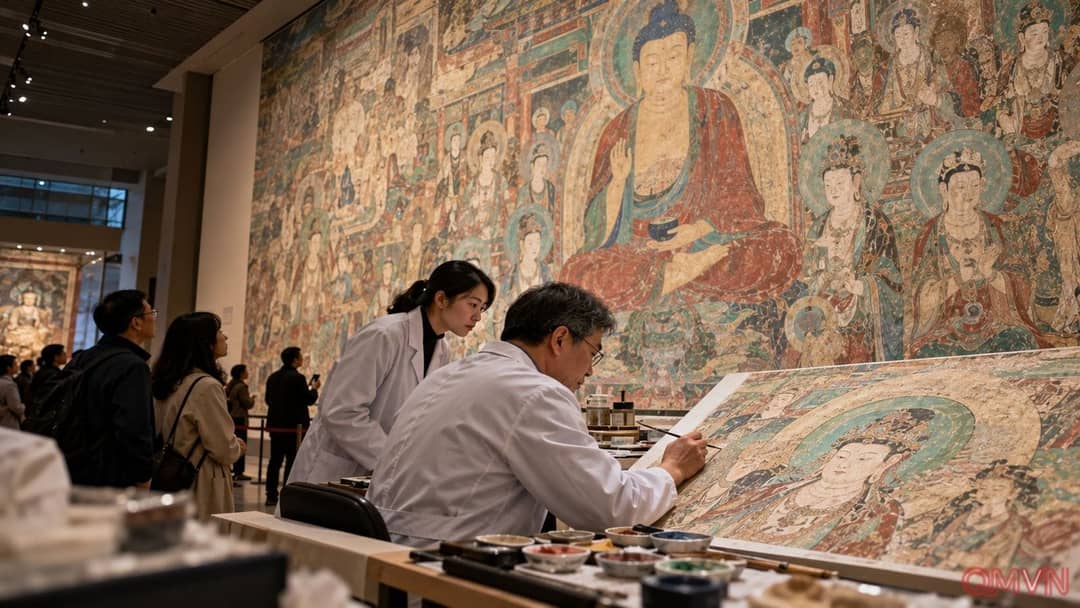
Visitors entering the Chinese galleries of the Metropolitan Museum of Art in New York encounter an extraordinary Yuan-dynasty wall painting: approximately 7.5 meters tall and more than 15 meters wide. The Medicine Buddha presides over a celestial assembly rendered in pigments laid on a clay-and-straw foundation. Its scale is imposing, but so is its history. The painting once occupied a wall of the Guangsheng monastery complex in China’s Shanxi province, where image, architecture and ritual belonged together.
Zhang Jian, a researcher and artist at the Chinese National Academy of Arts, visited the work more than once. According to the South China Morning Post, a later visit to the old temple space in Shanxi crystallized his ambition to produce a life-size, research-based replica. The aim was not to suggest that a copy could replace the original. It was to make the mural’s visual presence available again near its place of origin, while preserving evidence of the journey it had taken.
Copying every scar, not just the colors
The team resisted the easy option of reproducing a large photograph on a smooth surface. Artists experimented with earth obtained near the temple and recreated the old clay-and-straw support. They tested pigments repeatedly against the original under museum lighting, studying how surfaces and color shifted with distance and changing illumination.