MAIN CONTENT
A vertical racecourse in the heart of the city
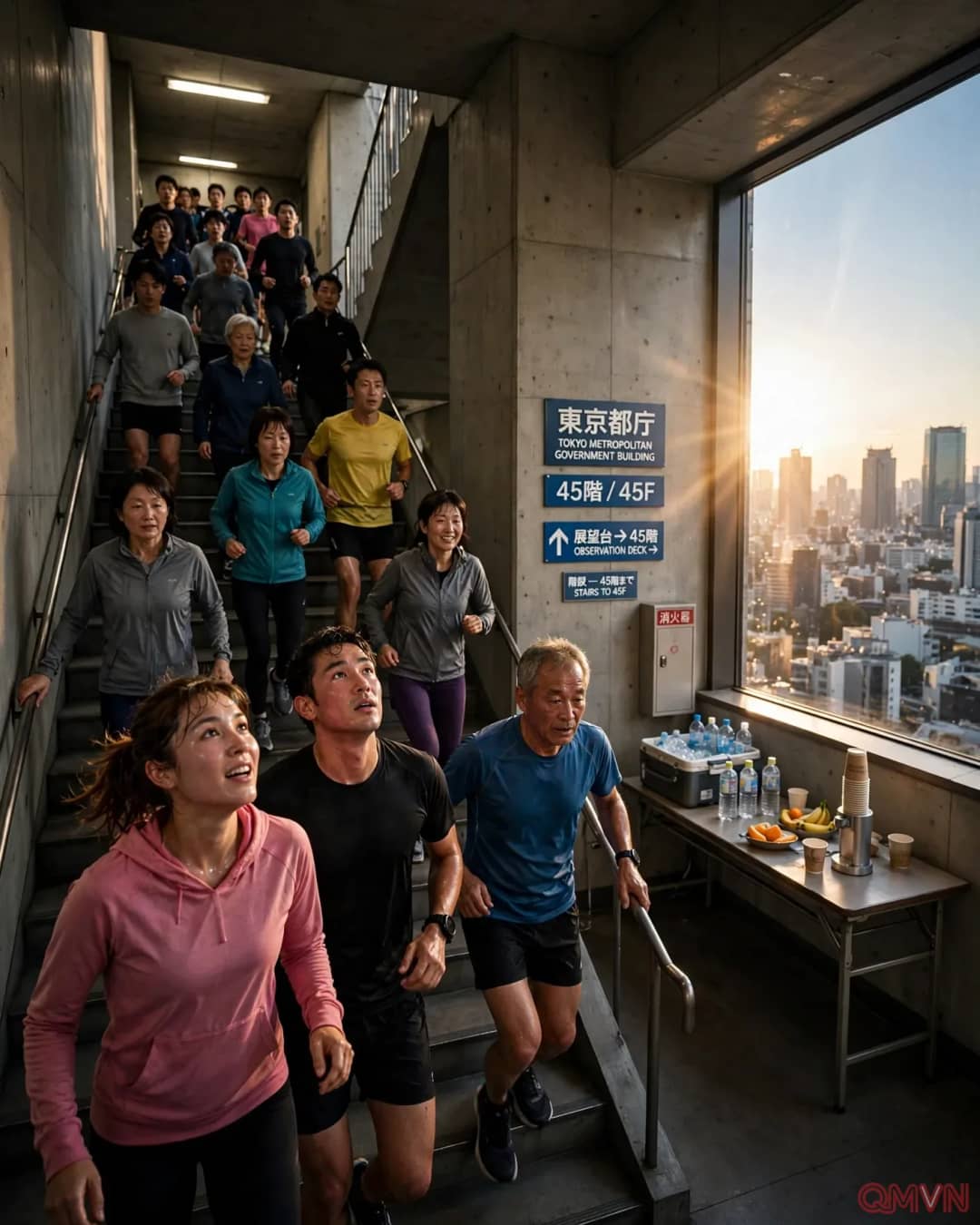
Called TOKYO RUN UP 2026, the competition took place inside Main Building No. 1 of the Tokyo Metropolitan Government complex in Shinjuku. Instead of racing through streets or along a river, entrants climbed an interior staircase from the second floor to the observation deck on the 45th. With 984 steps and 202 metres of elevation gain, each landing marked another stage of the challenge. It was the first event of this kind hosted at the metropolitan headquarters.
The metropolitan government's advance announcement set the programme between 9 a.m. and 3 p.m., with staggered starts. Categories ranged from elementary and junior-high school participants to adult and senior runners. Team and corporate competitions appeared alongside fun-run, elite and expert divisions. That range matters: the day was designed not only for specialists capable of spectacular times, but also for individuals who wanted a difficult, memorable experience on their own terms.
What an unbroken flight of steps demands
Japanese television reports put turnout at roughly 1,600 people. The quickest racers finished in about five minutes, while others reached the observatory visibly exhausted, catching their breath or steadying themselves after the final flight.
An enclosed staircase, repeating landings and little variation in the surroundings make stair racing psychologically different from running outdoors. Managing pace and breathing becomes essential as muscles tire and the remaining distance can be difficult to judge.
Organisers provided opportunities to rest and take water on the 14th and 25th floors. One woman in her twenties told NHK that previous work selling beer had made her confident of her stamina, yet the stairs proved harder than expected. She considered giving up before encouragement from people around her helped her finish. Her account captures something that a leaderboard cannot: the emotional lift of completing a shared challenge, even when every participant must take the steps personally.
A finish line with a view
The destination was no ordinary finish area. Tokyo's 45th-floor observatory looks across the city from 202 metres above the ground. On race day, that familiar viewpoint became a reward earned through physical effort. After recovering, some runners lingered to look out over the capital's buildings and streets. A view normally reached with little exertion by elevator suddenly carried the memory of hundreds of steps and moments of doubt.
The government complex normally offers free admission to its observation decks, and visitors can reach them by dedicated elevators. Racing up the staircase is therefore not a prerequisite for enjoying the panorama. Its appeal lies in changing how people arrive: an administrative building becomes a communal playground, and a routine destination takes on new meaning. Not everyone comes to win a medal. For some, simply crossing the finish line is sufficient.
A sporting event built from existing urban space
The race was organised by the Stair Promotion Association with the Tokyo Metropolitan Government as co-host. Repurposing existing public infrastructure shows how cities can create moments for exercise and connection without constructing a dedicated stadium. Such innovation still depends on careful planning. Staggered starts and places to hydrate illustrate the practical support required when welcoming participants with markedly different ages and levels of experience.
Tokyo officials said they hoped an event held at a familiar location would encourage greater interest in sport. That ambition cannot be judged solely by participation figures or winning times. Its longer-term value rests in what people do afterward: perhaps they walk more, begin a sustainable fitness routine or develop confidence about taking on a realistic new challenge. The real success of an urban race may be measured in habits that continue long after the staircase has returned to everyday use.