From windowless fortress to open street market
For almost half a century, the museum's former home at London Wall was a sealed brick block, hemmed in by traffic and reachable only via a few elevated walkways. According to Alec Shaw, director of transformation, it still drew around 700,000 visitors a year, yet few ever returned. Many came because their school brought them, not for the pleasure of spending time there.
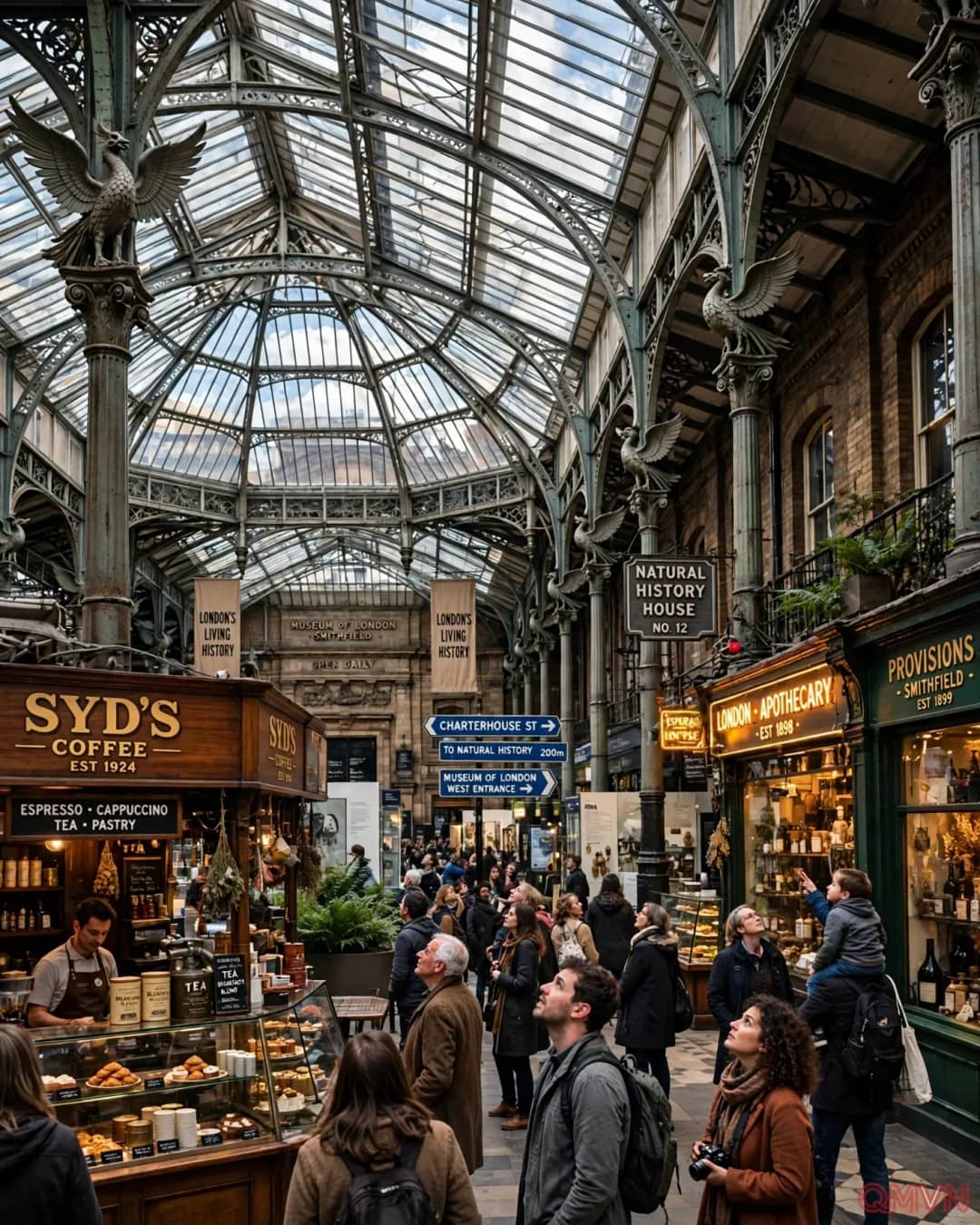
At Smithfield, the philosophy is entirely different. The 44 shop units that once ringed the market, where butchers and grocers sold to the street, have become 12 outward-facing "houses" for the museum and its partners, from cafes and pubs to galleries and shops. Architect Asif Khan, who worked alongside Stanton Williams and Julian Harrap Architects, likens the complex to a coral reef rather than a single organism, a place passersby might wander into without realising they are in a museum.
A museum that refuses to sleep
Inside, the soaring dome and ornamental iron columns by Horace Jones, also the architect of Tower Bridge, create a light-filled "cathedral of commerce". Thirteen displays around the main hall explore contemporary London: greyhound racing, glowing neon signs from familiar high-street shops, and the sound-system culture of street carnival. At weekends the museum stays open late, with DJs taking the stage.