MAIN ARTICLE
A board decision that needs an explanation
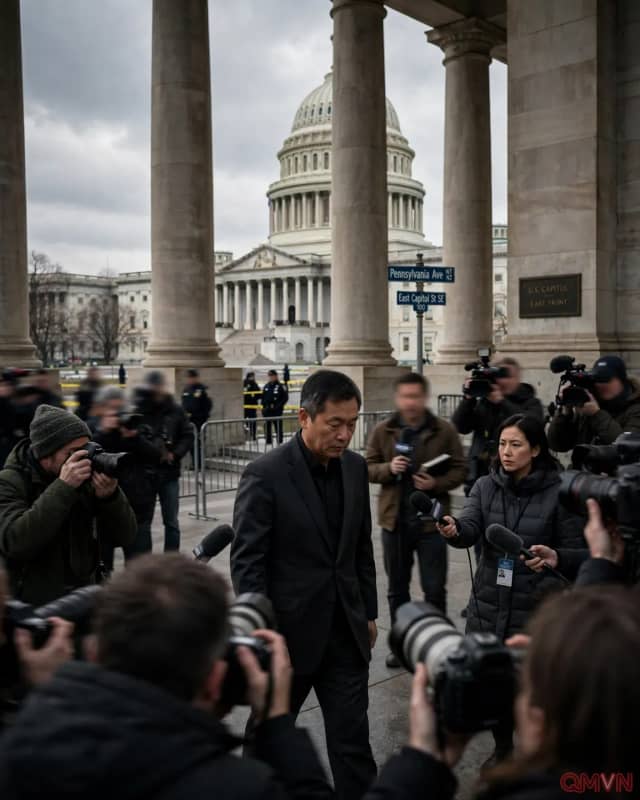
On November 17, chairman Harvey Jones had indicated that the directors did not plan to restore Huang. The announcement six days later was therefore more than an ordinary leadership change. Nvidia's official release confirmed the reinstatement; Reuters reported that the internal inquiry was still unfinished. The board now needs to explain what new information justified changing its position and how it weighed the interests of employees, customers and shareholders against governance risks.
The distinction between receiving government advice and surrendering independent judgment matters. Directors can legitimately consider national security assessments, but they remain responsible for evaluating corporate conduct, conflicts and succession. A rising share price does not independently establish that the decision process was sound.
Washington must account for its involvement
According to CNBC, Senator Jack Reed called for Treasury Secretary Scott Bessent and Commerce Secretary Howard Lutnick to appear before the Senate Banking Committee. Representative Gabe Amo also argued that the return expanded the scope of congressional scrutiny. The issue is not simply whether the president supported a successful executive; it is whether the government can explain the factual basis of its assurances and the process through which they reached the board.
Trump has publicly defended his intervention on economic and strategic grounds. That argument deserves consideration alongside concerns about institutional independence. Congress can examine both without presuming that any official or executive committed a crime.
Export controls reach beyond the first buyer
CNBC reported that lawmakers planned closed-door interviews with Huang on December 1 and Nvidia general counsel Tim Teter on December 2, followed by a Senate hearing on December 3. Their questions concern suspected diversion of advanced chips to China, customer screening and the company's knowledge of downstream transactions. Allegations and inquiries are not findings of guilt.
The central compliance question is whether Nvidia can identify ultimate customers and respond to warning signs across its distribution network. A seller's documentation may be accurate at the first transaction yet fail to establish where equipment ultimately operates. Clear escalation procedures, independent audits and reliable records would help investigators distinguish lawful trade from prohibited diversion.
Making oversight durable
Nvidia has pledged to appoint a chief compliance officer and create a committee focused on export controls and national security, according to CNBC. The effectiveness of those measures will depend on access to information, reporting independence and the ability to challenge commercially attractive decisions. Merely creating a committee cannot guarantee meaningful oversight.
Succession deserves similar attention. Huang's technical and commercial expertise is an asset, but the recent disruption illustrates the costs of concentrating confidence in a single leader. A credible succession process would preserve customer relationships and engineering priorities even during an unexpected transition.
Growth is a separate test
AP reported that Nvidia's data-center revenue in its recent quarter had more than doubled to $107.6 billion. Such growth illustrates the strength of demand, but future orders depend on financing, electricity, construction capacity and customers' ability to earn returns from AI services. CNBC also highlighted analysts' concerns about the sustainability of infrastructure commitments.
Investors should distinguish a relief rally from a durable improvement in business fundamentals. Useful indicators include actual deliveries, customer concentration, cash generation and the rate at which new data centers become operational. A leadership comeback cannot by itself remove these constraints.
The price of renewed confidence
CNBC reported that Bernstein retained a $200 price target and UBS a $220 target. These are analyst estimates, not promises. Their usefulness depends on the assumptions behind earnings, margins and future demand. A company can deliver excellent technology while its shares remain vulnerable to changes in expectations.
The broader lesson is that market confidence, corporate accountability and national security must be evaluated separately. Nvidia's next test is to demonstrate that these interests can reinforce rather than undermine one another.