MAIN STORY
1. Families who were never reached in time
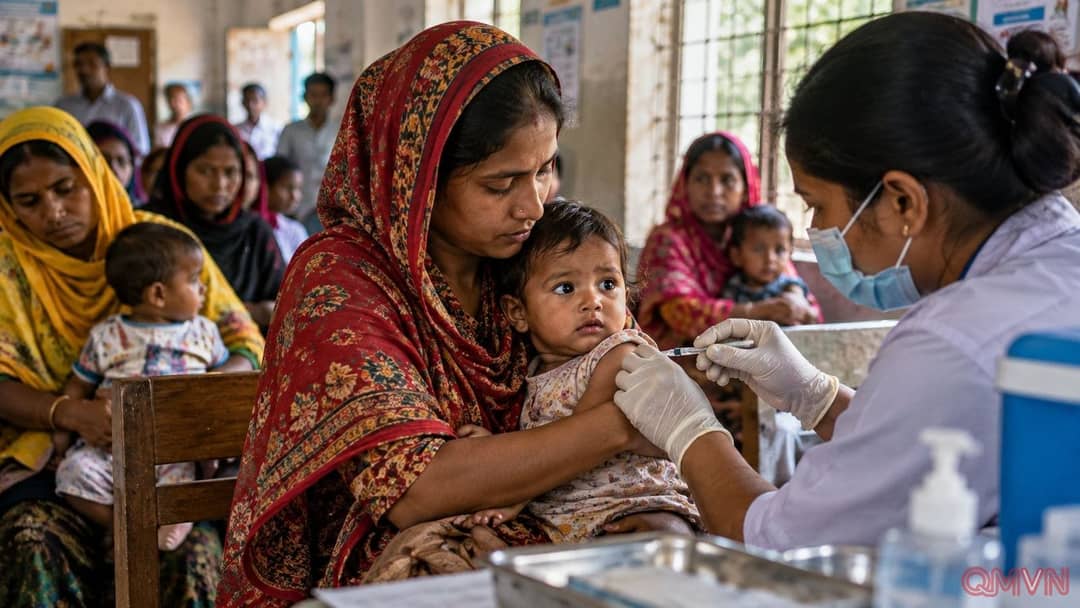
In Bangladesh’s northeastern Sylhet region, grief has become inseparable from questions about access to basic health services. Two-year-old Arman Hossain died in July, a day after entering hospital. His family had sold its three-wheeled vehicle to help pay for treatment; his four-year-old sister survived. Neither child had been vaccinated, their parents said.
In nearby Chhatak, nine-month-old Labiba Akter died in June. Her father said health workers had not informed his family that emergency vaccination eligibility had been lowered from nine to six months. These personal accounts cannot explain an entire epidemic, but they expose the divide between announcing a policy and ensuring that families in remote communities actually hear about it.
2. Strong national averages concealed local gaps
WHO and UNICEF estimated Bangladesh’s first-dose measles vaccination coverage at 96% in 2024, with second-dose coverage at 93%. Their estimates for 2025 fell to 90% and 86% respectively.