MAIN STORY
A small gap with enormous consequences
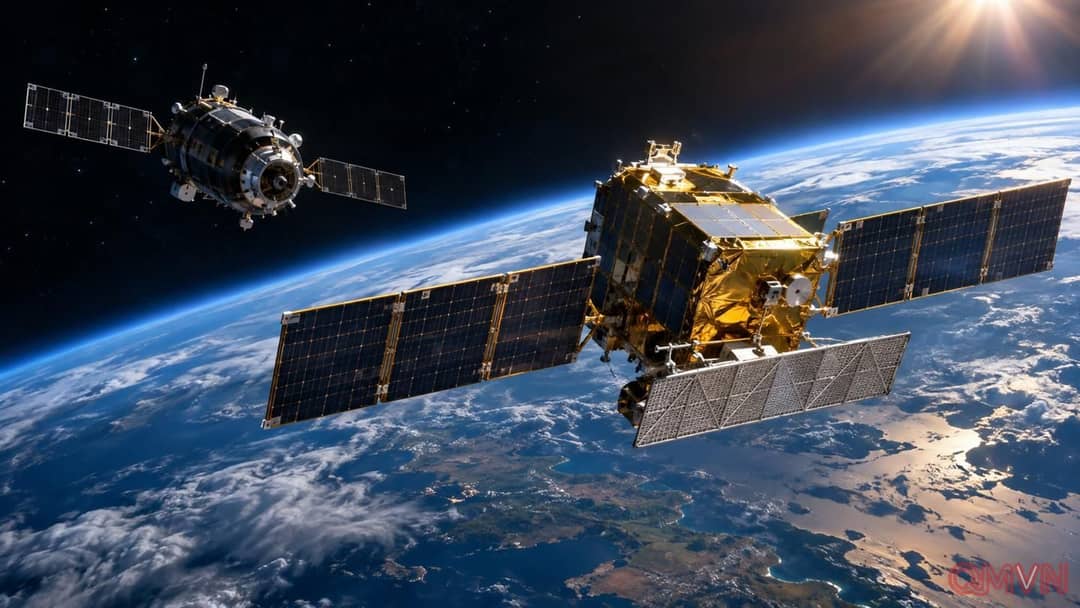
One kilometer sounds comfortable on the ground. In low Earth orbit, where spacecraft travel at several kilometers per second, it is a distance that demands unusually precise monitoring. Analysts told Reuters that Cosmos 2612 first trailed X36 by hundreds of kilometers in early October, then reduced the separation over several days. Estimates of the closest approach vary: roughly a kilometer in one assessment, perhaps a few hundred meters or less in others. Cosmos 2612 later withdrew to a distance of about 400 kilometers.
The movement matters as much as the minimum distance. Commercial tracking company LeoLabs flagged what appeared to be a deliberate approach in mid-October. On October 15, researchers at the Center for Strategic and International Studies (CSIS) described the possibility of an on-orbit threat to the ICEYE spacecraft. Their warning was about a potentially dangerous capability and exposure, not proof that a physical strike had occurred. Precision also has limits: publicly released orbital estimates are subject to uncertainty and do not reveal a spacecraft’s full payload or instructions.
What maneuvering can and cannot prove
Slingshot Aerospace publicly identifies Cosmos 2612 as a servicing and inspection satellite. Such capabilities can have legitimate roles, including observation and close-range examination, while the same maneuvering techniques can potentially be used to interfere with another spacecraft.