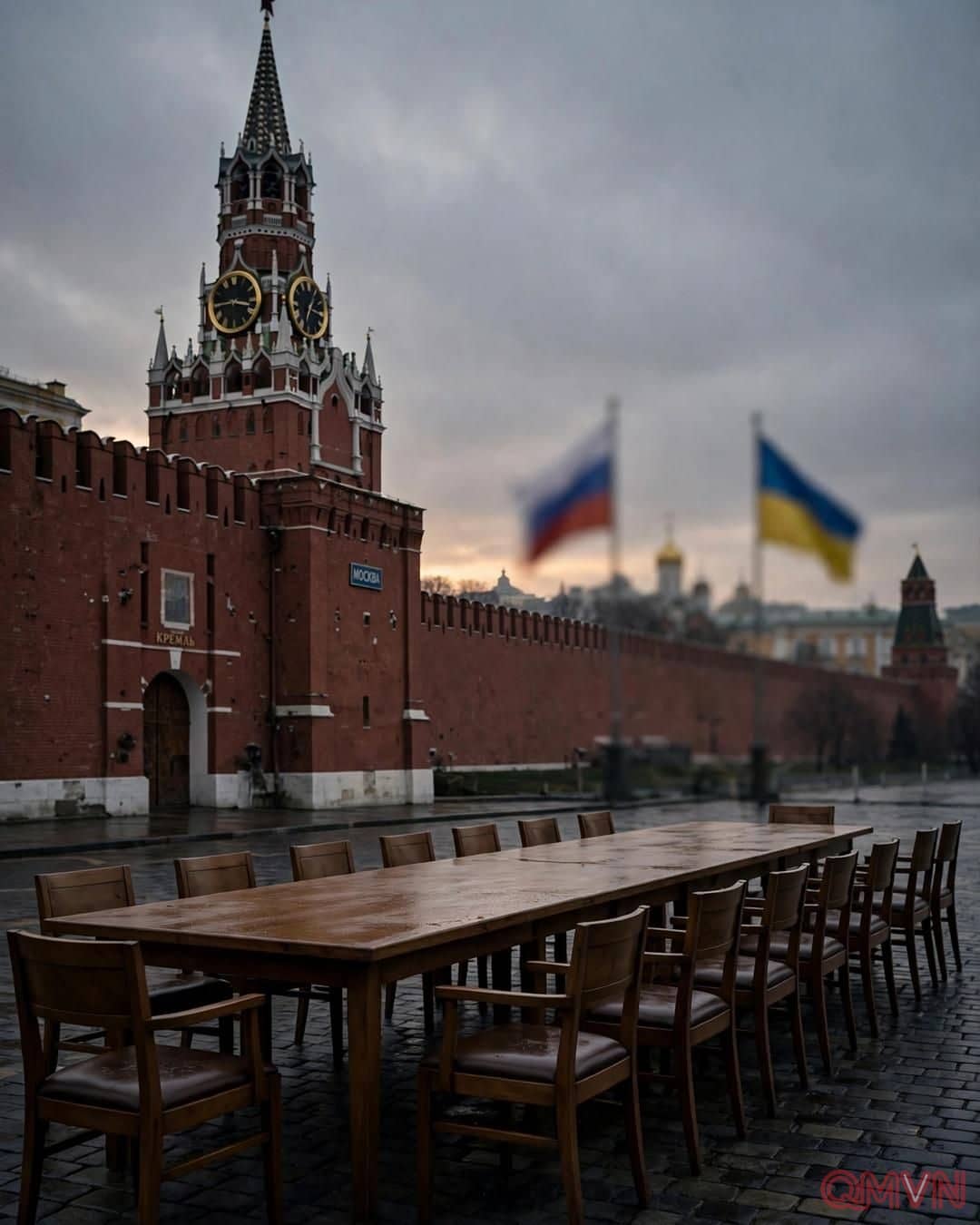
A dispute about timing
Johnson’s intervention challenges the sequence of diplomacy and security assistance. Rather than waiting for a negotiated end to hostilities, he wants a demonstration of Western commitment while the conflict continues. His argument rests on the principle that Ukraine should be able to determine its international partnerships. Sky News reported his remarks on November 24. He no longer holds executive office, however, and his suggestion does not constitute a deployment decision.
The distinction matters because a commitment made during active warfare presents different political and legal questions from a mission established after a ceasefire. Participating governments would need to define the mission’s mandate, responsibilities and limits. Even a small contingent could carry consequences far beyond its numerical strength. A symbol can communicate solidarity, but it cannot by itself resolve disagreement over what would happen if that solidarity were tested.
Moscow’s objections
Reuters reported on November 25 that Kremlin spokesperson Dmitry Peskov reiterated Russia’s refusal to accept Western forces in Ukraine. Dmitry Medvedev, deputy chairman of Russia’s Security Council, also raised the prospect of a confrontation with NATO.
Moscow has long portrayed Western military involvement as a threat to Russian security. Ukraine and its supporters, by contrast, regard outside assistance as part of Ukraine’s right to defend its independence following Russia’s full-scale invasion in 2022.
The disagreement extends to the diplomatic history of the conflict. Russian officials accuse Johnson of undermining negotiations in 2022, an allegation he rejects. The conflicting accounts should not be treated as proof that a particular individual was solely responsible for the failure of diplomacy. Decisions taken during war involve numerous actors, security concerns and uncertainties.
What the coalition has actually agreed
The British government’s published guidance describes the Multinational Force-Ukraine as the military component of the Coalition of the Willing, an initiative launched by Britain and France in March 2025. Its establishment was formalised in January 2026 through a declaration involving Britain, France and Ukraine. The guidance specifies that deployment requires an invitation from Ukraine, an end to hostilities and the fulfilment of relevant conditions.
A joint coalition statement dated August 24, 2026, similarly linked preparations to a credible cessation of fighting. These documents provide a useful benchmark against which to evaluate Johnson’s proposal. The former prime minister advocates a different timetable; the published framework does not establish that troops are about to enter Ukraine during active hostilities. Nor does a coalition initiative automatically amount to an operation of NATO as an institution.
The human stakes of security guarantees
A durable peace requires more than an announcement that fighting has stopped. People displaced by conflict need confidence that returning home will not expose them to another cycle of violence. Communities must be able to restore schools, hospitals and essential infrastructure, while businesses need enough certainty to invest in reconstruction. These needs explain why the credibility of future guarantees is a central concern for Ukraine.
At the same time, the risk of escalation remains a major consideration for governments discussing military involvement. The debate therefore turns on both the substance of promised assistance and the conditions under which it would be delivered. There is no confirmed decision in the reporting cited here to implement Johnson’s proposal. The immediate development is a public disagreement over how to reconcile Ukraine’s security with the risks of a broader confrontation.