MAIN CONTENT
Winter as a test of national resilience
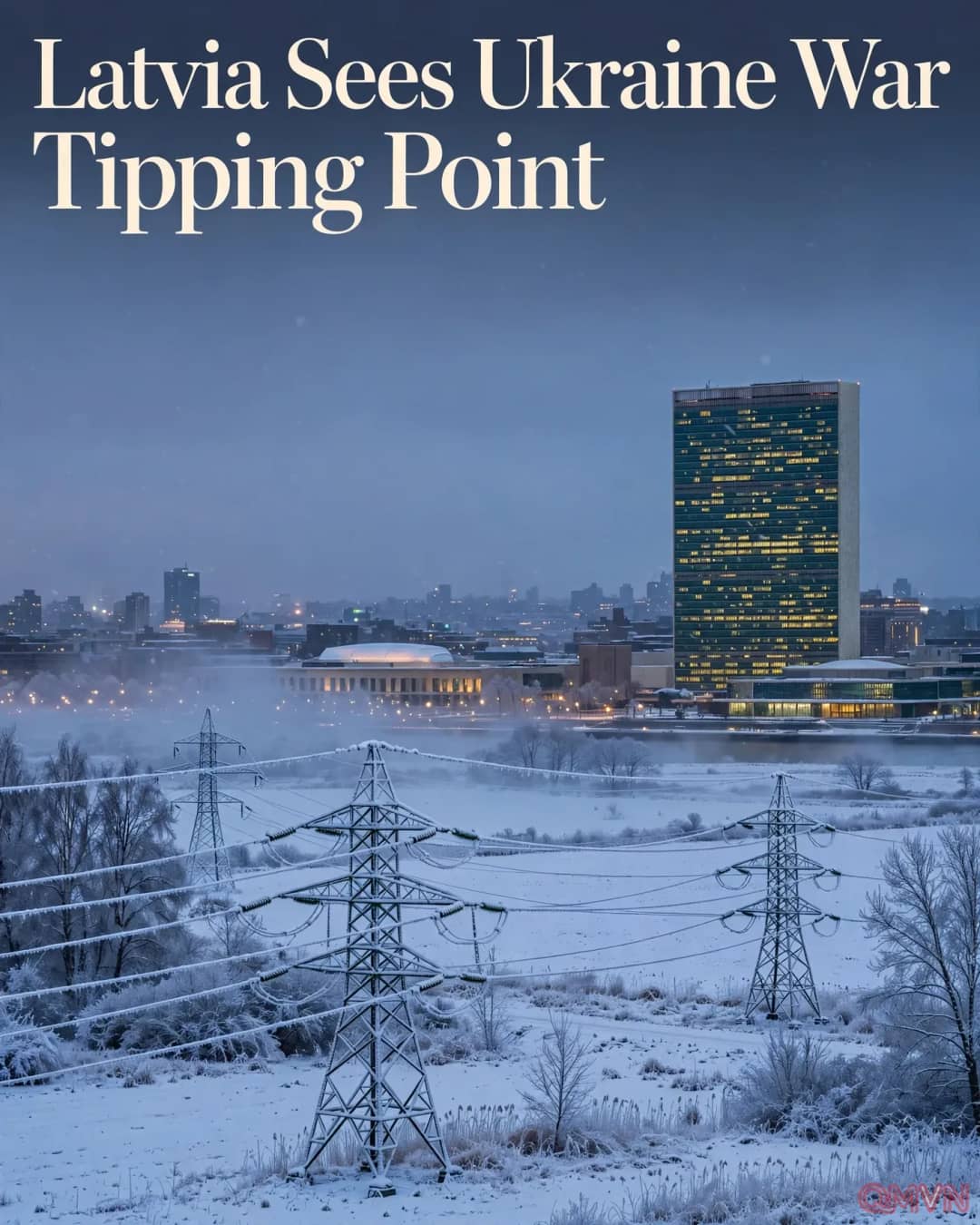
The ability to endure a prolonged conflict depends on more than the condition of armed forces. Electricity, heating, transport and public finances determine whether ordinary life can continue under extraordinary pressure. Damage to energy infrastructure can disrupt hospitals, schools and businesses simultaneously, making repair capacity a central part of national resilience. For Ukraine, winter therefore represents both a humanitarian challenge and a test of institutional continuity.
Rinkēvičs told Reuters that European partners would continue helping Ukraine through military, financial and infrastructure assistance. The effectiveness of such support depends not merely on announcements but on whether resources reach the institutions and communities that need them. Maintaining basic services can reduce the secondary economic damage of attacks, while predictable financing gives authorities greater capacity to plan beyond immediate emergencies.
Why economic pressure does not guarantee a breakthrough
The Latvian president’s forecast rests partly on his assessment of Russia’s deteriorating economic position. Yet economic strain does not translate automatically into a change in military policy.
Governments may redirect expenditure, accept declining living standards or seek alternative trading relationships. The duration of a conflict depends on political choices as well as material constraints.
International pressure also has several dimensions. Diplomatic criticism, trade restrictions and demands for negotiations are distinct instruments with different consequences. The president expressed skepticism about Moscow’s intentions in ceasefire discussions. That judgment is his own assessment, not independent proof of what Russian negotiators intend. The credibility of future talks would be better evaluated through concrete commitments, mechanisms for verification and observable compliance.
European security beyond the battlefield
The interview also addressed suspected hostile activities in European countries. For governments, the difficulty is not only preventing disruption but establishing responsibility with enough confidence to justify a response. A suspicious incident alone does not establish state involvement. Moscow denies organizing sabotage in NATO countries, and some cases remain under investigation.
NATO’s official explanation of Article 5 makes clear that collective defence applies when an armed attack is established; serious cyber or hybrid incidents may qualify depending on the circumstances. Each ally determines what assistance it considers necessary. This framework leaves room for proportionate decisions while preserving the principle of mutual defence. Intelligence cooperation, infrastructure protection and credible public communication can help governments respond without prematurely escalating uncertain situations.
Diplomacy and the limits of a forecast
Latvia’s position at the United Nations gives its concerns an international platform. The Latvian Foreign Ministry identifies support for Ukraine, international law and emerging security challenges among its priorities for the November presidency. The role enables Latvia to convene discussions, but it does not confer unilateral authority to settle a war or override the voting rules of the Security Council.
The spring or summer of 2027 should therefore be understood as a potential window identified by Rinkēvičs, not a deadline. Changes in military conditions, the continuity of external support and the substance of diplomatic negotiations may all influence what happens next. For civilians, the most meaningful evidence of progress would be a sustained reduction in violence and a dependable restoration of everyday security.