AI debt “below the waterline”: S&P Global warns that America’s tech giants may carry more liabilities than they disclose
LEDE
Credit rating agency S&P Global estimates that the world’s biggest technology companies are likely to have more AI-linked liabilities than currently known, although its top analyst for the sector sees no need to change any ratings for now. According to Mark Habib, S&P’s global head of digital infrastructure, the risk lies in “interconnected financing structures”, in which hyperscalers – the giant US cloud computing firms Amazon, Microsoft, Alphabet, Oracle, Meta and SpaceX – effectively guarantee huge data-centre builds or smaller AI companies. S&P expects these six firms to spend more than $7 trillion on data centres and AI-related investment between 2025 and 2030, and to have negative free cash flow until at least next year. The warning comes as bonds issued by “neocloud” firms such as CoreWeave have sunk to stressed levels.
Edite QUANG MINH·2 min read · 4 min listen·19 October 2026, 21:15 EDT·
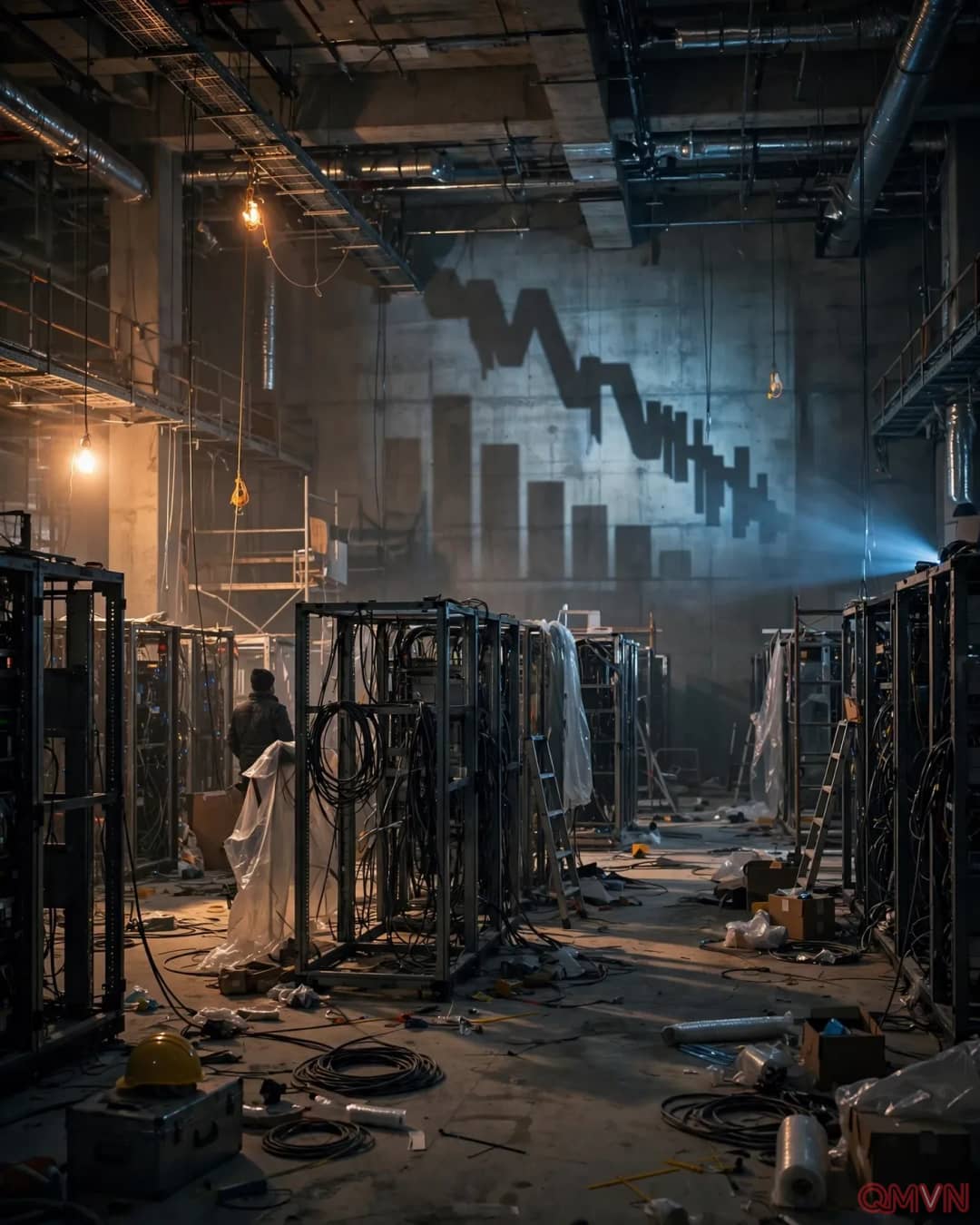
AI-generated illustration
MAIN CONTENT
Debt beyond the field of view
Speaking at a roundtable in London, Habib acknowledged that the rating agency may not see the whole picture. If guarantees are not reported, they are not part of hyperscalers’ disclosures; and if S&P is not rating the transactions where these liabilities accrue, it simply lacks visibility.
Advertisement300 × 250
*“It is safe to assume that there is more debt out there that we are not seeing.” — Mark Habib*
He said there was no estimate yet of how much additional debt such circular financing might add to balance sheets, but that S&P was trying to take a “holistic” view. Even so, the biggest risk to hyperscalers’ ratings remains whether expected profits fail to materialise.
$7 trillion and negative cash flow
The scale of investment in the AI race is unprecedented in the history of the technology industry. S&P’s figures show the financial pressure facing even the world’s richest companies.
The top six US hyperscalers are expected to spend more than $7 trillion on data centres and AI-related capex from 2025 to 2030.
The group is forecast to have negative free cash flow until at least next year.
In July, S&P downgraded Oracle to BBB-, the lowest rung of investment grade, over its AI spending and an uncertain path to profitability.
Meanwhile, debt issued by AI infrastructure providers and “neocloud” firms such as Nvidia-backed CoreWeave has sunk to increasingly stressed levels in recent weeks, amid concerns over the aggressive scale of their borrowing. CoreWeave has borrowed nearly $50 billion to fund its rapid expansion.
Markets worry, the rating agency stays calm
Asked whether the recent selloff in bonds tied to the AI buildout signals that investors see them as riskier than ratings suggest, Habib said there was no major disconnect forcing S&P to change ratings, as its scores are designed to take a long-term view.
*“For now, we don’t see a major disconnect that needs to force our ratings to change.” — Mark Habib*
He noted, however, that this view could shift if it became clear that the amount of money being spent was no longer sustainable. That, he said, could come from several drivers: further increases in investment by AI firms, or revenue competition becoming too intense.
A lesson in transparency
S&P’s warning comes as markets scrutinise the cost of AI infrastructure. The Philadelphia Semiconductor Index has shed about $1.6 trillion in value in under two weeks, several data-centre-related IPOs have been postponed, and investors are questioning the real profitability of these enormous investments.
Notably, the risk lies not only in the size of the debt, but in the fact that part of it does not clearly appear in financial statements. When guarantees and commitments are intertwined among big corporations, start-ups and data-centre developers, a shock at one link could spread far faster than public figures suggest.
BACKGROUND OF THE EVENT.
The AI infrastructure race took off in 2023, when large language models showed their commercial potential and tech giants rushed to build data centres, buy chips and sign long-term power contracts. At first, the spending was funded mainly by abundant cash flow. But as the scale grew into the trillions, companies turned to borrowing, bond issuance and complex financing structures, with hyperscalers guaranteeing partners or signing long-term leases with data-centre developers.
In 2026, rising interest rates, stubborn inflation and geopolitical turmoil made capital more expensive. The crux is a timing gap: the costs come today, while profits from AI remain a promise for the future. History has seen technology waves – such as the fibre-optic boom of the late 1990s – leave behind a burden of debt when revenue failed to keep pace with investment.
KEY LESSONS FROM THE ARTICLE
The most dangerous risks often lie not in the published numbers, but in what no one has yet seen.
A giant investment only makes sense if the profits arrive before the bills.
Financial transparency is the foundation of trust, especially when a whole market is betting on the future.
Subscribe to the QMVN newsletter
A daily morning digest - only stories worth reading, no spam.