MAIN ARTICLE
A police report, not a finding of guilt
K&K Property said on November 22 that it had notified police of an alleged attempt to extort money. Its spokesperson confirmed that the complaint was made on November 4 and declined to elaborate because the matter had been handed to law enforcement. The South China Morning Post cited a person close to the firm who described a demand for ‘tens of millions’ of Hong Kong dollars, backed by a threat to publish material that could harm the developer’s reputation. The amount and alleged threat are attributed to that source, not independently verified findings.
Public reporting at the time did not establish whether anyone had been arrested, charged or prosecuted in connection with the complaint. An accusation of extortion and a determination of criminal responsibility are very different things. Nor is there verified evidence that the alleged demand was made by a homeowner, contractor or person linked to the building-quality dispute. Maintaining that distinction protects both the integrity of an investigation and the public's ability to judge the facts.
Why the development was already under scrutiny
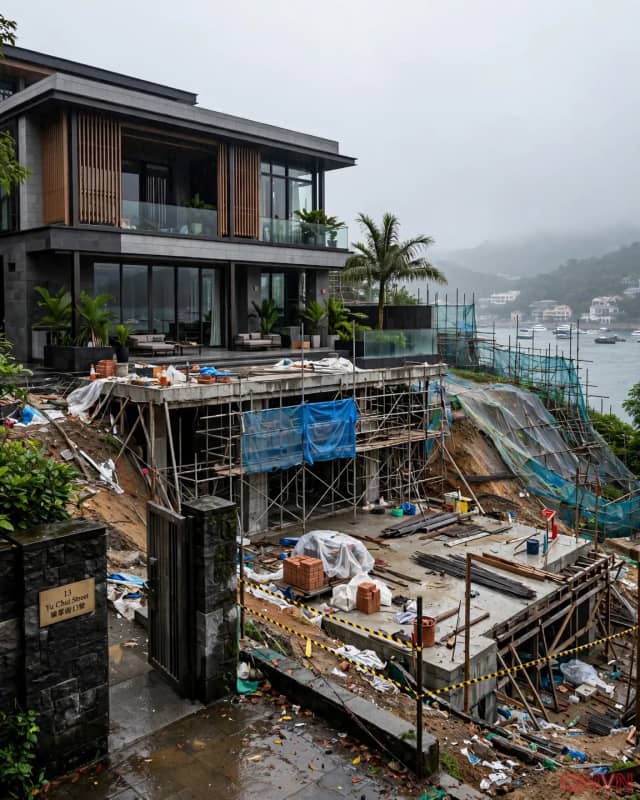
One Stanley, a low-density residential project overlooking Hong Kong’s southern coastline, had drawn attention after allegations that steel reinforcement in parts of a detached house did not match approved construction plans. Hong Kong’s Buildings Department announced an investigation in October.
It previously reported that a site visit in March had found no obvious danger to the house’s overall structure, a limited observation that should not be confused with final clearance of every construction detail.
Authorities subsequently required expanded checks involving eight additional houses. In a November 11 legislative reply, the Development Bureau said the Buildings Department had largely completed its investigation and would seek legal advice on potential enforcement. That procedural step is not a conviction or a final judgment against any company. The government’s response underlines the importance of documentary evidence, qualified inspections and transparent follow-up when residents raise structural concerns.
Promises to buyers and the burden of proof
K Wise, a K&K Property subsidiary, announced a six-year structural warranty and offered free independent property inspections to address homeowners’ concerns. Such measures can provide a route to technical reassurance, but their credibility rests on clear inspection scopes, publication of relevant findings and correction of any confirmed defects. Luxury prices do not lessen the significance of safety checks; they often heighten buyers’ expectations that the specifications they paid for will be delivered.
For residents, the practical questions are concrete: which properties were examined, which approved plans were used for comparison, and how any discrepancy will be remedied? An independently qualified professional's report may be more meaningful than competing public statements. Buyers also need to distinguish a suspected construction defect from a verified risk to the building’s stability. The available reporting does not justify describing every home at One Stanley as unsafe.
Two parallel tests of accountability
The alleged extortion attempt and the building-quality inquiry involve different legal and evidentiary questions. Police must assess whether any criminal threat occurred; building regulators must evaluate compliance with approved plans and applicable safety rules. Neither process should be used as a shortcut to conclusions about the other. Disclosure of the complaint does not nullify construction concerns, just as questions about reinforcement do not establish extortion.
The wider lesson for Hong Kong’s property sector is that confidence is maintained through verifiable procedures rather than declarations alone. Clear communication with owners, a defensible record of inspections and fair handling of allegations can reduce uncertainty. In the absence of final findings, precision matters: describe what has been reported, identify who says it, and leave disputed conclusions to the responsible authorities.