MAIN ARTICLE
A long run breaks a close contest open
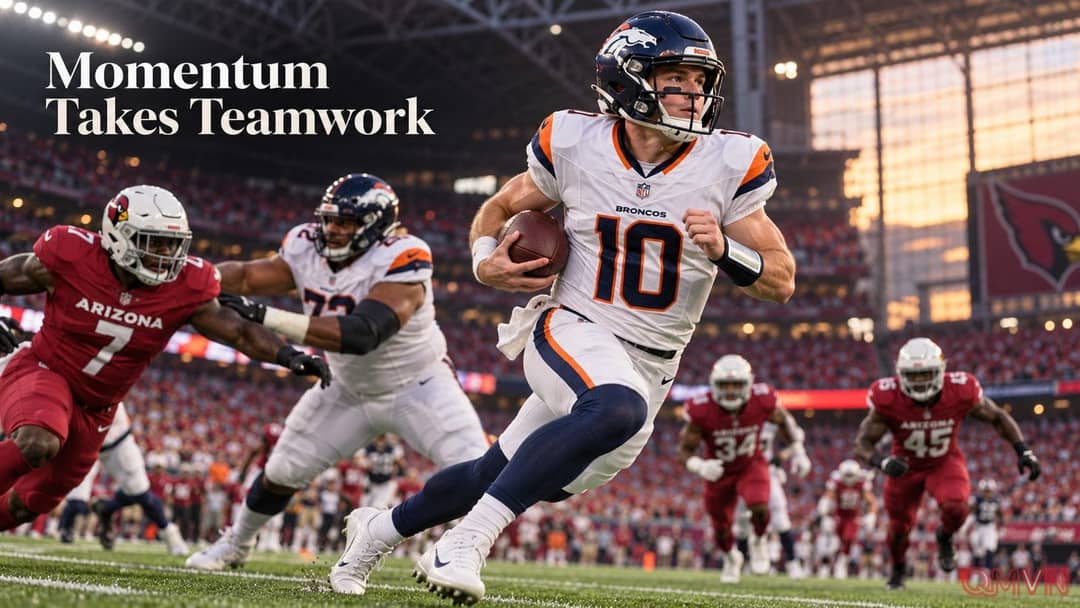
The decisive change arrived with the teams level at 6-6. With 3:43 remaining in the second quarter, Nix scrambled 62 yards for a touchdown, giving Denver a 13-6 advantage before halftime. A game initially shaped by field goals suddenly acquired a different rhythm. The play illustrated the additional problem a mobile quarterback can create for a defense: a passing situation can become an opportunity on the ground when space opens and the player carrying the ball recognises it quickly enough.
Nix finished with 222 passing yards on 15 completions from 29 attempts and added 73 rushing yards, according to Field Level Media. Those contributions describe two ways of influencing the same contest. They should not be mistaken for proof that Denver’s offense had become flawless. The completion rate and the team’s penalties still offer material for review. The importance of his performance was more specific: he produced a major change in the game when the sides had been struggling to separate.
Different contributions turn a spark into a lead
Denver’s defense forced a punt on Arizona’s first possession after the break. Nix then delivered a short pass to Harvey, who accelerated away to complete a 52-yard touchdown play and extend the advantage to 20-6. The distance attached to the score does not mean the ball travelled 52 yards through the air. Much of the gain came after the reception. That distinction helps explain how a passing touchdown can reflect a receiver’s running ability as well as the quarterback’s decision.