From “gutter oil” to “liquid gold”
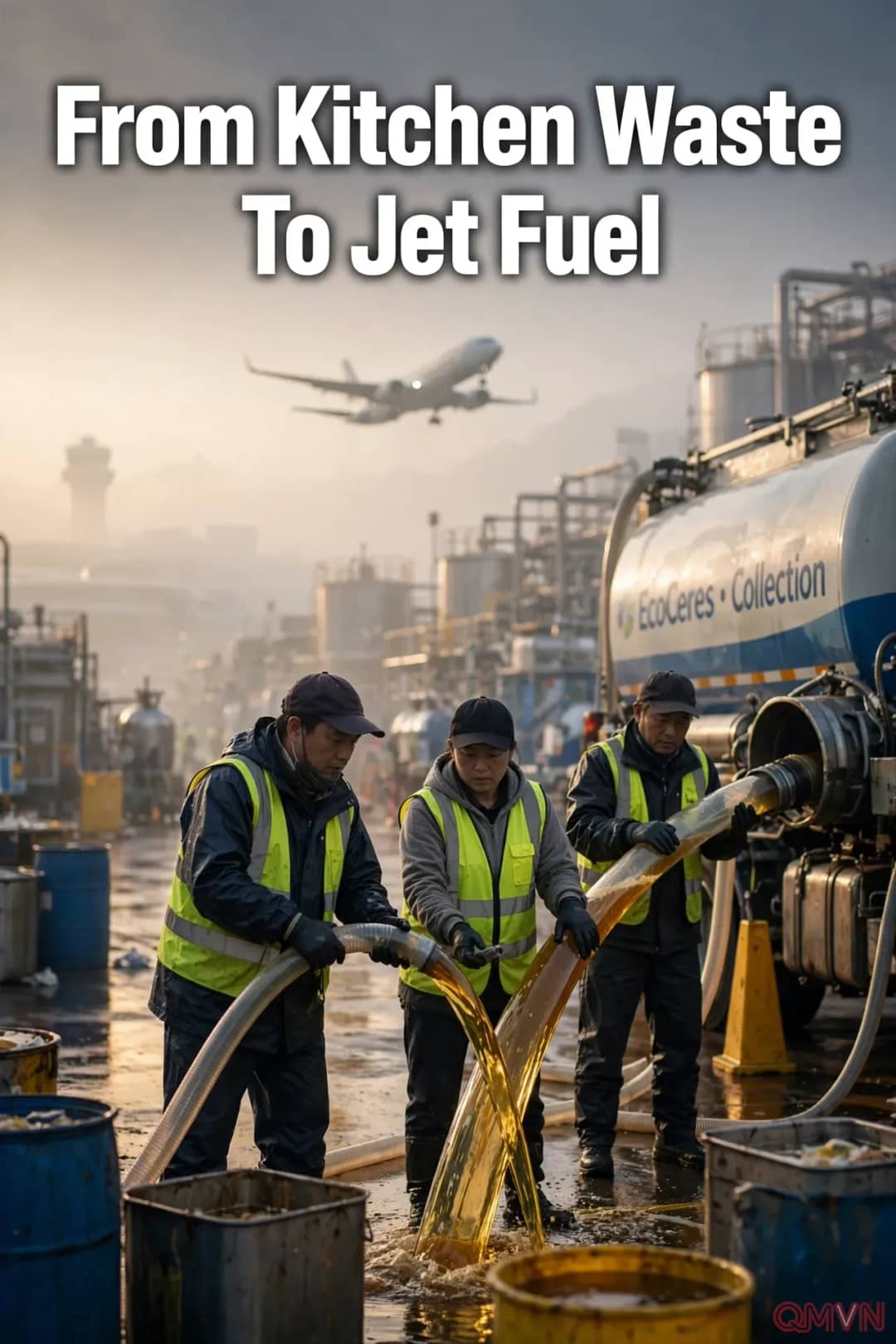
Oil recycled from kitchen and drainage waste has almost vanished from Chinese dining tables in recent years, but it has become a sought-after feedstock for clean energy. Hong Kong-based EcoCeres sources it across the Greater Bay Area.
I can recall that the gutter oil we collected was basically free 10 years ago, and authorities even offered subsidies to collectors, but now the unit cost is even more expensive than fuel.
EcoCeres co-chairman Alan Chan Ying-lung has witnessed that transformation. Along with animal fat and agricultural waste, used cooking oil can be turned into renewable jet fuel that cuts life-cycle carbon emissions by up to 80% compared with conventional fuel and can be blended directly without modifying aircraft engines.
Hong Kong’s “cautious” target
Hong Kong initially aimed for SAF to account for 1% to 2% of fuel used by flights departing Hong Kong International Airport by 2030. In the city’s first five-year plan released in September, Chief Executive John Lee raised the target to 1% to 3%.