MAIN STORY
When recovery grants become an investigative trail
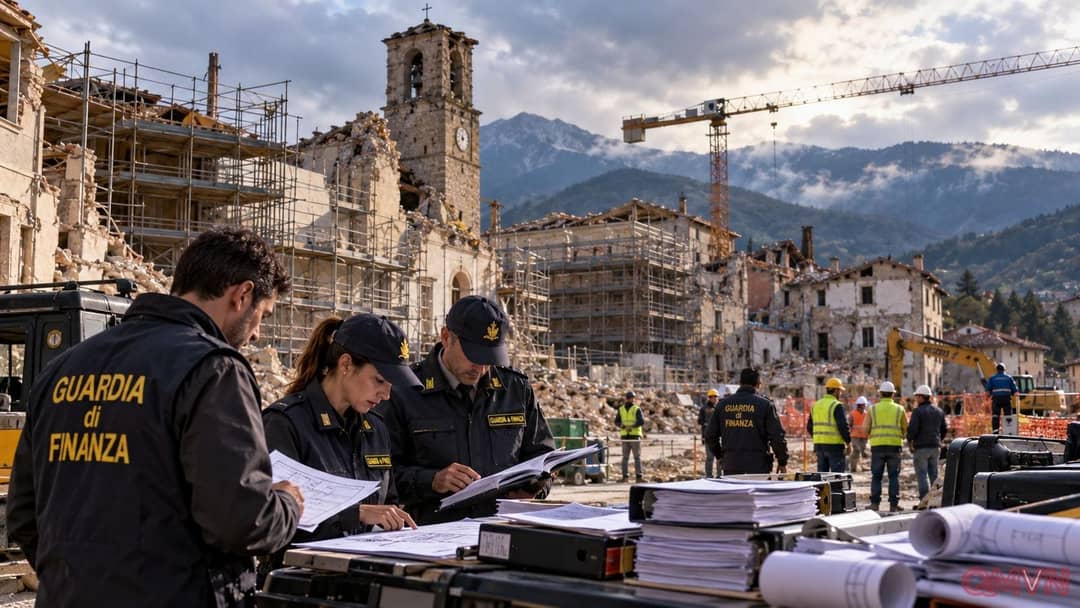
The first strand of the case concerns applications for public assistance to restore properties damaged by the 2016 earthquakes. Investigators suspect that misleading claims may have been used to obtain funding and that some projects were subsequently transferred through subcontracting arrangements that obscured who performed the work. Recovery grants are supposed to restore housing, revive businesses and keep small mountain communities viable.
A legitimate payment and an improper one can initially look alike on a financial ledger. Investigators therefore need to compare technical plans, actual work, beneficiaries and transfer records. Suspected wrongdoing in specific contracts should not be interpreted as proof that the overall rebuilding programme was fraudulent.
Two suspected schemes and the contracting chain
A separate strand examines alleged corruption in tenders involving Regione Marche, ERDIS Marche and Università di Camerino. Authorities are examining relationships between businesspeople and officials involved in allocating those contracts.
Investigators also allege that some privately financed rebuilding work was subcontracted to parties associated with organised crime networks from Calabria and Campania.
The distinction matters: subsidy fraud concerns eligibility for public financing; procurement corruption concerns the integrity of contract awards. Each can inflate costs and weaken public oversight. But any specific person’s responsibility must be established through evidence and due legal process, not inferred from their name appearing in an inquiry.
The scale of the financial police operation
The Ricostruzione operation extended across 13 Italian provinces: Ancona, Macerata, Pesaro-Urbino, Fermo, Rome, Caserta, Naples, Reggio Calabria, Modena, Terni, Chieti, Treviso and Piacenza. More than 50 searches and document-gathering actions were reported, with approximately 230 finance police officers participating, according to local reporting.
A judge in Ancona ordered eight people held in pretrial detention and advance questioning for five others. Assets and financial holdings worth more than €57 million were placed under seizure orders. The value of a precautionary seizure is not necessarily the final amount of losses established in court, nor evidence that every seized euro was unlawfully obtained.
Trust, due process and the work still ahead
For households uprooted by the earthquakes, reconstruction is about far more than concrete and invoices. It is the return of schools, local shops, friendships and ordinary routines. Allegations that recovery funds may have been diverted can deepen distrust after years of waiting.
Legal restraint remains indispensable. Suspects are presumed innocent, detention is not a conviction and suspected criminal links require individual proof. Accessible procurement records, credible inspections and meaningful public oversight offer practical protection for the next stage of recovery.