MAIN CONTENT
From Silicon Valley to the policy table
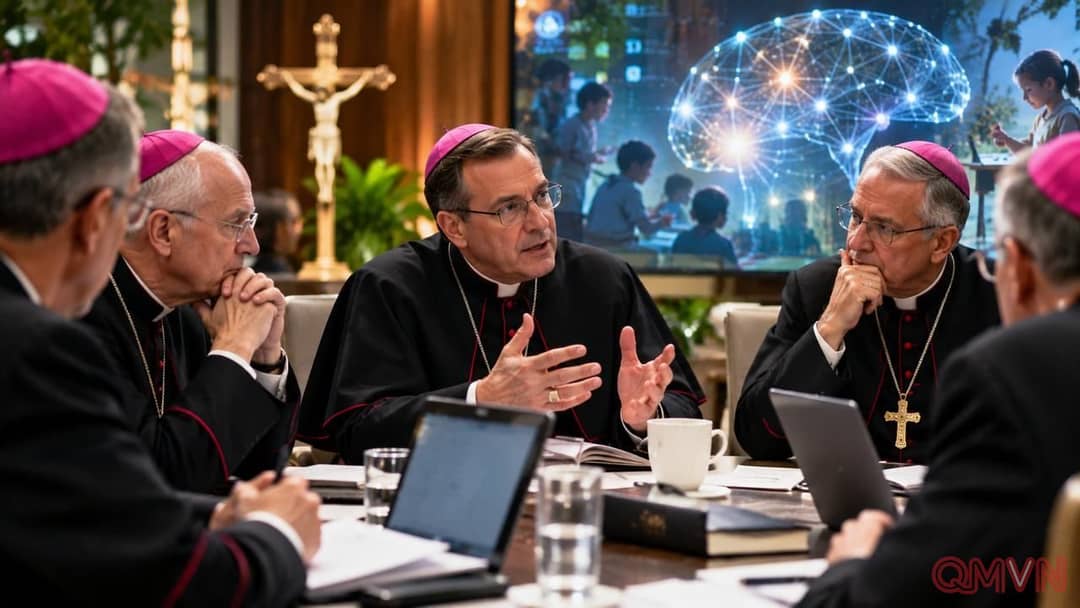
As bishop of San José, near the heart of Silicon Valley, Oscar Cantú occupies a distinctive position between AI developers and communities confronting the technology’s social consequences. At the Baltimore assembly, he described the work of the bishops’ task force on preserving human dignity in the age of AI. The US Conference of Catholic Bishops established it in September and named its members and consultants in October.
The effort does not call for a blanket ban on AI. Its immediate emphasis is on identifiable safeguards in development and deployment. Bishops have spoken with technology executives and lawmakers, hoping to move from general statements of principle toward rules that people and institutions can actually use.
Cantú argued that the Church brings a long tradition of thinking about personhood, truth and the common good. Such a tradition cannot substitute for engineering expertise. It can, however, question decisions too often framed only in terms of speed, efficiency and returns.
Work, childhood and the human relationship
The task force intends to track AI’s labor effects, advocate for workers and provide guidance on AI literacy. New tools may expand opportunity, yet automation can also hollow out expertise, intensify workplace surveillance and shift the burden of adjustment toward employees least equipped to absorb it.