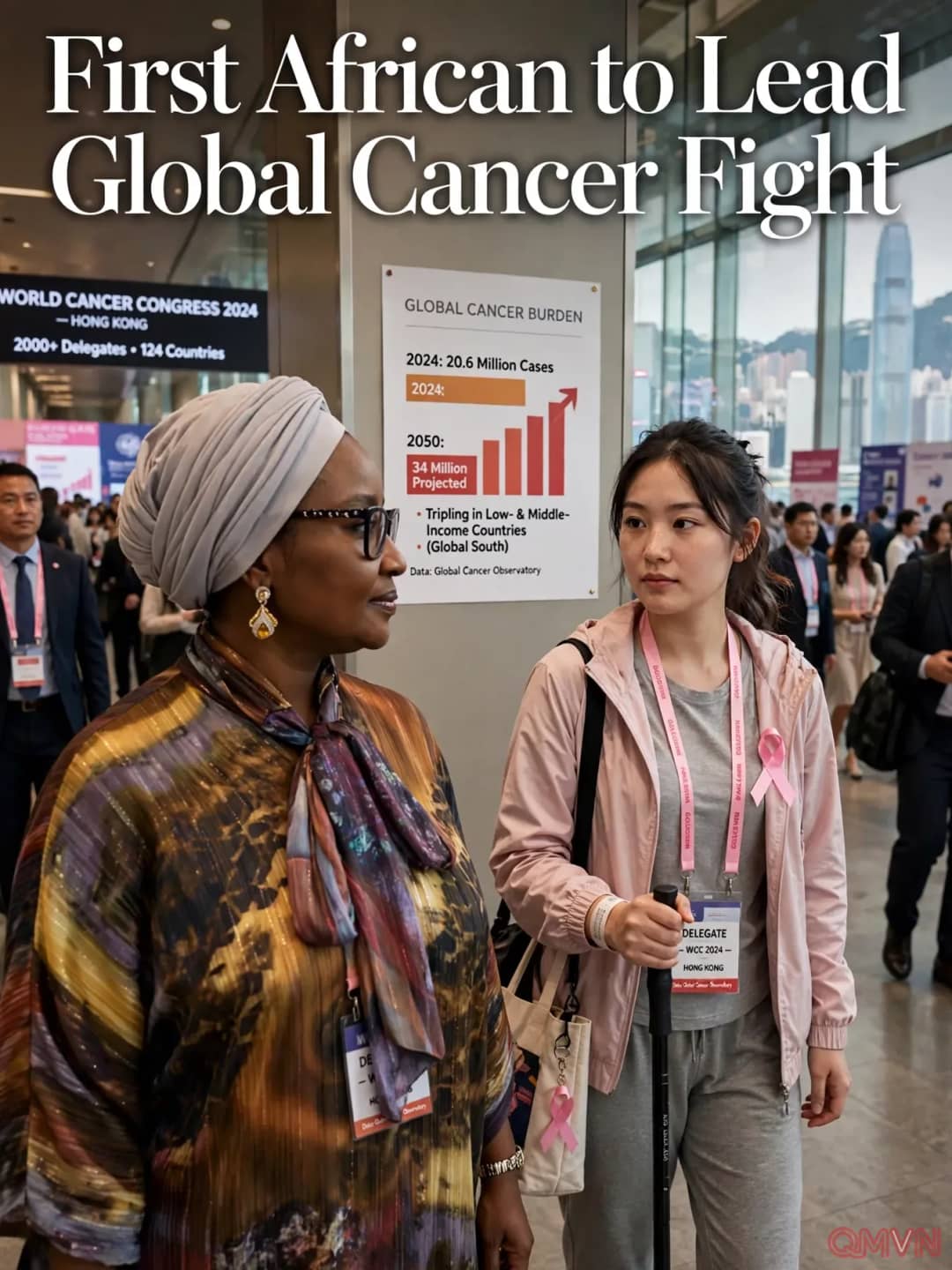
Gloria's story and a historic milestone
When Bagudu last saw Gloria in Nigeria's capital, Abuja, the young breast cancer patient was in hospital, with the disease spread to her bones and lungs. Then, at the World Cancer Congress in Hong Kong last month, attended by more than 2,000 people from 124 countries, Bagudu saw her again: walking with a stick because of the cancer in her hips, Gloria was attending sessions, sharing her experience and advocating for other patients.
That story captures the spirit Bagudu brings to the UICC. A paediatrician and patient advocate, she is the first African elected to lead the organisation. In her view, the long wait for a black leader at the UICC reflects the shortcomings of cancer care in Africa and other low- and middle-income countries.
“The fact that it took so long is a reflection of the inadequacy of cancer care along the entire spectrum in Africa and other low- and middle-income countries.” — Zainab Shinkafi-Bagudu
The cancer burden shifts towards the global south
The IARC forecasts that annual new cases will rise by 67% to more than 34 million by 2050, while deaths could reach 17.5 million, an increase of 79%. Most of the additional deaths are expected in low-income countries, where health systems are already under strain and short of diagnostic equipment, medicines, radiotherapy, specialists and funding.