MAIN ARTICLE
A sequence of decisions beneath the apparent magic
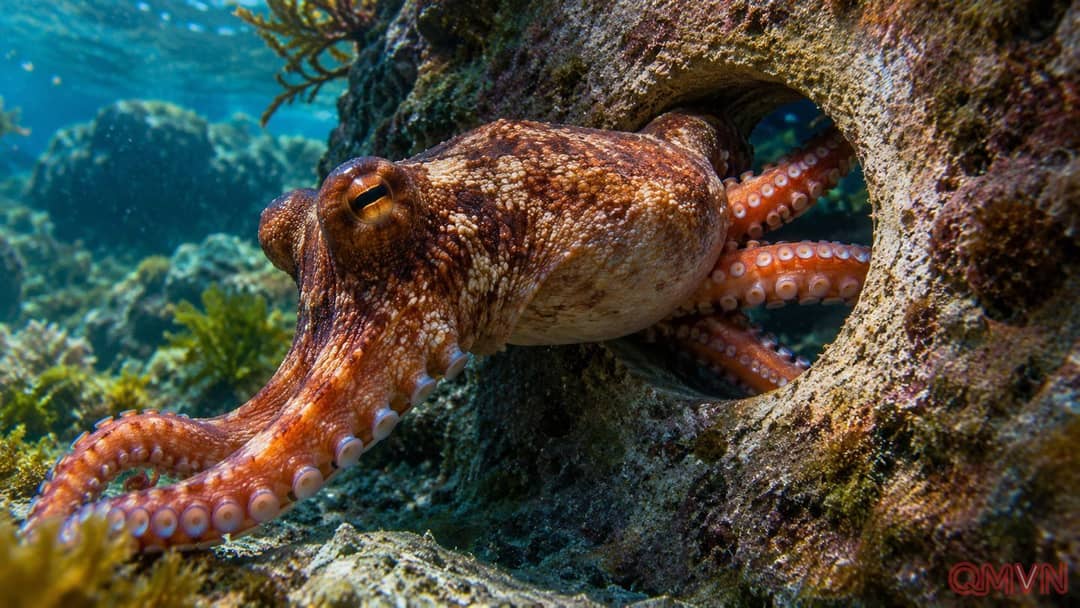
Among rocky coastal habitats, a crack can mean shelter, an escape route or a shortcut to hidden prey. An octopus brings eight highly versatile arms to that landscape. Suckers help the animal investigate surfaces and hold onto them, while its muscles provide support without the rigid skeleton found in vertebrate limbs. This arrangement, known as a muscular hydrostat, lets an arm bend, twist and lengthen. Yet flexibility by itself does not explain how multiple arms, the head and the bulbous mantle pass through the same constricted opening without becoming a tangled mass. The choreography matters as much as the anatomy.
'That choreography was the focus of researchers including Wenci Xin, associated with the National University of Singapore’s soft robotics research, and Michael Kuba of the University of Naples Federico II. Rather than documenting only whether an animal escaped, they filmed the progression of body parts through test apertures. By tracking when an arm explored the rim, when others followed and when the body squeezed through, they could turn a remarkable spectacle into a reproducible description of movement. The paper appeared in the Journal of Experimental Biology, with findings also discussed by Reuters and Science News.