A Real-Life Dune
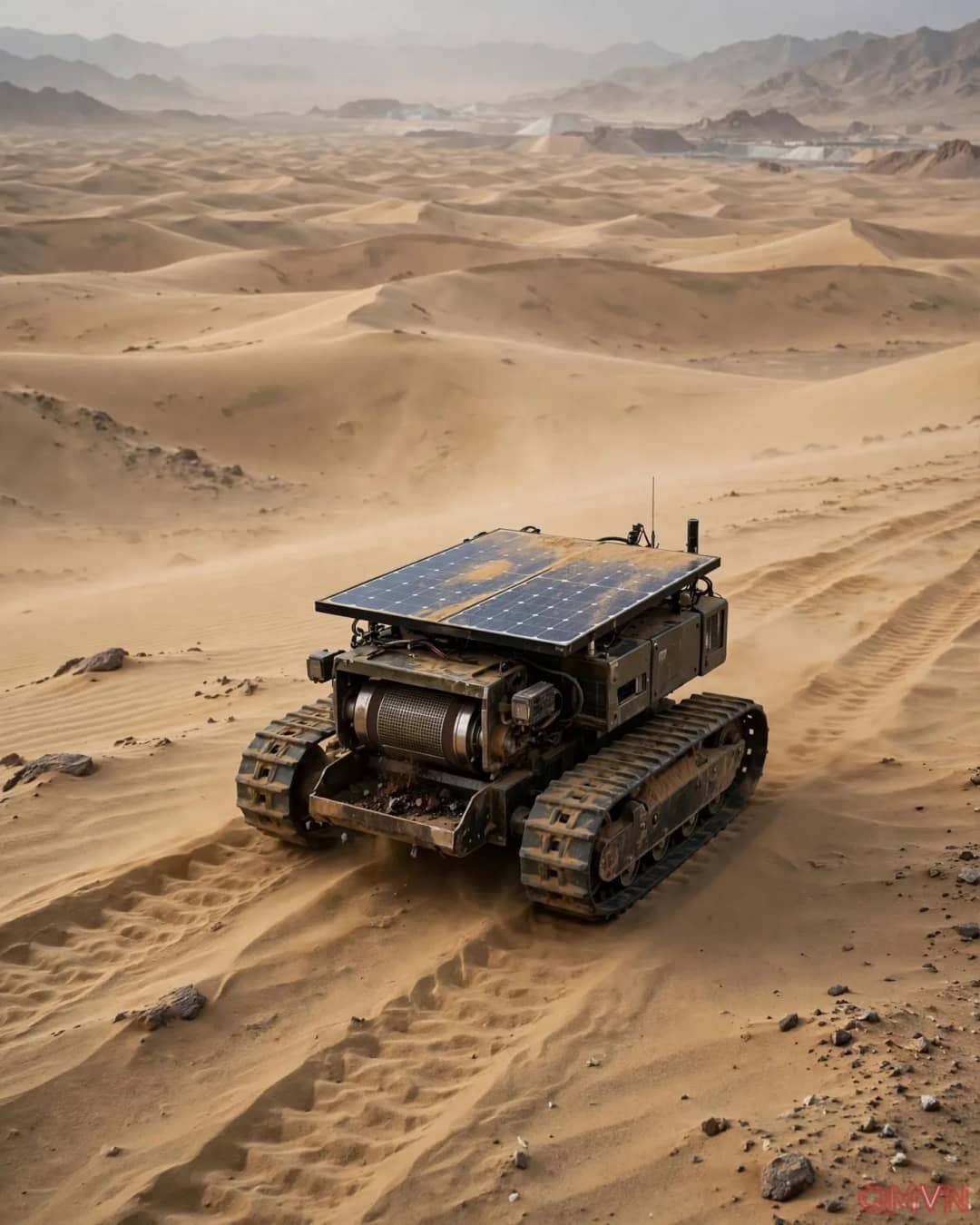
The device, developed by researchers at Tarim University, uses dry magnetic separation to filter ferromagnetic materials from sand. The team says the Taklamakan contains “vast quantities of ferromagnetic materials”, but extracting them has long been difficult.
However, their scattered distribution and the difficulty of collection have hindered the effective recovery and utilisation of these resources
The researchers said traditional manual techniques such as magnetic attraction, visual sorting and gravity washing were “ill-suited to the extreme conditions of the desert environment”, so they designed a machine that can cross the sands on its own.
A Small Machine With Big Ambitions
Notably, the device uses very little energy; the prototype runs on the equivalent of a large phone power bank. Key specifications include:
The robot weighs 4.3kg and uses a 20,000 milliampere-hour battery.
It operated continuously for 12.5 hours at an average speed of 1.5cm per second.
It stays stable on 20-degree slopes, and a mounted solar panel could extend its range.
Moving on a tracked chassis, the robot uses a rotating bucket mechanism to scoop sand into the magnetic separator. Inside, a ring of neodymium iron boron (NdFeB) permanent magnets draws magnetic particles to a rotating drum and releases them into a discharge chute, while non-magnetic sand falls out through a separate outlet.
China's Iron Challenge
According to the United States Geological Survey (USGS), China ranks fourth in the world for crude iron ore reserves at 17 billion tonnes, after Australia, Russia and Brazil, and was also fourth in usable ore production in 2025. Even so, imports account for most of the iron ore the economy consumes.
The paper notes that China's iron ore is complex in composition and low in grade, leading to low recovery rates and inefficient use. The device also reflects China's strength in NdFeB magnets, a field it dominates and in which it tightened export controls on processing technology from late 2023.
Results and Limits
Tests showed the prototype extracted an average of 0.46% magnetic material from raw sand, with an average total iron content of about 28%; two representative samples reached about 24% and 32%, along with elements such as titanium and manganese. In a June 2025 test, the robot covered 18.2 metres for every 3% of battery used.
Overall, the magnetic separator designed in this study is capable of the preliminary recovery and enrichment of iron-bearing magnetic materials from desert sand
The team acknowledged fluctuations between tests, possibly due to the uneven distribution of ferromagnetic components and varying terrain. At current yields and scale, the prospect of turning the whole desert into an iron mine remains distant, and questions about cost, scale and environmental impact still need answers.
From Desert to Resource
The small robot on the Taklamakan dunes shows how science can find value in places that seem barren. Yet the gap between a promising prototype and a real mining industry is always wide. Innovation must go hand in hand with caution, so that resource extraction does not become a burden on already fragile ecosystems.