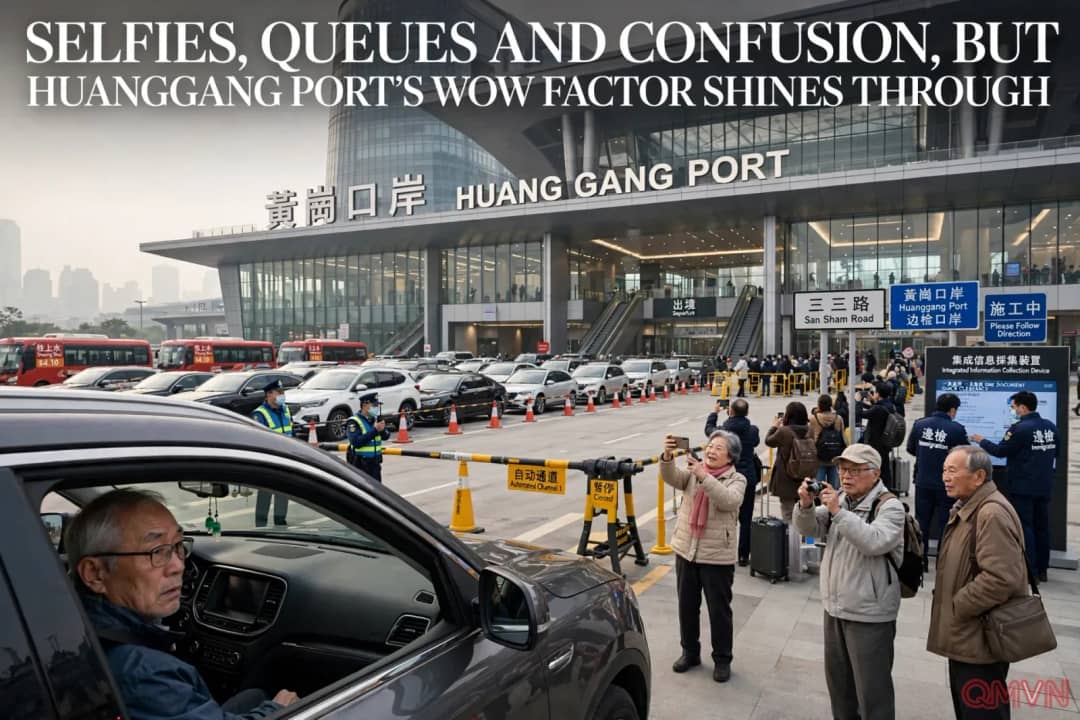
Architectural grandeur and the streamlined joint clearance model
On October 12, 2026, the reimagined Huanggang Port officially commenced border clearance operations, bringing a triumphant conclusion to the 37-year legacy of the original Lok Ma Chau/Huanggang control point inaugurated in 1989. Early visitors—predominantly domestic tourists and cross-border retirees—expressed awe at the grand departure halls, high ceilings, expansive observation glass walls overlooking the Shenzhen skyline, and fluid transit pathways.
The technical centerpiece of the new complex is the streamlined "collaborative inspection and joint clearance" channel.
Eligible travelers need only present a single identification document to clear both Hong Kong departure and mainland arrival formalities concurrently through a three-gate automated e-channel, reducing actual border-gate transit time to less than sixty seconds.
“This revamped port is a critical milestone for connectivity in the Greater Bay Area, allowing the city to better integrate into and serve the overall development of the country.” - John Lee Ka-chiu - Chief Executive of Hong Kong
Technological learning curves and cross-border traffic bottlenecks
Despite overall enthusiasm, vehicular crossings experienced noticeable teething problems during peak morning hours. Queues formed at the San Sham Road traffic buffer zone as drivers encountered the newly installed "integrated information collection devices." Because motorists frequently parked too far from the sensors or struggled with automated verification, lane attendants had to intervene manually.
The inaugural operational phase identified critical technical refinements necessary for future efficiency:
Private drivers reported waiting up to 55 minutes between the holding zone and terminal clearance lanes due to driver unfamiliarity with car-side automated scanning hardware.
Automobile associations urged Shenzhen municipal authorities to promptly update satellite navigation maps and physical road signage to eliminate driver disorientation between old and new portals.
Cross-border commuters called for full activation of all automated passenger lanes to eliminate residual queuing bottlenecks during weekend travel surges.
“Some drivers spent at least 10 minutes around the Shenzhen side of the border and could not tell the road signs for the new or old border crossing.” - Ringo Lee Yiu-pui - Honorary Life President of the Hong Kong, China Automobile Association