MAIN CONTENT
One alert overturns a nation of travel plans
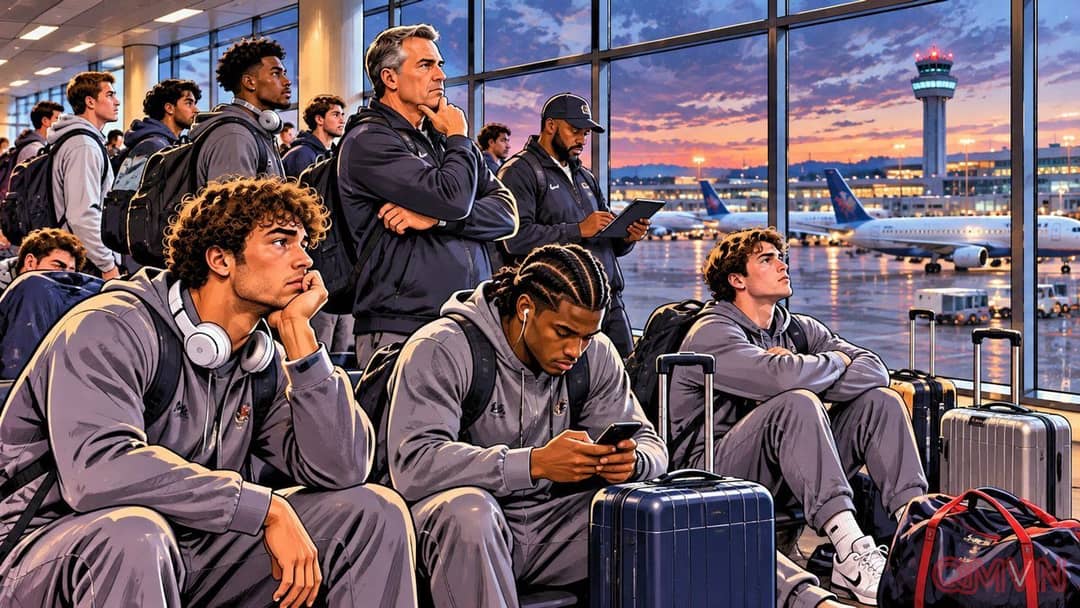
Washington was preparing for a Saturday afternoon matchup at Michigan State in East Lansing. As The Washington Post reported, the team's five buses reached King County Airport just as the national halt was announced. The group waited roughly half an hour, then returned to campus. A drive approaching 30 hours made an immediate road alternative substantially less practical than it was for schools facing nearby opponents.
Tennessee, Texas, Utah, Ole Miss, Minnesota, and Kansas State were among the programs reporting travel uncertainty. In some cases, equipment had already reached the destination while the athletes had not. Such mismatches affect far more than arrival times: preparation sessions, meals, medical routines, film meetings, and the sleep that precedes a physically demanding contest all become harder to protect.
Auburn and Purdue were among the schools choosing buses instead. But ground transport is not a universal substitute for a charter plane. Distances, available drivers, highway conditions, overnight travel, and the ability to secure suitable rest make each case different. The same federal decision produced radically unequal logistical choices across the country.