A “bad bank” for Russian assets
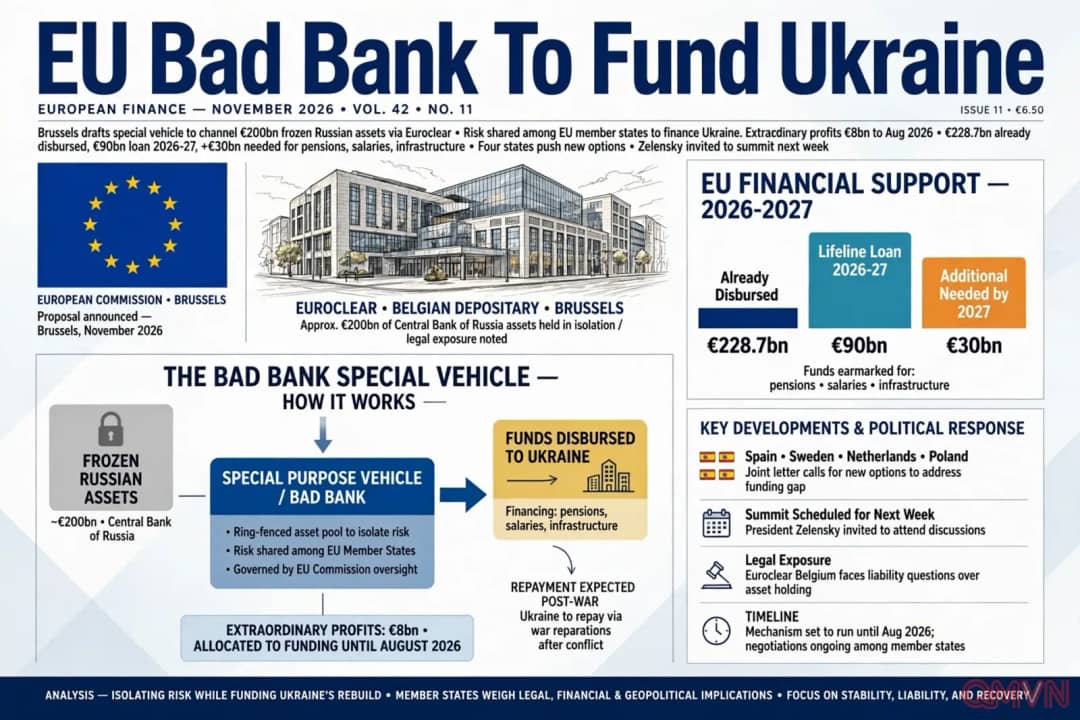
According to EU sources cited by the Spanish daily El País, the European Commission is examining a special European vehicle or structure to which the Russian central bank assets held at Euroclear would be transferred. A senior official in Brussels likens the model, “with some differences”, to a bad bank: separating the assets, and above all the associated risk, from Euroclear and moving the problem out of Belgium.
Once under the control of the new structure, the funds could back a financing operation for Ukraine, while the risk of Russian claims would be shared among member states. Commission experts argue this is not confiscation, because Ukraine would repay only once Russia pays war reparations. Moscow insists otherwise.
So far, the EU has used only the windfall profits generated by the frozen assets, about €8 billion up to August 2026, to support Kyiv. The principal remains untouched, a treasure locked between law and politics.
Kyiv running short, four capitals speak up
Since the war began, the EU and its member states have disbursed about €228.7 billion to Ukraine. Last year, unable to unlock the Russian assets, the bloc agreed a €90 billion loan for 2026 and 2027. But Kyiv warns it will need an extra €30 billion by 2027 to pay pensions and salaries, maintain infrastructure and buy weapons.