MAIN ARTICLE
A homecoming decades in the making
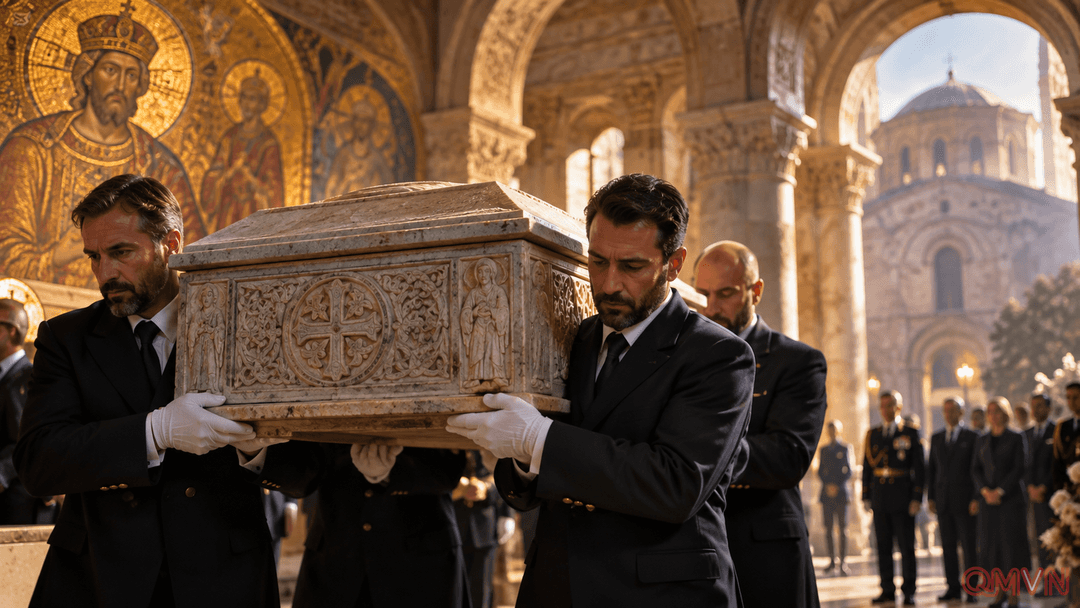
At the Museum of Byzantine Culture in Thessaloniki, Greek Prime Minister Kyriakos Mitsotakis and Bulgarian Prime Minister Rumen Radev attended the handover. Under the announced arrangements, a Spartan military transport aircraft was to fly the remains to Sofia, accompanied by fighter jets upon entering Bulgarian airspace. A 21-gun salute and a procession to the Church of St. Sophia were planned, allowing citizens to pay their respects.
The ceremonial scale reflects Samuel’s place in Bulgarian public memory. He ruled from 997 to 1014 and fought the Byzantine Empire amid fierce struggles for power in the Balkans. He died in 1014, shortly after a devastating military defeat. For many Bulgarians, his reign represents both an extraordinary effort to preserve sovereignty and the vulnerabilities of medieval statehood.
Sacred objects and unresolved objections
The agreement goes well beyond the transportation of a ruler’s bones. Bulgaria is returning 48 religious artifacts to Greece, objects removed in 1917 during World War I from monasteries and church institutions in the country’s north.