MAIN ARTICLE
An election decided by its final ballots
Mississippi did not wake up to a definitive answer on election night. In its explanation of the race call, the Associated Press reported that Colom’s lead after the last overnight update was only 43 votes. Absentee ballots and provisional ballots reviewed by county election officials over subsequent days expanded that margin. It was a vivid demonstration that an election is not completed when the campaign speeches end. Careful counting, verification and public confidence in the process are essential parts of democratic participation.
After Jackson County added 2,173 ballots, Colom was ahead by 4,669 votes out of 962,237 counted, AP reported. The news agency called the election for him on November 11, based on returns that had not yet been officially certified. Hyde-Smith subsequently telephoned her rival to congratulate him and released a concession message. That transition matters as much as the figures: acknowledging a verified electoral outcome helps preserve the institutions through which political disagreement can remain peaceful.
The civil-rights past meets the present
Mississippi’s political history gives the outcome particular weight. Civil-rights organizer Medgar Evers was murdered in 1963, while Fannie Lou Hamer helped challenge the exclusion of Black Americans from political power.
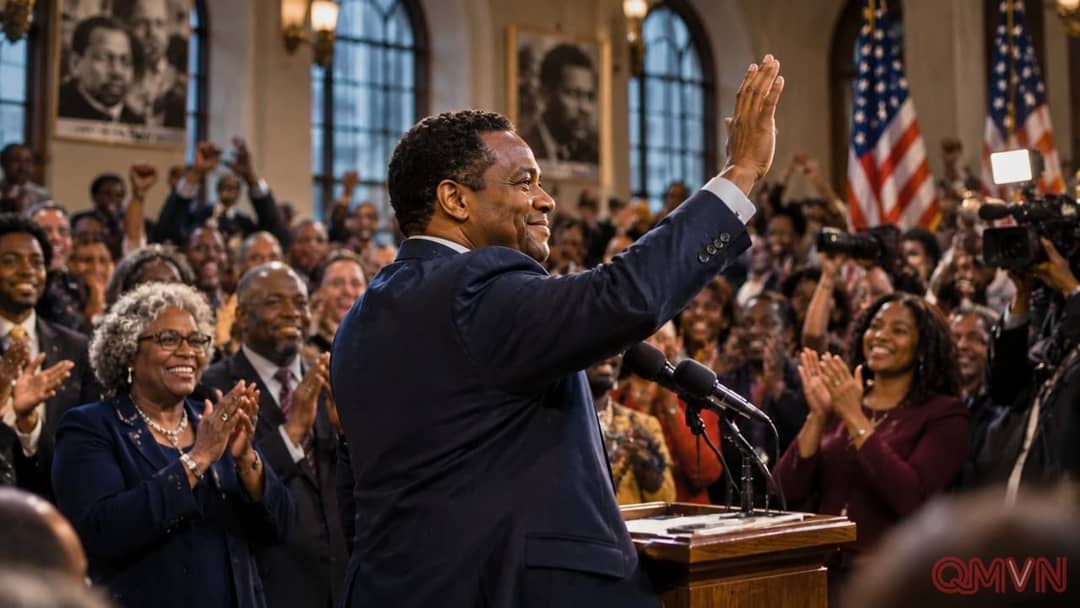
At his victory event at Tougaloo College, Colom evoked both figures. Their legacy did not mean that the struggle was finished. It reminded supporters of the long path that made this vote possible and of the obligations that accompany public office.
Colom said he had found the courage to believe in Mississippi, putting his faith in its people rather than simply in his own success. Representative Bennie Thompson, long the sole Black member of the state’s congressional delegation, welcomed the prospect of having another partner in Washington. Still, the significance of representation must ultimately be measured in access to opportunity, responsiveness and the extent to which citizens with different political views believe they have been heard.
The price of daily life reshapes political arguments
Historical meaning was only one part of Colom’s campaign. He emphasized food prices, healthcare and the financial strain on working households. One widely circulated advertisement used Hyde-Smith’s response to complaints about expensive beef, in which she said shoppers could choose other proteins, and recast the message as a call to choose another senator. Beneath the campaign wordplay lay a serious question: do elected officials understand household budgets, or merely advise people to adjust to higher costs?
Hyde-Smith, a former state agriculture commissioner who entered the Senate in 2018, highlighted her work for farmers, veterans and federal investment. She also retained President Donald Trump’s support. Colom, a local prosecutor, sought a coalition extending beyond usual partisan loyalties. His win does not mean every Mississippian has changed political beliefs. Instead, it shows how turnout, economic concerns and a competitive candidate can shift the result of a close statewide contest.
What the result changes in Washington
The victory was expected to bring Democrats to 55 seats in the incoming Senate, with Alaska’s contest still unresolved when AP reported the outcome. Nationally, it formed part of a difficult midterm picture for Republicans. But an election captures public judgment at one moment, not a permanent political realignment. Proclaiming that the entire American South has shifted decisively toward one party would extend the evidence well beyond what this single contest can establish.
Colom’s real challenge begins after the celebration. He will need to build relationships in the Senate, advocate for people who voted against him as well as those who supported him, and translate promises about affordability and opportunity into concrete work. Supporters hope the result inspires greater unity; skeptics will assess the actions that follow. A historic moment may begin with one ballot, but lasting public trust is built through decisions taken long after the election.